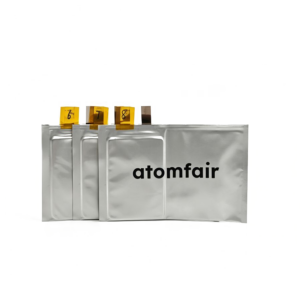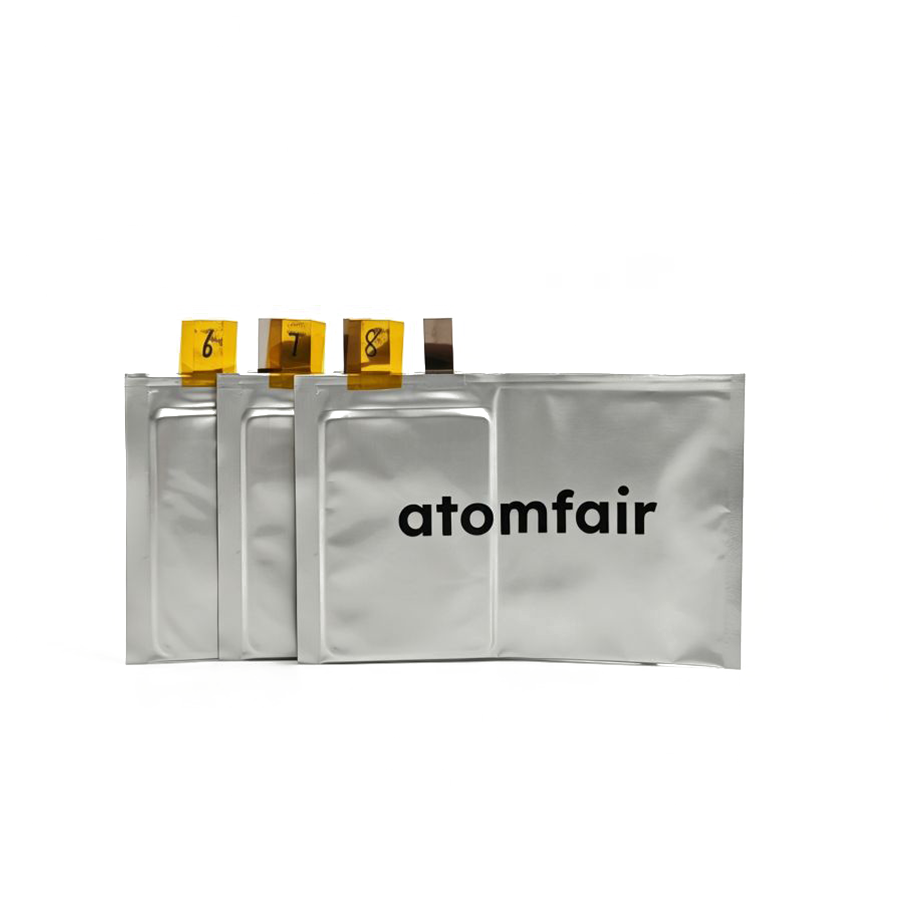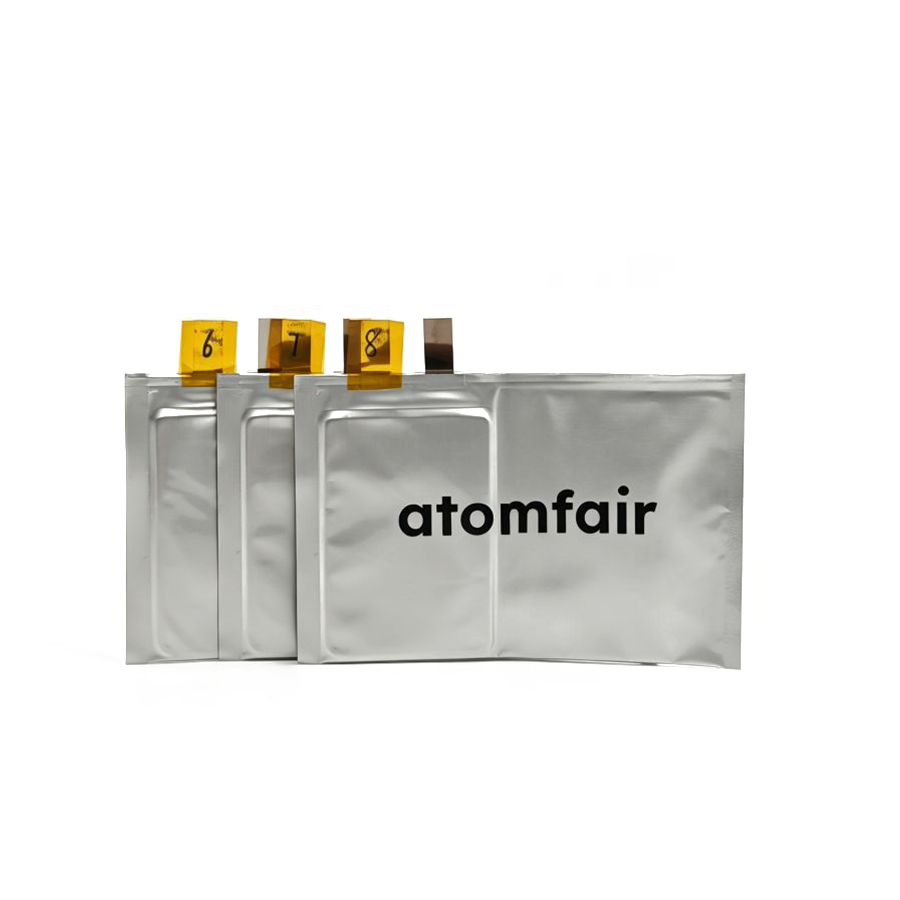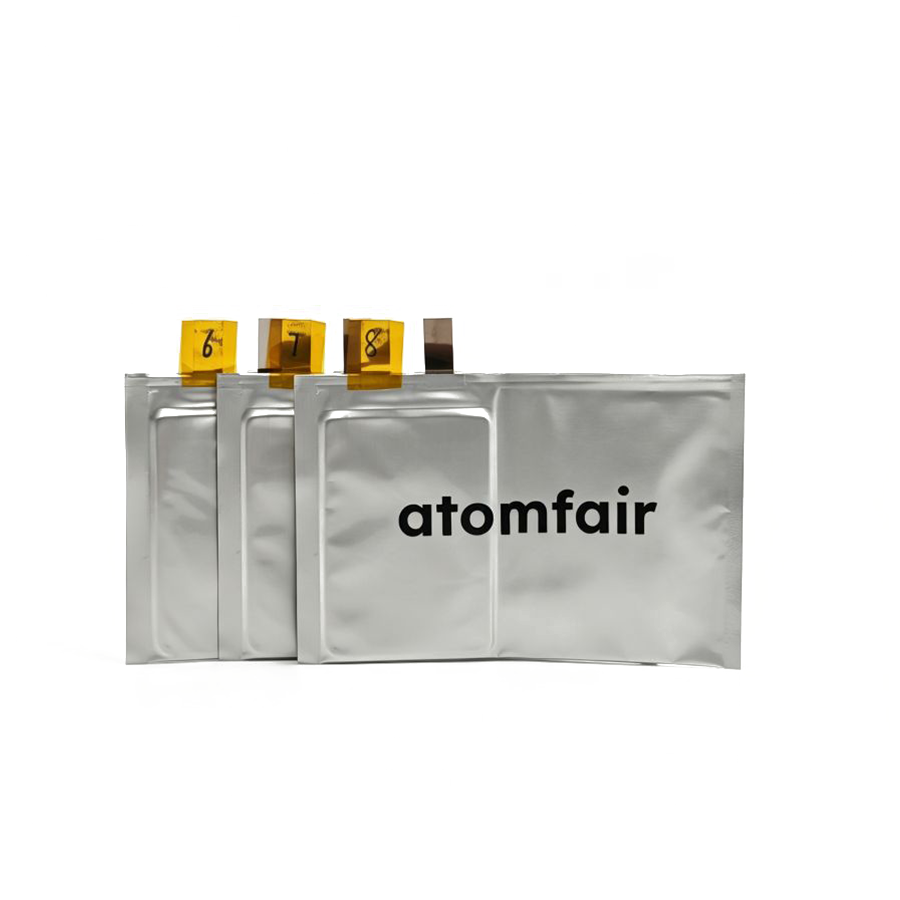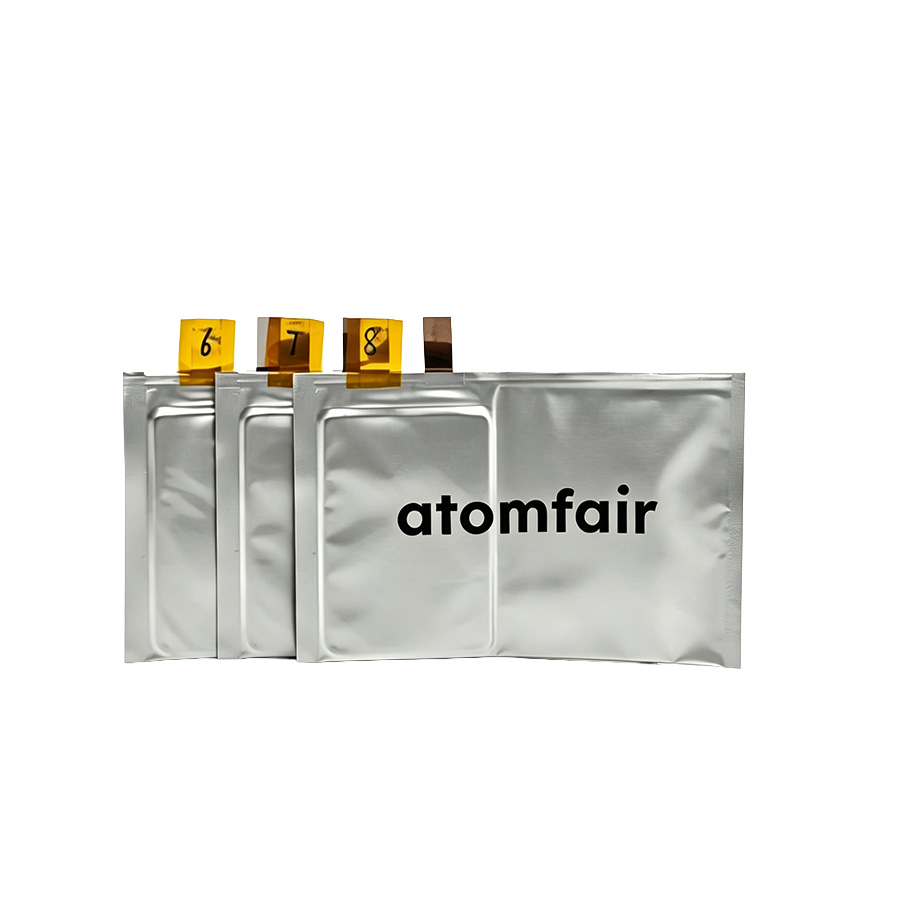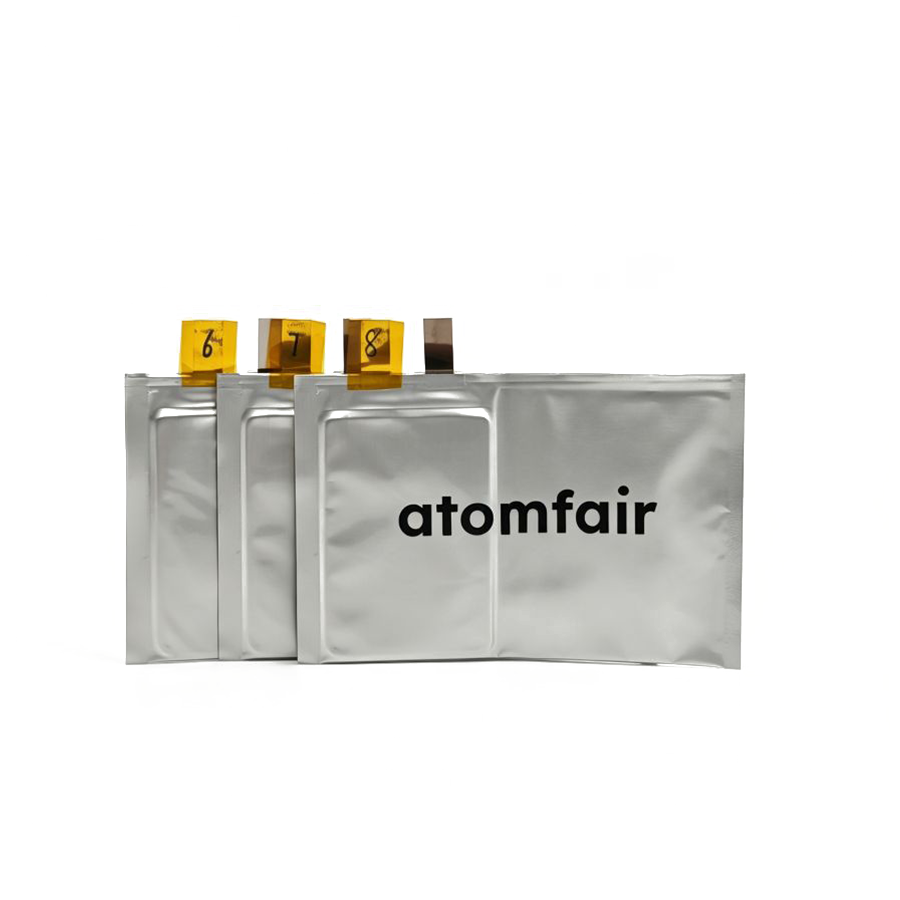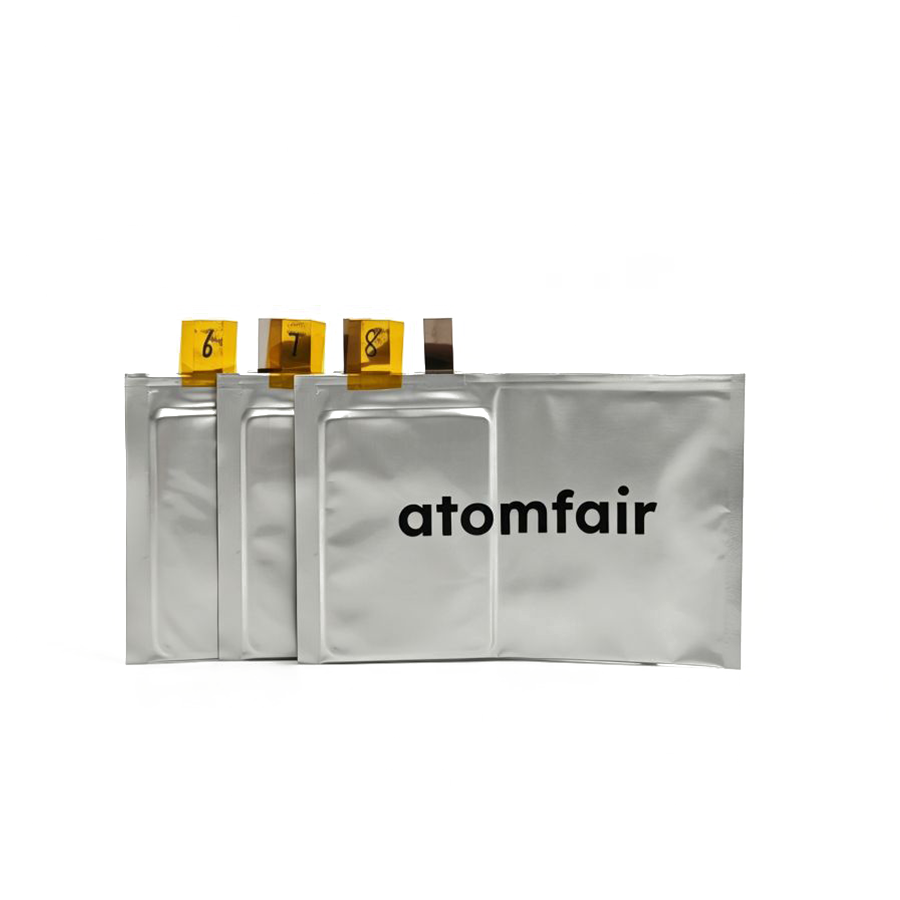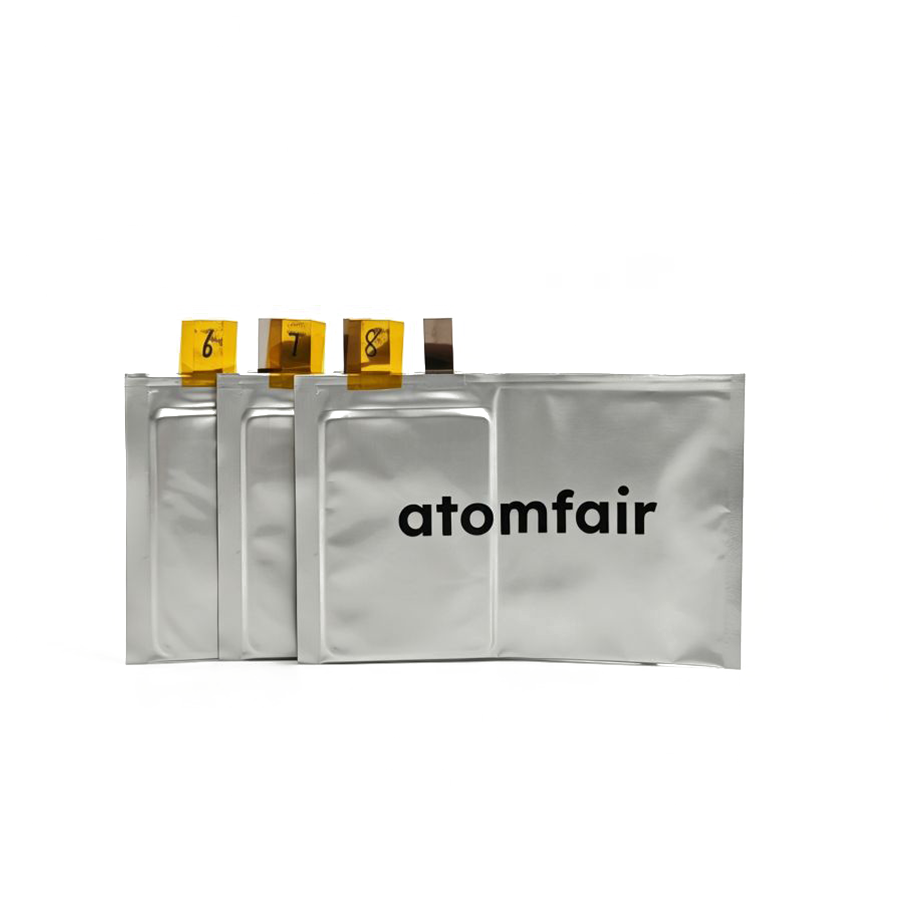
NCM811 Dry Pouch Cell (2.5Ah) – Li-Cu Composite Anode |
||||||||||||||||||||||||||||||||||||||||||||||||||||||||||||
|
||||||||||||||||||||||||||||||||||||||||||||||||||||||||||||
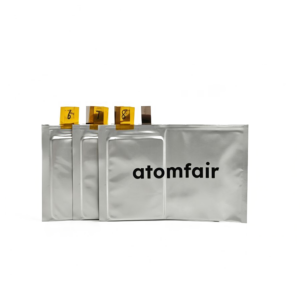
Store the uninfused dry pouch cell exclusively in an inert atmosphere glovebox with oxygen and moisture levels below 0.1 ppm to prevent lithium anode degradation. Maintain storage temperature between 15°C and 25°C and keep terminals insulated with non-conductive tape until electrolyte filling.
- Moisture Sensitivity: Store the dry pouch cell in an inert atmosphere glovebox with oxygen and moisture below 0.1 ppm to prevent lithium degradation.
- Short Circuit Prevention: Cover cell terminals with non-conductive tape until electrolyte filling and sealing to avoid accidental short circuits.
- Temperature Limits: Maintain storage temperature between 15°C and 25°C to minimize self-discharge and preserve electrode integrity.
- Electrolyte Compatibility: Use only electrolyte formulations compatible with NCM811 cathode and lithium metal anode within the 3.0–4.3 V operating window.
- Mechanical Integrity: Avoid bending, puncturing, or applying pressure to the pouch to prevent internal short circuits and delamination.
This dry pouch cell is delivered without electrolyte and requires inert-atmosphere filling and sealing before electrical testing. Follow these steps to activate the cell while preserving safety and electrode integrity.
Required Equipment: Argon-filled glovebox (<0.1 ppm O₂ and H₂O), Graduated syringe, Pouch heat sealer, Battery cycler
- Inspect Cell
Inspect the dry pouch cell for visible damage, pouch wrinkles, or terminal misalignment before any processing. - Transfer to Glovebox
Transfer the cell into an argon-filled glovebox with oxygen and moisture levels below 0.1 ppm. - Inject Electrolyte
Inject the pre-selected liquid electrolyte into the cell pouch using a clean graduated syringe. - Seal Pouch
Heat-seal the pouch opening with a pouch sealer set to the manufacturer's recommended temperature and dwell time. - Rest for Wetting
Allow the filled cell to rest for at least 12 hours to ensure complete electrolyte wetting of the electrodes and separator. - Condition Cell
Connect the cell to a battery cycler and perform an initial formation cycle within the 3.0–4.3 V window.
How does the Li-Cu composite anode in this 2.5 Ah NCM811 dry pouch cell improve test reliability over pure lithium foil anodes?
The 20+6+20 μm Li-Cu composite anode eliminates mechanical instability variables inherent to pure lithium foils, ensuring consistent electrochemical validation during high-voltage electrolyte and additive screening. By sandwiching a copper core between pristine lithium layers, the anode provides superior structural support while maintaining a 20 μm lithium interface on each side.
Can this NCM811 dry pouch cell be used with solid-state electrolytes or is it optimized only for liquid electrolytes?
This cell is assembled without liquid electrolyte infusion, making it a dry platform specifically designed for researchers to infuse their own liquid electrolyte formulations. The 3.0–4.3 V operating window and 9/10 multilayer stack are optimized for conventional liquid electrolyte validation, though the dry construction could accommodate gel-polymer or quasi-solid systems if the viscosity allows uniform wetting of the 12 μm PE + 2 μm Al2O3 separator.
What are the critical safety considerations when handling this Li-Cu composite anode dry pouch cell before electrolyte filling?
The dry pouch cell must be stored under inert atmosphere (e.g., argon) to prevent moisture contamination, which can degrade the lithium surfaces of the 20+6+20 μm composite anode. The copper substrate provides enhanced mechanical robustness over pure lithium, reducing the risk of tearing during handling, but standard lithium-metal safety protocols including use of non-conductive tools and avoiding short circuits are still mandatory.
This NCM811 dry pouch cell features a high-compaction cathode and a structurally reinforced Li-Cu composite anode, enabling reproducible benchmarking of high-voltage electrolyte and additive systems, but requires electrolyte filling and activation to reach target capacity.
Positive
- High-Compaction Cathode Density: 3.4 g/cc compaction density enhances volumetric energy density and structural integrity, supporting reliable high-voltage cycling.
- Li-Cu Composite Anode Stability: 20+6+20 μm substrate-supported sandwich eliminates deformation issues common with pure lithium foils, improving mechanical stability during screening.
Trade-offs
- Dry Cell Requires Electrolyte Filling: Cell is shipped without liquid electrolyte; users must perform electrolyte infusion under controlled conditions before operation.
- Activation Cycle Needed for Rated Capacity: Nominal 2.5 Ah capacity is a baseline target achieved only after formation cycles; initial performance may be lower.
Every advanced material, component, equipment, and instrument in our catalog is backed by rigorous testing. We maintain strict internal quality management frameworks and align with CE conformity metrics to deliver transparent, reproducible performance data via our public open-science repository.
To request raw batch performance data, submit formal vendor registration paperwork, or execute a fast-turnaround R&D manufacturing loop, contact us at inquiry@atomfair.com.
Item is dispatched under the Atomfair Shipping & Delivery Framework (Free worldwide shipping on orders over $59 USD excl. heavy equipment). Return is governed by the Atomfair Return & Refund Policy (7-day technical return window).