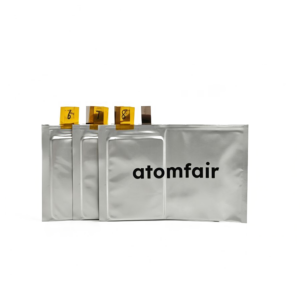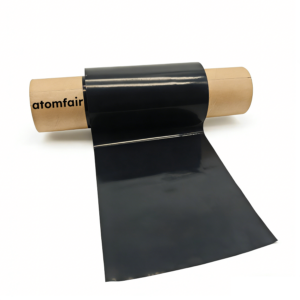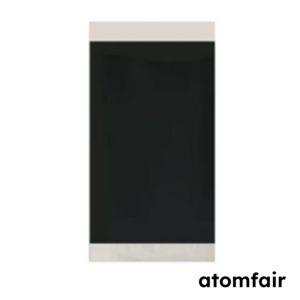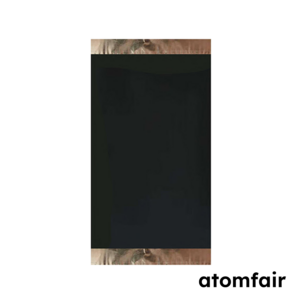
Description
ATOMFAIR® NCM811-D03 LITHIUM NICKEL COBALT MANGANESE OXIDE (NCM811) ELECTRODE SHEETRESEARCH GRADE MATERIAL
|
||||||||||||||||||||||||||||||||||||||||||||||
|
||||||||||||||||||||||||||||||||||||||||||||||
|
|||
|
TAILORED SOLUTIONS FOR RESEARCH
Contact our engineering team for technical support or official institutional quotations.
EMAIL: inquiry@atomfair.com
|
|||
|
Manufacturer: ATOMFAIR LLC
Brand: ATOMFAIR®
Disclaimer: Sold exclusively for laboratory research.
|
Store the electrode sheets in a dry, inert atmosphere to prevent moisture-induced degradation and capacity fade. Avoid exposure to high temperatures and physical damage to maintain electrochemical performance.
- Moisture Sensitivity: NCM811 cathode material is hygroscopic and requires storage below 0.1 ppm water to prevent lithium hydroxide formation.
- Electrical Short Prevention: Keep electrode sheets electrically isolated from conductive surfaces to avoid short circuits that could cause thermal runaway.
- Mechanical Integrity: Handle sheets with clean, non-abrasive tools to avoid delamination or cracking of the double-side coating.
- Chemical Compatibility: Use only electrolytes and solvents compatible with nickel-rich cathode materials to prevent transition metal dissolution.
These steps outline the safe handling and preparation of the double-side coated NCM811 electrode sheet for laboratory cell assembly. All procedures should be performed in an inert atmosphere to maintain material integrity.
Required Equipment: Argon-filled glovebox (H₂O and O₂ <0.1 ppm), Precision electrode cutter or punch, Vacuum oven with temperature control, Coin cell crimping press
- Inspect
Inspect the electrode sheet for visible defects such as pinholes, cracks, or debris before cutting. - Cut
Cut the electrode sheet to the desired disc size using a precision punch or cutter inside the glovebox. - Dry
Dry the cut electrode discs in a vacuum oven at 80°C for 12 hours to remove any adsorbed moisture. - Assemble
Transfer the dried discs to the glovebox and assemble into coin cells with electrolyte, separator, and lithium counter electrode.
How does the 61 mg/cm² areal loading and 96% active material ratio in this dry-process NCM811 electrode affect rate capability and cycle life trade-offs?
The high areal loading of 61 mg/cm² with 96% active material enables high energy density but may trade off rate capability at high C-rates due to increased tortuosity. The dry-process coating delivers superior structural integrity and uniform coating density, and the carbon-coated aluminum foil substrate minimizes interfacial contact resistance to partially offset this trade-off.
Which cell formats and electrolyte systems are compatible with this double-side-coated NCM811 cathode?
This electrode is designed for lithium-ion battery R&D and material evaluation, compatible with standard carbonate-based electrolytes and suitable for pouch or coin cell assembly after punching. The carbon-coated substrate ensures low interfacial resistance, and the 90×140 mm substrate size allows flexible customization for different cell formats.
What is the required handling and drying protocol before using these electrode sheets in a cell assembly?
The standard drying protocol mandates vacuum baking at 100°C for 12 hours to remove adsorbed moisture before cell assembly. Electrodes should be stored in a dry, inert atmosphere to prevent degradation, and the 12-hour drying step is critical for achieving the specified capacity of 200 mAh/g and minimizing side reactions.
The NCM811-D03 electrode sheet offers a 96% active material ratio and uniform dry-process coating at 61 mg/cm² for reliable Li-ion battery R&D, though it requires 12-hour vacuum baking at 100°C before use and its fixed 90×140 mm substrate may need cutting for non-standard cell formats.
Positive
- High active material ratio: 96.0% active material formulation maximizes electrochemical evaluation accuracy by minimizing diluent effects.
- Uniform dry-process coating: Advanced dry process delivers consistent 61 mg/cm² coating density with superior structural integrity for reproducible cell performance.
Trade-offs
- Mandatory vacuum drying protocol: Electrodes require 12-hour vacuum baking at 100°C prior to use, demanding appropriate oven infrastructure and extended preparation time.
- Fixed substrate dimensions: Standard 90×140 mm substrate size may require additional cutting or punching to fit non-standard cell formats, adding handling steps.
Every advanced material, component, equipment, and instrument in our catalog is backed by rigorous testing. We maintain strict internal quality management frameworks and align with CE conformity metrics to deliver transparent, reproducible performance data via our public open-science repository.
To request raw batch performance data, submit formal vendor registration paperwork, or execute a fast-turnaround R&D manufacturing loop, contact us at inquiry@atomfair.com.
Item is dispatched under the Atomfair Shipping & Delivery Framework (Free worldwide shipping on orders over $59 USD excl. heavy equipment). Return is governed by the Atomfair Return & Refund Policy (7-day technical return window).