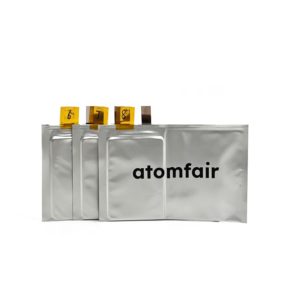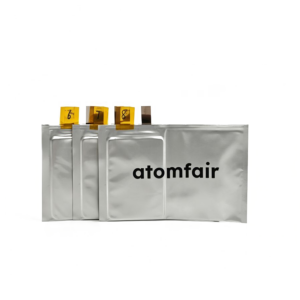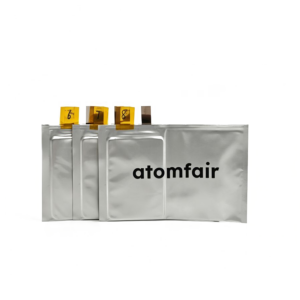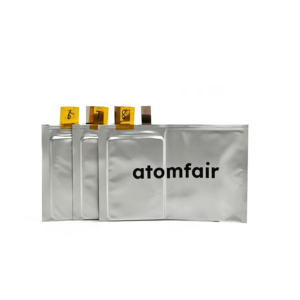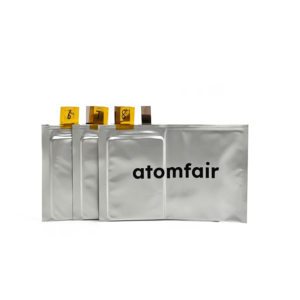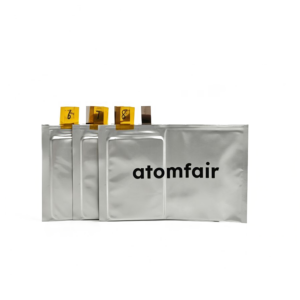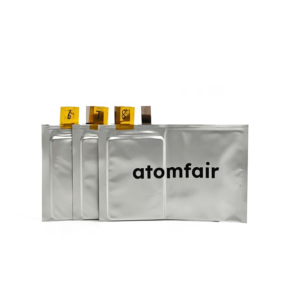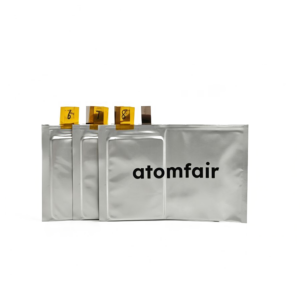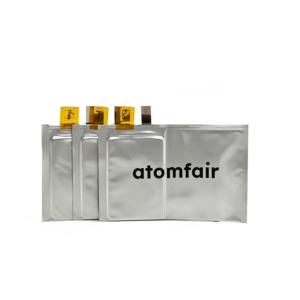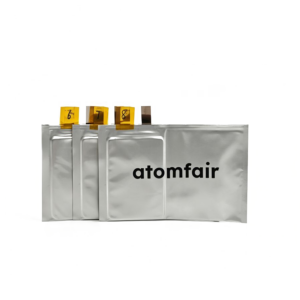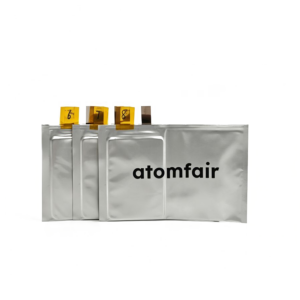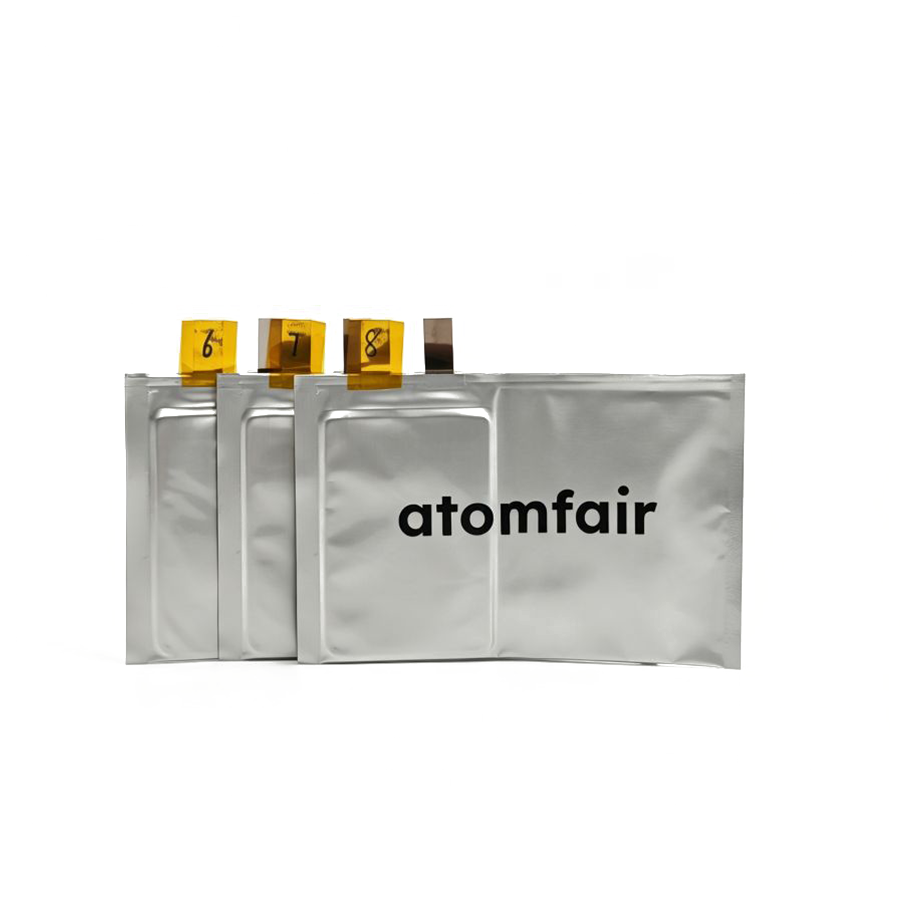
ATOMFAIR® 1AH NCM622 || SI/C DRY POUCH CELLLITHIUM-ION BATTERY | RESEARCH GRADE MATERIAL
|
|||||||||||||||||||||||||
|
|||||||||||||||||||||||||
|
TAILORED SOLUTIONS FOR RESEARCH
Contact our engineering team for technical support or official quotations.
EMAIL: inquiry@atomfair.com
|
|||||||||||||||||||||||||
|
Manufacturer: Atomfair LLC
Brand: ATOMFAIR®
|
|||||||||||||||||||||||||
This dry pouch cell requires controlled storage in an inert atmosphere to prevent moisture contamination of the silicon-carbon anode. Electrolyte filling and cell activation must be performed in a glovebox environment with strict oxygen and water vapor control.
- Storage Condition: Store the dry pouch cell in an argon-filled glovebox with oxygen and water levels maintained below 1 ppm.
- Moisture Sensitivity: Avoid exposing the cell to ambient air for more than a few seconds to prevent moisture uptake by the electrodes.
- Mechanical Handling: Use insulative gloves and non-metallic tweezers to handle the cell and prevent short circuits.
- Electrolyte Filling Protocol: Fill the cell with electrolyte only inside an inert atmosphere glovebox using anhydrous, battery-grade electrolyte.
- Seal Integrity: Inspect the pouch seal for pinholes or damage prior to electrolyte injection to avoid leakage.
This procedure describes the electrolyte filling, sealing, and formation cycling steps required to activate the dry pouch cell. All steps must be performed in an inert atmosphere glovebox with electrochemical testing equipment.
Required Equipment: Inert gas glovebox with oxygen and moisture sensors, Heat sealer with vacuum port, Graduated syringe with 18-gauge needle, Battery cycler or potentiostat
- Transfer into glovebox
Transfer the sealed dry pouch cell into the inert atmosphere glovebox through the antechamber without opening the primary packaging. - Prepare electrolyte
Measure and mix the electrolyte components inside the glovebox, ensuring they remain anhydrous and oxygen-free. - Fill cell with electrolyte
Inject a predetermined volume of electrolyte into the cell through the fill port using a clean syringe. - Seal the pouch
Seal the pouch under vacuum using a heat sealer to remove gas bubbles and ensure hermetic closure. - Rest and wetting period
Allow the filled cell to rest for at least 4 hours to ensure complete electrolyte wetting of the porous electrodes. - Connect and perform formation
Connect the cell to a battery cycler and perform formation cycles at a C/20 rate to stabilize the solid-electrolyte interphase.
What is the default N/P ratio for the 1Ah NCM622-Si/C dry pouch cell, and what performance trade-offs does it introduce?
The product description indicates that default design parameters include NP ratio, but specific values are not disclosed; researchers are directed to contact the manufacturer via inquiry@atomfair.com for detailed information. The NP ratio trades off between lithium plating safety and capacity utilization: a lower ratio increases capacity but raises plating risk, while a higher ratio improves safety at the cost of energy density.
What electrolyte formulations are recommended for use with this dry pouch cell core?
Electrolyte is explicitly not included with this dry core cell, as stated in the technical specifications. The product description does not recommend specific electrolyte formulations; researchers must select an appropriate electrolyte compatible with NCM622 cathodes and silicon-carbon anodes based on their experimental objectives. Contact Atomfair’s engineering team for application-specific guidance.
What are the storage and handling requirements for this dry pouch cell before electrolyte filling?
The product packaging instructs storage in a cool, dry environment to maintain optimal performance. As a dry core without electrolyte, the cell poses reduced chemical hazard compared to filled cells, but handling must minimize moisture exposure to preserve electrode integrity. The product description does not specify further infrastructure requirements for electrolyte filling.
This 1Ah NCM622-Si/C dry pouch cell is a research-grade platform for studying high-capacity silicon-carbon anodes with nickel-rich cathodes, but requires careful electrolyte filling and controlled storage to preserve its as-designed properties.
Positive
- High Energy Density from NCM622-Si/C Chemistry: The combination of NCM622 cathode and silicon-carbon anode provides exceptional energy storage, suitable for high-performance research applications.
- Dry Cell Enables Custom Electrolyte Optimization: Delivered without electrolyte, the dry format allows researchers to select and inject their own electrolyte formulation, facilitating systematic studies of electrolyte effects on Si/C anodes.
Trade-offs
- Requires Electrolyte Filling and Sealing: Delivered as a dry core without electrolyte; users must fill and seal the pouch cell under controlled conditions (e.g., dry room or glovebox) before electrochemical testing.
- Storage Conditions Critical for Performance: Manufacturer specifies storage in a cool, dry environment to prevent degradation of the dry electrode assembly; deviation can affect final cell performance.
Every advanced material, component, equipment, and instrument in our catalog is backed by rigorous testing. We maintain strict internal quality management frameworks and align with CE conformity metrics to deliver transparent, reproducible performance data via our public open-science repository.
To request raw batch performance data, submit formal vendor registration paperwork, or execute a fast-turnaround R&D manufacturing loop, contact us at inquiry@atomfair.com.
Item is dispatched under the Atomfair Shipping & Delivery Framework (Free worldwide shipping on orders over $59 USD excl. heavy equipment). Return is governed by the Atomfair Return & Refund Policy (7-day technical return window).