
Battery Instruments
ATOMFAIR Battery Instruments focuses on testing, measurement, diagnostics, metrology, and safety-validation tools used in battery research, sample verification, pilot evaluation, and quality control. This category is intended for users who need reliable data, repeatable test conditions, electrical diagnostics, liquid parameter checks, accurate weighing, controlled dosing, and safer evaluation of battery cells and related materials.
The category covers battery testers, OCV testers, internal resistance testers, short-circuit testers, safety test chambers, conductivity meters, analytical balances, precision scales, electrolyte dosing tools, environmental test instruments, and related instruments for battery performance evaluation and laboratory process control. Selection should be based on test parameter, range, accuracy, channel count, sample compatibility, data recording method, safety protection, and long-term repeatability.
For coin cells, pouch cells, cylindrical cells, prismatic cells, supercapacitors, and solid-state battery samples, Battery Instruments can support key tasks from material weighing, electrolyte dosing, and liquid conductivity checks to charge-discharge testing, OCV screening, internal resistance diagnosis, short-circuit validation, safety isolation, and environmental condition evaluation.
Show More Battery Instruments Selection Guide
I. BATTERY INSTRUMENTS BY TEST OBJECTIVE
| Test Objective | Suitable Instruments | Key Selection Parameters |
|---|---|---|
| Charge-discharge and cycle performance | Multi-channel battery testers, battery cycling systems | Voltage range, current range, channel count, accuracy, power per channel, software and data export |
| Cell screening and consistency checks | OCV testers, voltage testers, automated inspection systems | Testing speed, voltage accuracy, batch data recording, sorting logic |
| Internal resistance and electrical diagnosis | Internal resistance testers, voltage and IR testers | IR resolution, four-terminal measurement, test speed, fixture compatibility, supported cell formats |
| Short-circuit and insulation validation | Short-circuit testers, insulation testers, safety test chambers | Output voltage, insulation resistance range, leakage current detection, safety interlock, protective structure |
| Environmental and safety testing | Explosion-proof test chambers, low-temperature chambers, temperature-controlled test chambers | Chamber size, temperature range, protection design, exhaust path, observation window |
| Electrolyte and liquid measurement | Conductivity meters, electronic pipettes, digital dispensers, ceramic plunger pumps | Conductivity range, temperature compensation, dosing volume, dosing accuracy, corrosion resistance |
| Laboratory metrology | Analytical balances, precision electronic scales | Readability, capacity, stabilization time, calibration method, draft shield, data interface |
II. CORE PRODUCT SELECTION MATRIX
| Instrument Type | Best For | Selection Focus |
|---|---|---|
| Multi-channel battery tester | Cycle life, capacity, rate performance, Coulombic efficiency, and long-term battery testing | Choose current range by cell capacity, channel count by sample quantity, and software stability by test duration. |
| OCV tester | Fast cell screening, resting voltage comparison, and batch consistency checks | Compare voltage accuracy, testing speed, data export, fixture compatibility, and suitability for batch testing. |
| Internal resistance tester | Cell consistency evaluation, aging diagnosis, contact quality checks, and connection quality checks | Focus on mΩ or μΩ resolution, four-terminal structure, repeatability, and fixture contact stability. |
| Short-circuit tester | Safety validation, insulation inspection, failure-boundary testing, and protection design verification | Check output voltage, insulation resistance range, discharge protection, leakage current detection, and safety interlock. |
| Safety test chamber | High-risk cell testing, abuse testing, thermal runaway isolation, and protected battery evaluation | Review chamber size, explosion-resistant structure, exhaust design, observation window, temperature monitoring, and internal sample mounting. |
| Conductivity meter | Electrolyte, solution, or conductive liquid parameter checks | Compare conductivity range, accuracy, temperature compensation, probe material, and compatibility with non-aqueous systems. |
| Analytical balance | Weighing active materials, conductive additives, binders, electrolyte additives, and small samples | Check 0.1 mg or 1 mg readability, stabilization time, draft shield, calibration method, and anti-static performance. |
| Quantitative liquid handling tool | Coin cell, pouch cell sample, and electrolyte formulation experiments | Compare pipetting or dispensing volume, repeatability, wetted materials, cleaning convenience, and operating posture. |
III. INSTRUMENTS BY BATTERY SAMPLE TYPE
| Sample Type | Recommended Battery Instruments |
|---|---|
| Coin cells | Multi-channel battery tester, analytical balance, electronic pipette, digital dispenser, conductivity meter |
| Pouch cells | Battery tester, OCV tester, internal resistance tester, short-circuit tester, safety test chamber |
| Cylindrical cells | OCV tester, internal resistance tester, voltage and IR tester, safety test chamber |
| Prismatic cells | Battery tester, internal resistance tester, short-circuit tester, insulation test tool, safety test chamber |
| Solid-state battery samples | Battery tester, EIS-type instrument, conductivity meter, pressure-assisted test fixture, precision metrology tools |
| Supercapacitors | Battery tester, internal resistance tester, short-circuit tester, voltage test tool |
IV. TYPICAL USER SCENARIOS
| User Goal | Suggested Instrument Combination |
|---|---|
| Compare cycle performance of different cathode or anode materials | Multi-channel battery tester, analytical balance, electrolyte dosing tool, temperature-stable test environment |
| Screen a batch of cells for consistency | OCV tester, internal resistance tester, data recording system |
| Identify aging or failure trends | Battery tester, internal resistance tester, voltage and IR tester |
| Validate battery safety boundaries | Short-circuit tester, safety test chamber, temperature monitoring tool |
| Evaluate electrolyte formulation or liquid systems | Conductivity meter, analytical balance, electronic pipette, digital dispenser |
| Improve experimental repeatability | High-precision balance, quantitative dosing tool, stable fixture, data-exportable test instrument |
| Build small-batch R&D data records | Multi-channel tester, OCV and IR testing tools, safety test chamber, unified data management method |
V. PRODUCT-FOCUSED FAQ
1. I mainly test coin cells. Which instruments should I prioritize first?
Prioritize a multi-channel battery tester, analytical balance, and electronic pipette or digital dispenser. The tester determines the quality of cycling data, while the balance and dosing tool help keep sample preparation consistent. If many samples are tested at once, choose a system with enough channels, stable data export, and convenient program setup.
2. For screening a batch of cells, should I choose OCV testing or internal resistance testing first?
The best screening workflow uses both. OCV testing quickly compares resting voltage consistency, while internal resistance testing reveals more about cell condition, connection quality, and aging differences. If only one can be selected first, R&D screening often benefits from voltage plus internal resistance testing, while high-throughput batch sorting may prioritize OCV speed.
3. How should I choose the current range of a battery tester?
Select the current range according to cell capacity and target C-rate. Small coin cells need accurate low-current control, while pouch cells or small-format cells may require higher current output. Do not compare only the maximum current; also confirm low-current accuracy, stability, channel power, and long-duration data reliability.
4. Why is the fixture important when buying an internal resistance tester?
Internal resistance readings are highly affected by contact quality. Unstable contact, inconsistent pressure, or oxidized contact points can cause data drift. Before purchase, confirm whether the fixture fits coin cells, cylindrical cells, pouch cells, or prismatic cells, and check the four-terminal structure and repeat-test stability.
5. When should a short-circuit tester be used together with a safety test chamber?
Use them together when the test involves high voltage, forced short circuit, abnormal heating, swelling, venting, or possible thermal runaway. The short-circuit tester controls output and measurement, while the safety chamber provides physical isolation and risk containment.
6. For electrolyte work, should I buy a conductivity meter or a dosing tool?
Choose a conductivity meter if the goal is to evaluate liquid parameters. Choose an electronic pipette, digital dispenser, or ceramic plunger pump if the goal is to add the same electrolyte volume into each cell. Formulation work often needs both: one instrument checks liquid performance, and the other controls dosing consistency.
7. Should I choose a 0.1 mg or 1 mg analytical balance?
Use a 0.1 mg balance for micro-additives, electrolyte salts, conductive additives, or small-batch formulation work. A 1 mg balance is usually suitable for larger active material samples and general laboratory weighing. If formula ratio error strongly affects results, choose the higher readability and better stability.
8. If I already have a battery tester, do I still need OCV or internal resistance instruments?
For a few long-cycle research samples, a battery tester may be enough. For batch screening, aging comparison, fast abnormal-cell detection, or consistency grouping, OCV and internal resistance instruments improve efficiency and reduce the risk of placing unsuitable samples into long-duration tests.
Showing 1–16 of 19 results
-
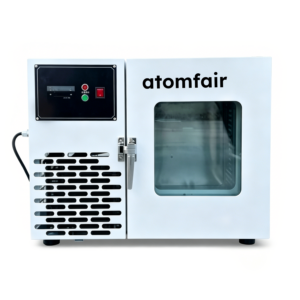
30L Low Temperature Freezing Test Chamber -50°C
$3,200.00 -
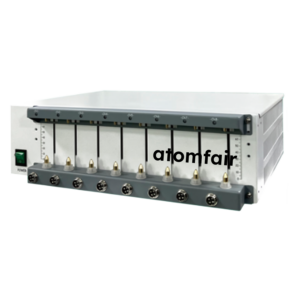
5V6A 8-Channel Battery Tester for Coin Cells ATOMFAIR®
Price range: $1,199.00 through $2,299.00 -
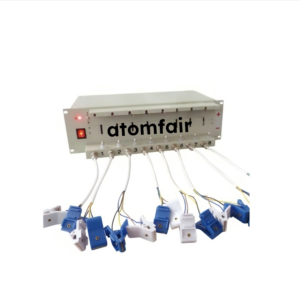
8-Channel Battery Tester 0-5V Customizable Current
$1,613.00 -
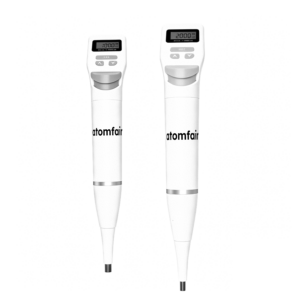
BD-10mL Digital Dispenser 10mL ±0.07% Accuracy ATOMFAIR®
$320.00 -
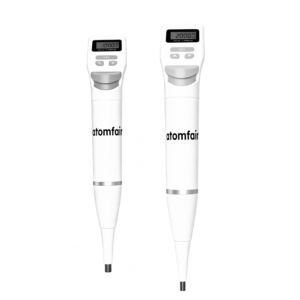
BD-200μL Digital Pipette 20-200μL ±0.8% Accuracy ATOMFAIR®
$320.00 -
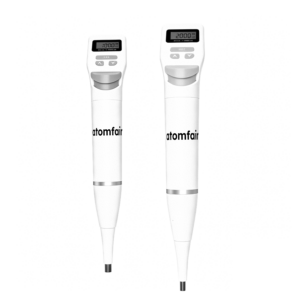
BD-50mL Digital Dispenser ±0.07% for Electrolyte ATOMFAIR®
$452.00 -
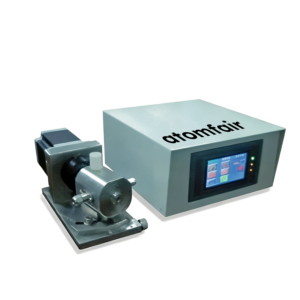
Ceramic Plunger Pump 0-10000μL Precision 0.5%
$7,670.00 -
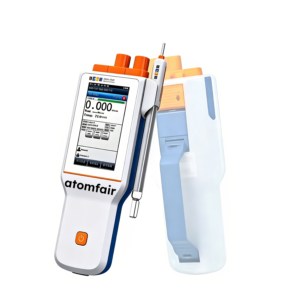
DDBJ-350F Handheld Conductivity Meter 4.3″ LCD ATOMFAIR®
$869.00 -
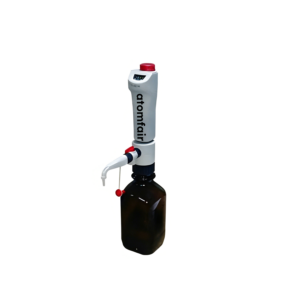
Digital Liquid Injector 10mL ±0.07% Li-Battery
$2,572.00 -
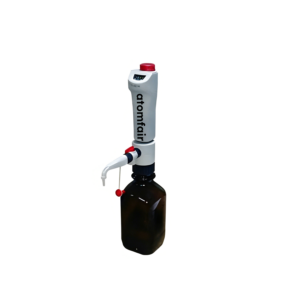
Digital Liquid Injector 50mL ±0.07% Battery Grade
$1,571.00 -
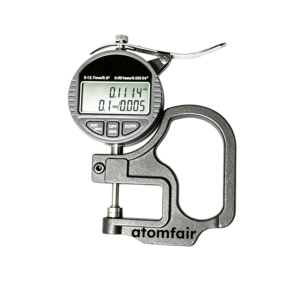
Digital Thickness Gauge 0.001mm Resolution 12.7mm ATOMFAIR®
$79.00 -
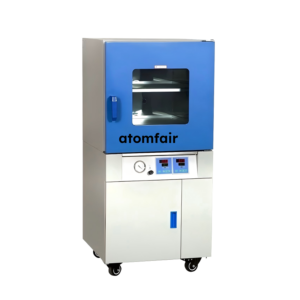
Double Chamber Vacuum Drying Oven DVO-724 PLC
$3,174.00 -
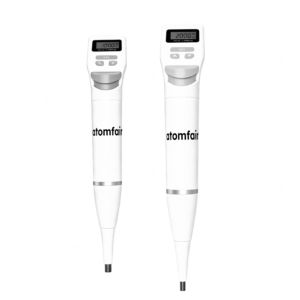
Electronic Pipette 20-200μL Autoclavable 5 Modes
$1,493.00 -

High Precision Electronic Balance 0.1mg OIML R76 ATOMFAIR®
$495.00 -

Precision Electronic Analytical Balance 110g/0.001g ATOMFAIR®
$272.00 -

Precision Electronic Analytical Balance 210g/1mg
$299.00