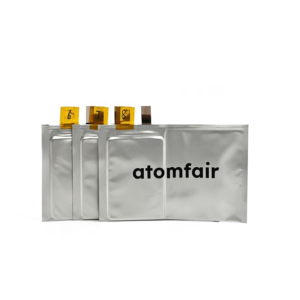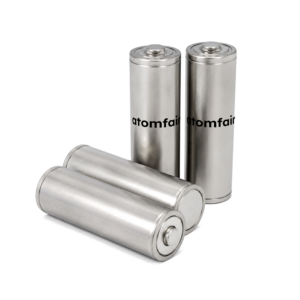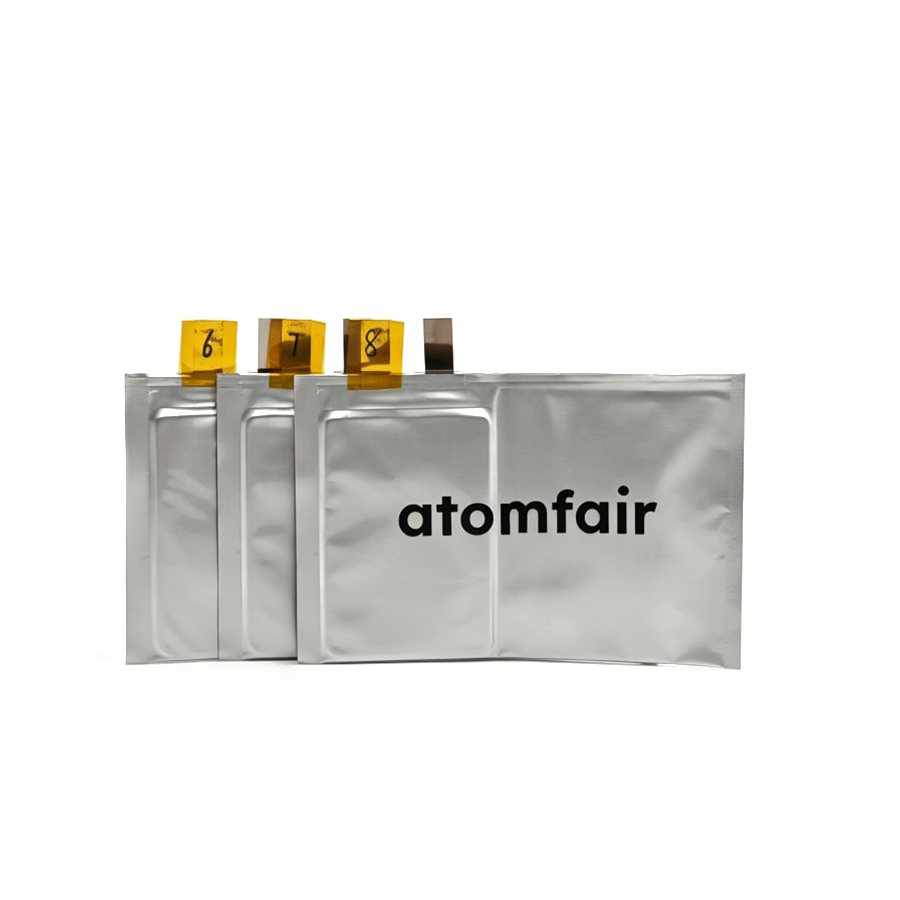
ATOMFAIR® BLADE BATTERY CELLADVANCED ENERGY SOLUTIONS
|
|||||||||||||||||||||||
|
|||||||||||||||||||||||
|
TAILORED ENERGY SOLUTIONS
Contact our engineering team for custom sizing or official price quotations.
EMAIL: inquiry@atomfair.com
|
|||||||||||||||||||||||
|
Manufacturer: Atomfair LLC
Brand: ATOMFAIR®
|
|||||||||||||||||||||||
Lithium-ion battery cells require strict thermal management to mitigate the risk of thermal runaway and fire. Storage must be in a cool, dry environment with controlled humidity to prevent internal degradation.
- Temperature Control: Maintain the cell within the manufacturer's specified temperature range to avoid capacity loss and safety hazards.
- Humidity Limit: Store in an environment with relative humidity below 60% to prevent corrosion of terminals and internal components.
- Conductive Material Isolation: Keep terminals covered or isolated from conductive materials to prevent accidental short circuits.
- Mechanical Integrity: Avoid physical impact or deformation of the cell casing to prevent internal short circuits.
- Chemical Containment: Ensure any leakage is contained immediately, as electrolyte is flammable and can cause skin irritation.
Follow these steps to safely handle, inspect, and store Blade Battery Cells to minimize electrical and chemical risks. Proper PPE and environmental controls are mandatory for all personnel.
Required Equipment: Insulated gloves, Safety goggles, Non-flammable storage container
- Personal protective equipment
Don insulated gloves and safety goggles before handling the cell to protect against electrical shock and chemical exposure. - Visual inspection
Inspect the cell for any signs of swelling, cracks, leakage, or damaged terminals prior to use or storage. - Terminal protection
Cover exposed terminals with insulating caps or tape to prevent accidental short circuits during transport or storage. - Storage placement
Place the cell upright in a cool, dry, non-flammable container away from direct sunlight, heat sources, and combustible materials.
How does the energy density of the 200Ah blade cell compare to the 50Ah variant, and what are the implications for system design?
The blade cell uses advanced lithium-ion chemistry and a compact form factor to deliver high energy density across all capacity options. Choosing a 200Ah cell maximizes total stored energy but requires larger physical dimensions and greater weight, whereas the 50Ah cell offers a lighter, more compact solution for space-constrained applications. Both variants share the same superior thermal management and structural integrity benefits.
What are the integration requirements for using the blade battery cell in an existing energy storage system (ESS)?
The blade cell's dimensions are customizable based on application needs, enabling adaptation to various ESS architectures. Its advanced lithium-ion chemistry and long cycle life support standard charge/discharge protocols, but physical mounting and electrical connections must be engineered for the blade form factor. The cell's enhanced thermal management facilitates integration into climate-controlled rack or cabinet configurations.
What safety and storage protocols must be followed when handling the blade battery cell?
Operators must use appropriate PPE and store cells in a cool, dry environment away from direct sunlight and moisture. The blade design's enhanced structural integrity and thermal management reduce risk during normal handling, but standard lithium-ion safety practices remain essential. Dispose of cells in accordance with local regulations.
The Atomfair Blade Battery Cell delivers high energy density in a compact form with enhanced structural integrity for thermal management, making it suitable for EVs and ESS. However, it demands cool, dry storage away from sunlight and moisture, plus appropriate PPE during handling, adding infrastructure and safety requirements.
Positive
- High Energy Density in Compact Form: Maximizes storage capacity within a streamlined, compact form factor, enabling higher performance in space-constrained applications such as electric vehicles and energy storage systems.
- Enhanced Structural Integrity: Innovative blade design improves thermal management and serves as a safety feature, contributing to overall cell robustness and long cycle life.
Trade-offs
- Environmental Storage Constraints: Must be stored in a cool, dry environment away from direct sunlight and moisture to maintain performance and safety, requiring dedicated climate-controlled storage infrastructure.
- Personal Protective Equipment Required: Handling requires appropriate PPE to mitigate risks associated with lithium-ion cells, adding operational complexity and cost for laboratory deployment.
Every advanced material, component, equipment, and instrument in our catalog is backed by rigorous testing. We maintain strict internal quality management frameworks and align with CE conformity metrics to deliver transparent, reproducible performance data via our public open-science repository.
To request raw batch performance data, submit formal vendor registration paperwork, or execute a fast-turnaround R&D manufacturing loop, contact us at inquiry@atomfair.com.
Item is dispatched under the Atomfair Shipping & Delivery Framework (Free worldwide shipping on orders over $59 USD excl. heavy equipment). Return is governed by the Atomfair Return & Refund Policy (7-day technical return window).