
Dry Pouch Cell
Dry pouch cells are unfilled pouch-cell platforms designed for battery R&D, electrolyte evaluation, and materials screening. Unlike finished pouch batteries, dry pouch cells are typically assembled with electrodes, separator, current collectors, tabs, and pouch packaging in place, while leaving electrolyte filling, soaking, sealing, degassing, and formation under controlled experimental design.
Atomfair Dry Pouch Cells focus on fully assembled, customized pouch-cell configurations rather than standalone raw materials or loose components. They can support liquid electrolyte, gel electrolyte, solid-state and hybrid electrolyte systems, high-voltage lithium-ion chemistries, sodium-ion platforms, lithium-metal cells, anode-free designs, and next-generation energy storage research.
For projects that require a more reproducible experimental baseline, dry pouch cells help reduce manual assembly variation and allow researchers to focus on electrolyte formulation, active materials, interfacial engineering, electrode loading, formation strategy, and pouch-cell architecture. Exact capacity, chemistry, delivery state, and process service should be confirmed by project.
Show More Dry Pouch Cell Customization & Selection Guide
Select by Research Objective
| Research Objective | Recommended Direction | Selection Notes |
|---|---|---|
| Electrolyte screening | NCM/graphite, LFP/graphite, LCO/graphite, or other baseline pouch formats | Keep capacity, loading, structure, separator, and formation protocol consistent so electrolyte formulation remains the main variable. |
| High-energy lithium-ion development | High-nickel NCM, NCA, Ni90, Si-C, silicon oxide, or lithium-metal systems | Confirm voltage window, anode excess, interfacial stability, electrolyte compatibility, and formation conditions. |
| Anode-free battery research | NCM, NCA, NFPP, NFM, or other anode-free pouch-cell structures | Pay close attention to current collector surface, first-cycle lithium inventory, stack pressure, and additive chemistry. |
| Sodium-ion battery development | NVP, NVPF, NFM, NFPP, Prussian Blue analogs, hard carbon, or sodium-metal systems | Match sodium salt, solvent system, separator, current collector, and operating voltage window to the target chemistry. |
| Solid-state or semi-solid research | Pouch structures compatible with oxide, sulfide, polymer, gel, or composite electrolytes | Confirm moisture control, interface layer, stack pressure, thermal processing, and sealing compatibility. |
| Scale-up validation | Multi-layer, high-capacity, or custom-footprint pouch cells | Define layer count, pouch dimensions, tab layout, target capacity, electrolyte plan, and delivery state. |
Customization Matrix
| Customization Area | Capability or Range | Engineering Notes |
|---|---|---|
| Cell scale and capacity | 10 mAh to 300 Ah | Supports ultra-low-capacity single-layer prototypes through large multi-layer pouch-cell architectures. |
| Manufacturing style | Wet-processed coating and dry-processed solvent-free coating | Suitable for high-loading electrodes, binder optimization, and solvent-sensitive matrix structures. |
| Pouch framework | Customized pouch formats only | Custom geometric footprint, aluminum laminate thickness, multi-layer stack design, multi-tab positioning, and internal dimensions can be specified. |
| Anode modalities | Graphite, Si-C, SiOx, tin, hard carbon, soft carbon, lithium metal, sodium metal, aluminum metal, and anode-free designs | Supports lithium-ion, sodium-ion, multivalent, lithium-metal, and high-energy anode research paths. |
| Cell stacking architecture | Z-folding, mono-stacking, or continuous winding | Architecture can be matched to capacity target, internal geometry, electrode dimensions, and tab layout. |
| Electrode engineering | Areal loading, compaction density, binder ratio, conductive additive ratio, and active-material blending | Helps build controlled electrochemical baselines for comparative testing and process validation. |
| Process options | Dry delivery, vacuum electrolyte filling, degas-resealing, and formation | Cells may be supplied as unfilled dry pouch cells for user-side formulation screening or completed with project-specific filling and formation steps. |
Compatible Materials and Components
Lithium-based cathode systems may include NCM111, NCM532, NCM622, NCM811, ultra-high-nickel NCM, LFP, LFMP, LCO, LMO, LMNO, LMR, LVP, LVPF, lithium-rich layered oxides, lithium sulfide conversion materials, and organic carbonyl-based materials.
Sodium-based cathode systems may include P2-type layered oxides, NFM, NFPP, NVP, NVPF, Prussian Blue analogs, tunnel-type manganese oxides, and selected sulfide or selenide systems. Anode directions may include natural graphite, synthetic graphite, Si-C, SiOx, LTO, tin, antimony, phosphorus-carbon composites, hard carbon, soft carbon, lithium metal, sodium metal, aluminum metal, and anode-free current collector structures.
Current collectors and separators can also be customized by project. Options may include copper foil, carbon-coated copper, nickel foil, stainless steel foil, aluminum foil, carbon-coated aluminum, corrosion-resistant alloy substrates, composite current collectors, PP, PE, PP/PE/PP separators, ceramic-coated separators, aramid-coated separators, PVDF/ceramic hybrid separators, and porous support matrices for solid or gel electrolyte integration.
Solid-State, Hybrid, and Next-Generation Systems
| System Type | Representative Compatibility | Key Design Considerations |
|---|---|---|
| Oxide solid electrolytes | LLZO, LLTO, LATP, and LAGP frameworks | Interface layer, stack pressure, electrode surface condition, and thermal process compatibility should be confirmed. |
| Sulfide solid electrolytes | Li₂S-P₂S₅ glass ceramics, Li₆PS₅Cl argyrodites, and thio-LISICON structures | Moisture sensitivity, pressure control, interfacial stability, and dry processing conditions are critical. |
| Polymer and gel electrolytes | PEO-based matrices, gel polymer electrolytes, and inorganic-organic hybrids | Thermal profile, wetting behavior, separator support, and mechanical stability should be matched to the cell design. |
| Specialty liquid and ionic systems | High-voltage formulations, low-gassing configurations, ionic liquids, LiFSI, LiTFSI, NaBOB, NaFSI, and alternative salts | Voltage stability, gas generation, current collector compatibility, salt purity, and formation protocol should be evaluated. |
| Beyond-lithium systems | Lithium-sulfur, lithium-air, aluminum-ion, calcium-ion, zinc-based aqueous or non-aqueous systems | These projects usually require custom review of electrode architecture, electrolyte reactivity, sealing design, and cell hardware compatibility. |
Specifications to Confirm Before Ordering
| Specification | Why It Matters |
|---|---|
| Cathode chemistry | Defines voltage range, electrolyte compatibility, capacity design, and safety boundary. |
| Anode chemistry | Graphite, Si-C, lithium metal, sodium metal, hard carbon, and anode-free structures each introduce different interfacial risks. |
| Capacity and layer count | Affects throughput, scale-up relevance, internal resistance, and thermal behavior. |
| Electrode loading and compaction | Directly affects energy density, rate performance, wetting difficulty, and cycling stability. |
| Separator and current collector | Influences voltage tolerance, corrosion resistance, contact resistance, interface compatibility, and safety behavior. |
| Delivery state | Clarify whether the cell should be delivered fully dry, filled, resealed after degassing, or formed. |
| Electrolyte plan | For user-side filling, confirm electrolyte chemistry, target fill amount, soaking time, and sealing method. |
| Formation protocol | Formation current, temperature, pressure, rest steps, and degassing sequence can strongly affect final cell behavior. |
FAQ
How should I choose the baseline dry pouch cell for electrolyte screening?
If the goal is to compare electrolyte formulations, choose a mature and reproducible baseline such as NCM/graphite, LFP/graphite, or LCO/graphite, then keep capacity, electrode loading, N/P ratio, separator, and formation protocol consistent. For high-voltage stability, fast charging, or low-temperature work, select a cell chemistry that matches the target voltage window and rate conditions.
Can dry pouch cells replace coin cells for early electrolyte screening?
They should not fully replace coin cells. Coin cells are useful for low-cost, high-throughput initial screening, while dry pouch cells are better suited after candidate formulations have been narrowed down and the study needs to evaluate wetting, gas generation, electrode-scale effects, stack structure, interfacial stability, and formation behavior closer to practical cell formats.
How should electrolyte fill amount be determined for user-side filling?
Fill amount is typically determined from electrode porosity, separator porosity, target E/C ratio, cell capacity, electrode area, and whether excess electrolyte is intentionally required. For comparative experiments, fix either the absolute fill amount or the E/C ratio so electrolyte quantity does not mask formulation effects.
Should dry pouch cells be re-dried or baked after receipt?
This depends on delivery state, packaging condition, material system, and the moisture-control requirements of the experiment. Lithium metal, sodium metal, sulfide solid electrolytes, and high-voltage systems are especially sensitive to residual moisture and transfer exposure time, so recommended drying, storage, and opening procedures should be confirmed before use.
Can I use a standard finished-cell formation protocol for dry pouch cells?
Usually not without adjustment. Formation should be designed around cathode chemistry, anode type, N/P ratio, additive package, electrolyte wetting speed, voltage window, pressure condition, and whether degassing is required. Si-C, lithium-metal, anode-free, and sodium-ion systems are especially sensitive to first-cycle current, rest time, temperature, and pressure.
How can batch variation be reduced in electrolyte experiments?
Use cells from the same batch with the same structure, capacity, electrode parameters, separator, and current collector. Standardize electrolyte fill amount, soaking time, sealing method, formation protocol, test temperature, and pressure condition. Include a baseline electrolyte control group and enough replicate cells to separate formulation effects from cell-to-cell variation.
What matters most when testing anode-free dry pouch cells?
Anode-free systems are highly sensitive to electrolyte chemistry, current collector surface, stack pressure, first-cycle coulombic efficiency, and lithium deposition morphology. Experimental design should tightly control fill amount, formation pressure, first-cycle current density, rest time, and temperature, and early failure should not be attributed to a single material variable without proper controls.
How is sodium-ion dry pouch cell design different from lithium-ion design?
Sodium-ion systems require separate consideration of sodium salts, solvent chemistry, hard-carbon pore structure, first-cycle irreversible capacity, current collector compatibility, and cathode voltage window. Lithium-ion electrolyte recipes, formation protocols, and cutoff voltages should not be transferred directly without validation.
What parameters must be confirmed for solid-state or semi-solid pouch-cell studies?
Confirm electrolyte type, interface layer, separator or support scaffold, compaction pressure, thermal treatment, moisture sensitivity, electrode surface roughness, tab layout, and pouch sealing compatibility. Sulfide, oxide, polymer, and gel systems have very different process windows, so the cell structure often needs to be designed specifically for the selected electrolyte family.
How can I tell whether gas generation comes from the electrolyte or the cell structure?
Use a baseline electrolyte control group with cells from the same batch, identical fill amount, soaking time, sealing method, and formation protocol. If only one formulation shows swelling or impedance rise, the cause is more likely electrolyte decomposition, additive side reactions, or unstable interfaces. If the whole batch behaves abnormally, also examine moisture exposure, sealing quality, residual solvent, electrode condition, and formation parameters.
Showing 49–58 of 58 results
-
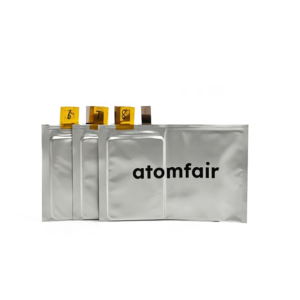
Ni90 Carbon Coated Copper 20Ah Dry Pouch Cell ATOMFAIR®
$79.00 -
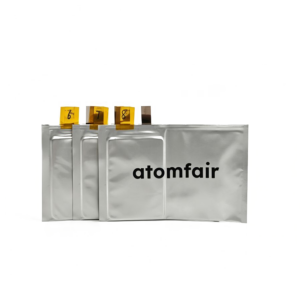
Ni90 Carbon-Coated Cu Dry Pouch Cell 1Ah – ATOMFAIR®
$70.00 -
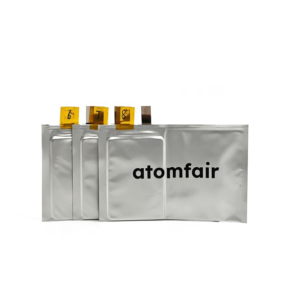
Ni90 Silicon-Carbon 1350 Dry Pouch Cell 1Ah ATOMFAIR®
$99.00 -
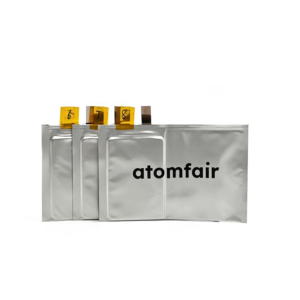
Ni90 Silicon-Carbon 5Ah Dry Pouch Cell for Labs ATOMFAIR®
$119.00 -
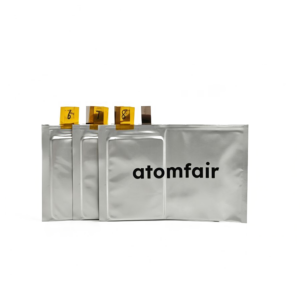
Ni90 Silicon-Carbon 7.6Ah Dry Pouch Cell ATOMFAIR® Research
$109.00 -
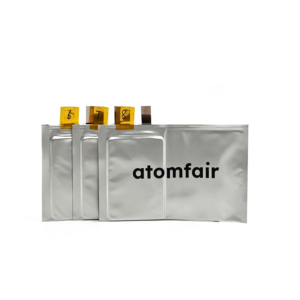
NVP Carbon Coated Al 1Ah 14-Layer Dry Pouch Cell ATOMFAIR®
$199.95 -
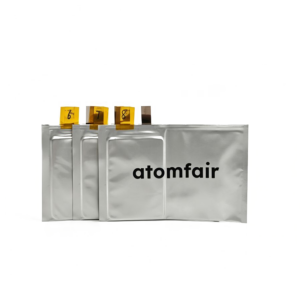
NVP Carbon Coated Aluminum 2Ah 30-Layer Dry Pouch ATOMFAIR®
$699.00 -
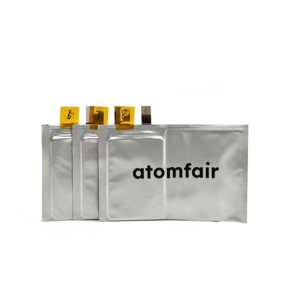
NVP Carbon-Coated Aluminum 1Ah Dry Pouch Cell ATOMFAIR®
$89.00 -
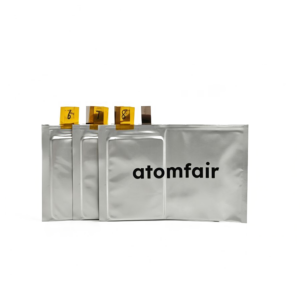
NVP Hard Carbon 1Ah Dry Pouch Cell Research Grade ATOMFAIR®
$70.00 -
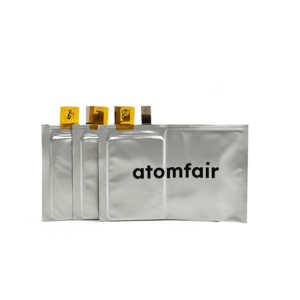
NVP Hard Carbon Dry Pouch Cell 0.2Ah Research Grade ATOMFAIR®
$70.00