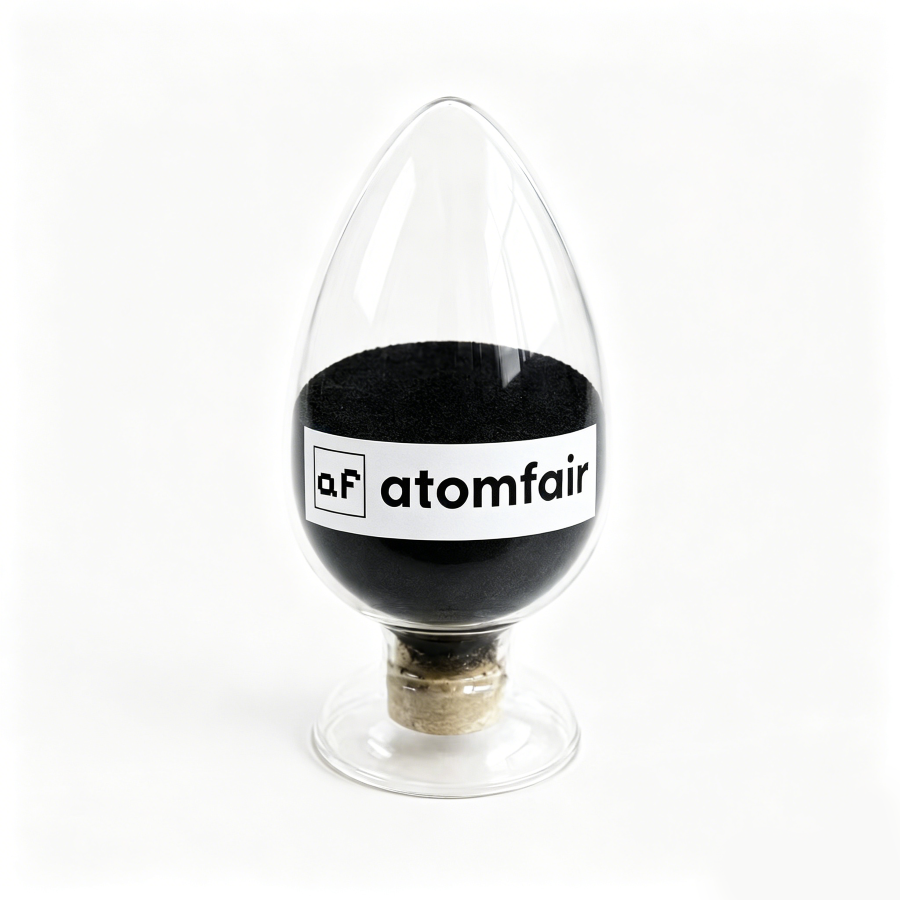
ATOMFAIR® 103 MAH/G NFPP SODIUM IRON PYROPHOSPHATE POWDERRESEARCH GRADE MATERIAL
|
|||||||||||||||||||||||||||||||||||||||||||||||||
|
|||||||||||||||||||||||||||||||||||||||||||||||||
|
TAILORED SOLUTIONS FOR RESEARCH
Contact our engineering team for technical support or official institutional quotations.
EMAIL: INQUIRY@ATOMFAIR.COM
|
|||||||||||||||||||||||||||||||||||||||||||||||||
|
Manufacturer: ATOMFAIR LLC
Brand: ATOMFAIR®
|
|||||||||||||||||||||||||||||||||||||||||||||||||
This sodium iron pyrophosphate powder is sensitive to moisture and oxygen exposure, which can degrade its electrochemical performance. Storage in an inert atmosphere (argon or nitrogen) within a glovebox is recommended to preserve material integrity.
- Moisture Sensitivity: Minimize exposure to ambient air to avoid hydration and oxidation of the powder.
- Temperature Stability: Store at room temperature (20–25 °C) to prevent phase changes or unwanted reactions.
What initial coulombic efficiency does this NFPP powder achieve, and how does the first-cycle loss impact cell design?
The 0.1C initial coulombic efficiency is typically 87.95%, with a charge capacity of 117.1 mAh/g and discharge capacity of 103.0 mAh/g. The 12% first-cycle irreversible capacity must be compensated by pre-sodiation of the anode or by using excess cathode loading in full-cell designs.
What is the maximum operating voltage for this NFPP cathode material to avoid structural degradation?
The specified operating platform is 1.5–3.8V vs Na+/Na, with an average discharge voltage of 3.1 V. Charging beyond 3.8V risks irreversible phase transitions in the orthorhombic Pn21a crystal structure, leading to capacity fade and reduced cycle life.
What storage and handling conditions are required to maintain the moisture content of this NFPP powder below specification?
To stay within the ≤600 mg/kg moisture limit (typical 368 mg/kg), the powder must be stored in an airtight container in a dry atmosphere, ideally an argon-filled glovebox or a dry room with <0.1 ppm water vapor. Exposure to ambient air increases moisture content and can degrade electrochemical performance.
This research-grade NFPP powder delivers a consistent 103 mAh/g discharge capacity with low magnetic impurities and high compaction density for electrode calendering, though its moisture sensitivity and alkaline pH demand controlled processing environments.
Positive
- Low magnetic impurity content: Magnetic impurities ≤0.6 mg/kg (typical 0.14 mg/kg) minimize self-discharge and safety risks during cell assembly, supporting consistent baseline testing.
- High compaction density for calendering: Powder compaction density of 2.10±0.10 g/cm³ under 3T and an electrode calendering reference of 2.30–2.50 g/cm³ enable dense electrode coatings with improved volumetric energy density.
Trade-offs
- Moisture content requires dry handling: Moisture content limit ≤600 mg/kg (typical 368 mg/kg) necessitates processing in dry-room or glovebox environments to avoid capacity fade or gas evolution.
- Alkaline pH may affect slurry formulation: Matrix pH of 9.50±1.0 requires compatible binders and solvents; alkaline conditions can cause gelation or corrosion if not properly managed during electrode coating.
Every advanced material, component, equipment, and instrument in our catalog is backed by rigorous testing. We maintain strict internal quality management frameworks and align with CE conformity metrics to deliver transparent, reproducible performance data via our public open-science repository.
To request raw batch performance data, submit formal vendor registration paperwork, or execute a fast-turnaround R&D manufacturing loop, contact us at inquiry@atomfair.com.
Item is dispatched under the Atomfair Shipping & Delivery Framework (Free worldwide shipping on orders over $59 USD excl. heavy equipment). Return is governed by the Atomfair Return & Refund Policy (7-day technical return window).