
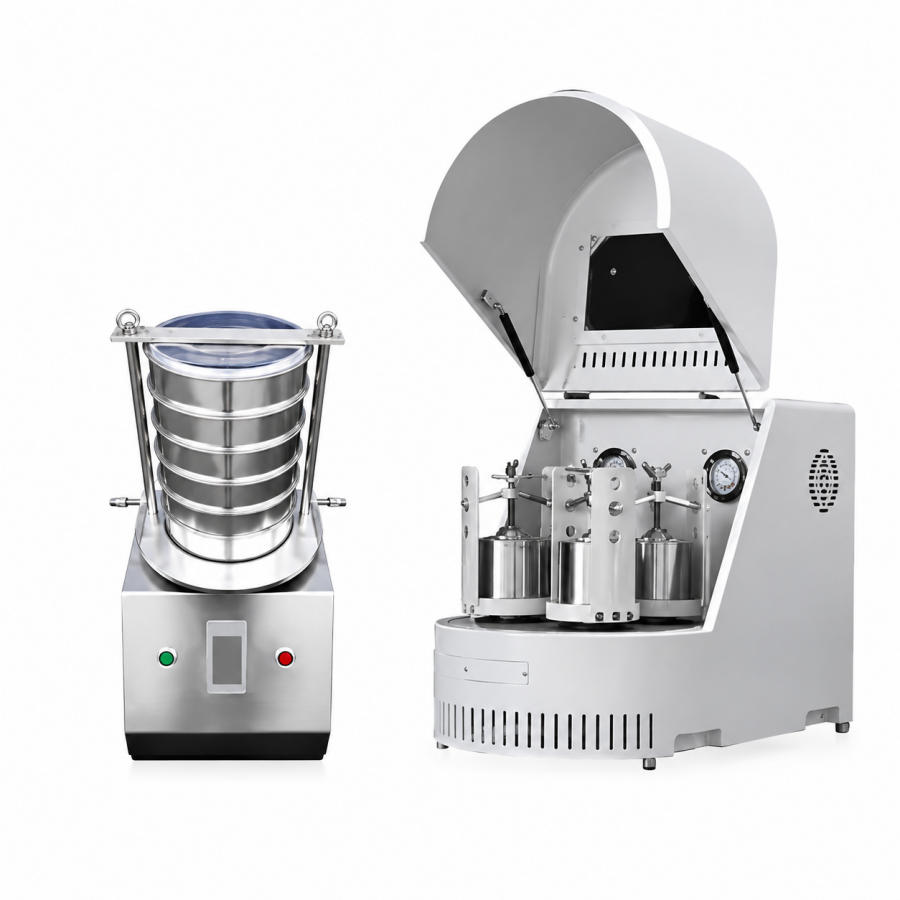
Description
PBM-16A SEMI-CIRCULAR PLANETARY BALL MILL 3KW SOIL GRINDER 16LLABORATORY GRADE EQUIPMENT
|
|||||||||||||||||||||||||||||||||||||||||||||||||||||||||||||||||||||||||||||||||||||||||||||||||||||||||||||||||||||||||||||||||||||||||||||||||||
|
|||||||||||||||||||||||||||||||||||||||||||||||||||||||||||||||||||||||||||||||||||||||||||||||||||||||||||||||||||||||||||||||||||||||||||||||||||
|
TAILORED SOLUTIONS FOR RESEARCH
Contact our engineering team for technical support or official quotations.
EMAIL: inquiry@atomfair.com
|
|||||||||||||||||||||||||||||||||||||||||||||||||||||||||||||||||||||||||||||||||||||||||||||||||||||||||||||||||||||||||||||||||||||||||||||||||||
|
Manufacturer: Atomfair LLC
Brand: ATOMFAIR®
|
The PBM-16A is a powered mechanical mill with rotating masses and electrical hazard potential requiring controlled installation and operation. Grinding jars and balls must be ordered separately and selected for material compatibility to avoid cross-contamination.
- Electrical and Mechanical Safety: The 3KW motor and variable frequency controller require a stable 220V AC supply and must be operated within the specified 48-hour continuous full-load limit to prevent overheating.
- Jar and Media Compatibility: Grinding jar sealing pressure must be adjusted via the graduated scale to prevent leakage or jar failure during high-energy planetary operation.
- Material Cross-Contamination Risk: Select jar and ball materials (e.g., WC-Co, Al₂O₃, Agate, YSZ, SS, PU, Ceramic, Nylon) that are chemically inert to the sample to avoid introducing contaminants into soil heavy metal analysis.
- Feed Particle Size Constraint: Feed particle size must not exceed 10 mm for soil samples or 3 mm for other materials to prevent jamming or damage to the grinding mechanism.
This procedure covers initial setup, jar loading, and operation of the PBM-16A for ultrafine soil grinding. Always consult the user manual for detailed maintenance and troubleshooting before first use.
Required Equipment: PBM-16A main grinding unit, Grinding jars (4 L, ordered separately), Grinding balls (40% jar capacity, ordered separately), Electric screener with sieve set (included)
- Inspect and Prepare Jars
Inspect each grinding jar for cracks or damage, then fill to approximately 40% capacity with grinding balls and add the soil sample, leaving adequate headspace for grinding action. - Seal Jars with Graduated Scale
Seal each jar using the graduated scale to apply consistent, adjustable sealing pressure, ensuring no leakage during high-speed planetary rotation. - Load Jars into Mill
Load two or four jars symmetrically into the jar holders on the turntable, securing them firmly to prevent imbalance during operation. - Set Grinding Parameters
Set the revolution speed (35–335 r/min), rotation speed (70–670 r/min), and forward-reverse commutation cycle using the variable frequency controller with power display. - Start Grinding Cycle
Start the grinding cycle and monitor the power display and timer, allowing continuous operation up to 48 hours at full load for maximum throughput. - Stop and Unload Jars
Stop the mill after the programmed cycle completes, allow the jars to cool if necessary, then carefully unload and open them to retrieve the ground sample. - Screen Ground Sample
Transfer the ground sample to the electric screener fitted with the appropriate mesh sieves (20–200 mesh) and run at 1400 rpm vibration frequency to achieve the desired particle size fraction.
What is the performance trade-off between jar capacity and achievable particle fineness for the PBM-16A planetary ball mill?
The PBM-16A uses 4 L jars and achieves output particle sizes as fine as 0.1 μm from soil feed ≤10 mm, but the maximum jar rotation speed is limited to 510 r/min. This represents a trade-off where larger jar volume (16 L total across 4 jars) reduces rotational speed compared to smaller jar models, balancing higher throughput with sufficient impact energy for sub-micron grinding.
Which jar material is recommended for soil heavy metal analysis to avoid cross-contamination?
For trace heavy metal analysis in soil, agate (natural SiO2) jars are recommended because they are explicitly listed as 'zero-metal analysis' jars. The standard configuration includes jars ordered separately, with materials including WC-Co, Al2O3, YSZ, stainless steel, PU, ceramic, and nylon; the YSZ variation introduces zirconia, which may interfere with trace metal analysis.
What electrical and installation infrastructure is needed to support 48-hour continuous operation of the PBM-16A?
The PBM-16A requires a 220V AC power supply and a 3KW motor with variable frequency controller. For 48-hour continuous operation at full load, a dedicated circuit rated for 3KW is recommended. The unit weighs 205 kg and measures 950×600×710 mm, requiring a stable, ventilated benchtop or floor area.
The PBM-16A semi-circular planetary ball mill integrates a 3 kW drive with a 16 L capacity and an electric screener for soil heavy metal analysis, delivering ultrafine grinding down to 0.1 μm from ≤10 mm feed. Its 48-hour continuous operation and adjustable jar sealing pressure support dry, wet, and vacuum modes, but the 205 kg weight and separate jar/ball procurement are practical deployment constraints.
Positive
- Ultrafine output down to 0.1 μm: Achieves sub-micron particle refinement from soil feed ≤10 mm, critical for heavy metal analysis requiring high surface area and homogeneity.
- 48-hour continuous full-load operation: Industrial-grade 3 kW motor with variable frequency controller and automatic forward-reverse commutation enables uninterrupted long-duration grinding for high-throughput sample processing.
Trade-offs
- Heavy unit at 205 kg net weight: The 205 kg mass requires robust benchtop or floor support and may complicate relocation or installation in space-constrained labs.
- Grinding jars and balls ordered separately: Jars and balls are not included in the standard configuration, requiring additional procurement and material compatibility selection to avoid cross-contamination.
Every advanced material, component, equipment, and instrument in our catalog is backed by rigorous testing. We maintain strict internal quality management frameworks and align with CE conformity metrics to deliver transparent, reproducible performance data via our public open-science repository.
To request raw batch performance data, submit formal vendor registration paperwork, or execute a fast-turnaround R&D manufacturing loop, contact us at inquiry@atomfair.com.
Item is dispatched under the Atomfair Shipping & Delivery Framework (Free worldwide shipping on orders over $59 USD). Return is governed by the Atomfair Return & Refund Policy (7-day technical return window).
