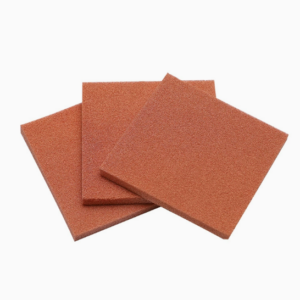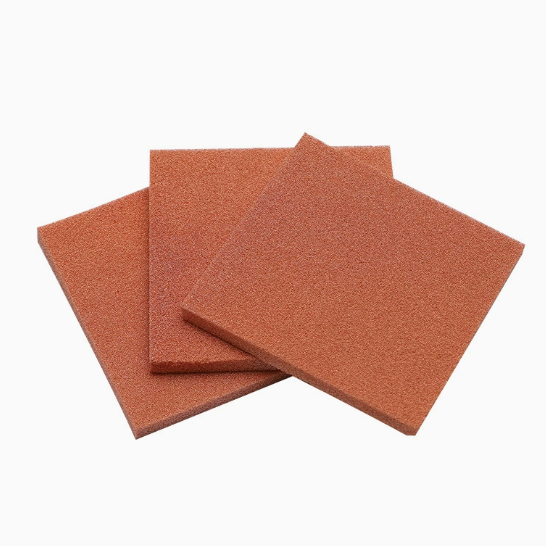
COPPER FOAM 90PPI 60% POROSITY SOUND ABSORPTION HONEYCOMB ELECTRODEADVANCED POROUS METAL MATERIAL
|
|||||||||||||||||||||||||||||||
|
|||||||||||||||||||||||||||||||
|
TAILORED SOLUTIONS FOR RESEARCH
Contact our engineering team for technical support or official quotations.
EMAIL: inquiry@atomfair.com
|
|||||||||||||||||||||||||||||||
|
Manufacturer: Atomfair LLC
Brand: ATOMFAIR®
|
How does the 60% porosity and 90 PPI structure of this copper foam balance its thermal and electrical conductivity for dual-use applications?
The product description highlights excellent thermal conductivity for heat dissipation and superior electrical conductivity for electrode materials. The 60% porosity with 90 PPI and ≥98% through-hole rate ensures a continuous copper network, supporting both functions. The areal density of 0.42 g/cm³ and bulk density range of 0.1–0.8 g/cm³ indicate a highly porous structure that still maintains conductivity. However, specific quantitative trade-off data is not provided.
Can this copper foam be used directly as a catalyst carrier in photocatalytic air purification without additional surface modification?
The description notes that copper foam has achieved good application as a carrier for photocatalytic air purification. It does not specify whether surface modification is needed. The large specific surface area of the foam makes it suitable, but for specific integration requirements, contact the manufacturer.
What storage or handling conditions are recommended for this copper foam to maintain its structural integrity and performance?
The product description does not provide specific storage or handling instructions. The through-hole rate of ≥98% and open-cell structure may make it susceptible to contamination. The manufacturer offers customization and technical support, so users should contact the engineering team for recommended handling and storage conditions.
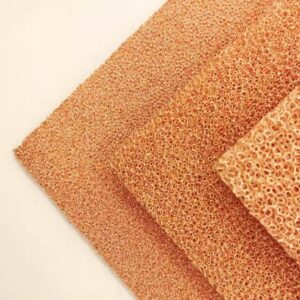
Copper foam (90 PPI, 60% porosity, 0.42 g/cm³ areal density, 2 mm thickness) is evaluated for its high electrical conductivity suitable for electrode materials in nickel-zinc batteries and electric double-layer capacitors, as well as its excellent thermal conductivity for heat dissipation and flame isolation. The ≥98% through-hole rate supports sound absorption, EMI shielding, and filtration, though the slight closed-cell fraction may marginally affect precision filtration applications.
Positive
- Superior electrical conductivity for electrodes: Copper foam exhibits superior electrical conductivity, making it suitable as a skeletal electrode material for nickel-zinc batteries and electric double-layer capacitors, with broad prospects in electrolytic recovery applications.
- High thermal conductivity for heat dissipation: Excellent thermal conductivity enables effective heat conduction and dissipation in motors, electronics, and fire-fighting equipment, particularly for flame isolation in high-end applications.
Trade-offs
- Slight closed-cell fraction limits precision filtration: The through-hole rate is ≥98%, meaning up to 2% of pores may be closed, which can reduce effective surface area and filtration efficiency in applications requiring maximum open porosity.
Every advanced material, component, equipment, and instrument in our catalog is backed by rigorous testing. We maintain strict internal quality management frameworks and align with CE conformity metrics to deliver transparent, reproducible performance data via our public open-science repository.
To request raw batch performance data, submit formal vendor registration paperwork, or execute a fast-turnaround R&D manufacturing loop, contact us at inquiry@atomfair.com.
Item is dispatched under the Atomfair Shipping & Delivery Framework (Free worldwide shipping on orders over $59 USD excl. heavy equipment). Return is governed by the Atomfair Return & Refund Policy (7-day technical return window).