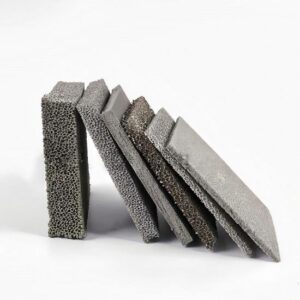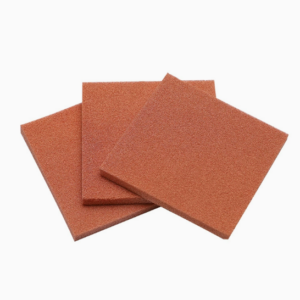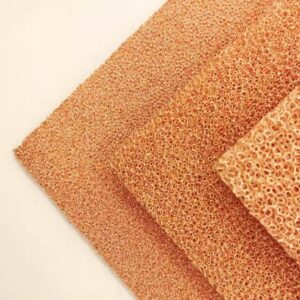
3D Graphene Foam (Nickel Substrate) – Product Specification
1. Product Overview
2. Core Features
3. Technical Parameters
4. Standard Sizes
5. Application Fields
If you’re interested, have any questions, or have specific customization requirements, please feel free to contact us at inquiry@atomfair.com.
How does the ultra-high porosity of the 3D graphene foam affect its mechanical strength for structural applications?
The foam maintains excellent mechanical processability despite its ultra-high porosity. The 3D interconnected graphene network, formed by seamless bonding of graphene sheets, provides structural integrity, enabling easy cutting, stamping, and bending without compromising the foam's shape or performance.
For thermal management, how does the 3D graphene foam's thermal conductivity compare to traditional copper or aluminum heat sinks?
The 3D graphene foam exhibits superior thermal conductivity to traditional copper and aluminum heat dissipation materials. The product specification states that its efficient heat transfer performance is explicitly better than conventional metal-based thermal management solutions, making it an ideal cooling material for high-heat-density electronics.
Can the 3D graphene foam be machined into custom shapes without damaging its graphene network?
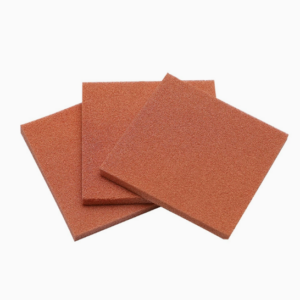
Yes, the foam is lightweight and designed for easy machining, including cutting, stamping, and bending. The graphene sheets are bonded seamlessly into a fully integrated 3D network, so standard mechanical processing does not cause delamination or structural damage, preserving electrical and thermal continuity.
The 3D graphene foam on nickel substrate provides a seamless 3D network with high electrical and thermal conductivity, but the retained nickel may introduce metal contamination in sensitive electrochemical systems, and the 2–10 layer graphene thickness introduces batch variability.
Positive
- Seamless 3D conductive network: The CVD-fabricated graphene foam forms a fully interconnected 3D network with seamless bonding, enabling exceptional charge transfer and high electrical conductivity ideal for electrodes in supercapacitors and batteries.
- High thermal conductivity and light weight: The foam exhibits thermal conductivity superior to copper and aluminum while maintaining ultra-low density, making it a mechanically processable thermal management material for electronic cooling and heat exchangers.
Trade-offs
- Nickel substrate remains in product: The nickel template substrate is not removed after CVD growth, so the final foam contains nickel metal, which may leach into electrolytes or interfere with applications requiring metal-free carbon electrodes.
- Variable graphene layer count: The specification indicates a 2–10 layer range per batch, creating inherent variability in electrical, thermal, and mechanical properties that may affect reproducibility in sensitive sensor or device applications.
Every advanced material, component, equipment, and instrument in our catalog is backed by rigorous testing. We maintain strict internal quality management frameworks and align with CE conformity metrics to deliver transparent, reproducible performance data via our public open-science repository.
To request raw batch performance data, submit formal vendor registration paperwork, or execute a fast-turnaround R&D manufacturing loop, contact us at inquiry@atomfair.com.
Item is dispatched under the Atomfair Shipping & Delivery Framework (Free worldwide shipping on orders over $59 USD excl. heavy equipment). Return is governed by the Atomfair Return & Refund Policy (7-day technical return window).