Core Product Parameters
Key Performance Features
Applicable Application Fields
How does the area density of copper foam influence its thermal conductivity and weight for heat dissipation applications?
The copper foam's area density ranges from 280 g/m² to 4800 g/m². Higher area densities increase copper mass, enhancing thermal conductivity for efficient heat dissipation but also raising weight. This trade-off allows designers to select the optimal balance for motor and electrical appliance heat sinks.
What dimensional customization options are available for integrating copper foam into electrode assemblies for supercapacitors and nickel-zinc batteries?
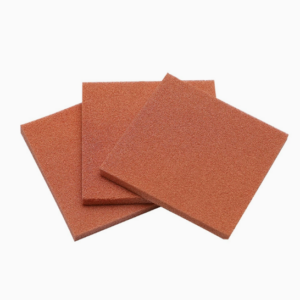
The copper foam is available in standard dimensions such as 100mm×100mm×0.15mm and can be customized up to 500mm×1000mm with thickness from 0.1mm to 35mm. Cutting methods include wire cutting and laser cutting for special-shaped part processing, enabling tailored integration into electrode designs for supercapacitors and nickel-zinc batteries.
What cutting methods are recommended for copper foam to maintain its structural integrity during integration into filter or shielding assemblies?
Copper foam can be cut by wire cutting or laser cutting to produce precise shapes without damaging its three-dimensional network structure. Special-shaped part processing is also available. These methods ensure the foam maintains its mechanical toughness and open-cell architecture required for medical filtration and electromagnetic shielding applications.
This copper foam product offers high purity (≥99.9%), high porosity (75-98%), and an open cell rate ≥97%, making it suitable for applications in battery electrodes, catalyst carriers, thermal management, and electromagnetic shielding. However, the maximum dimension of 500mm×1000mm and the need for specialized cutting methods may require careful planning for large-scale or custom-shaped deployments.
Positive
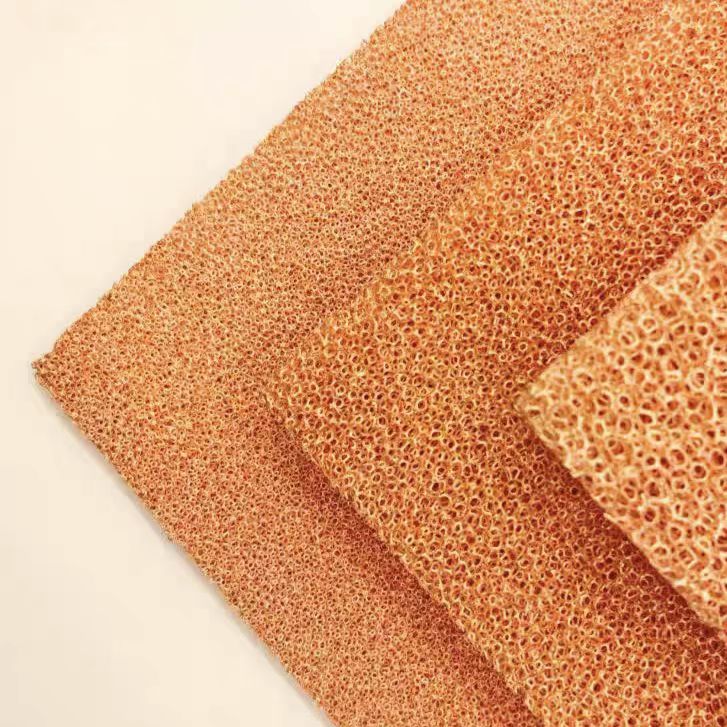
- High conductivity and porous structure: Excellent thermal and electrical conductivity combined with a three-dimensional interconnected network, high porosity (75-98%), and open cell rate ≥97% enable efficient heat transfer and reliable electrode support.
- EM shielding and mechanical toughness: Electromagnetic shielding performance comparable to silver, along with good mechanical toughness, allows adaptation to diverse working conditions and shielding requirements.
Trade-offs
- Maximum dimension constraint: The maximum available dimension is 500mm×1000mm×H, which may limit use in applications requiring larger continuous sheets without custom fabrication.
- Specialized cutting required: Wire cutting, laser cutting, or special-shaped processing is needed for dimensioning, adding complexity and potential cost for non-standard shapes.
Every advanced material, component, equipment, and instrument in our catalog is backed by rigorous testing. We maintain strict internal quality management frameworks and align with CE conformity metrics to deliver transparent, reproducible performance data via our public open-science repository.
To request raw batch performance data, submit formal vendor registration paperwork, or execute a fast-turnaround R&D manufacturing loop, contact us at inquiry@atomfair.com.
Item is dispatched under the Atomfair Shipping & Delivery Framework (Free worldwide shipping on orders over $59 USD excl. heavy equipment). Return is governed by the Atomfair Return & Refund Policy (7-day technical return window).