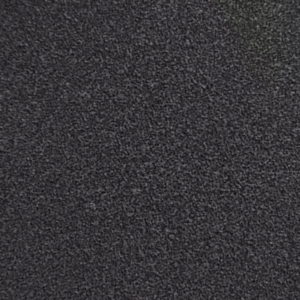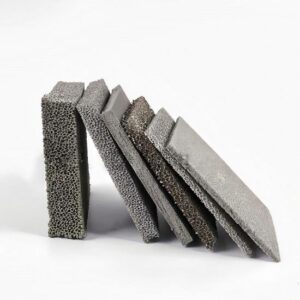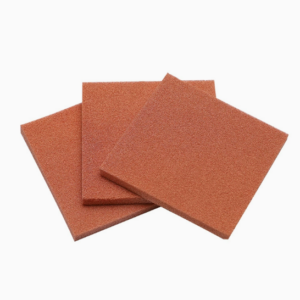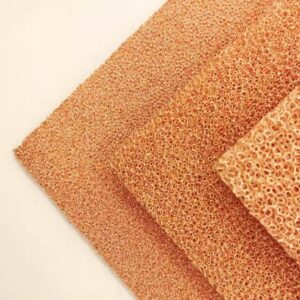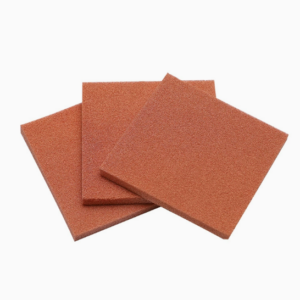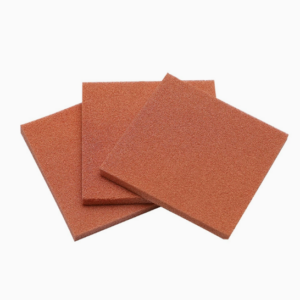
Foam Stainless Steel Filter Plate
1. Basic Technical Parameters
2. Standard Dimension Specifications
3. Product Overview
4. Core Performance Features
If you’re interested, have any questions, or have specific customization requirements, please feel free to contact us at inquiry@atomfair.com.
How does the porosity range of 20–50% influence the trade-off between filtration precision and flow rate for this foam stainless steel filter plate?
The filter plate balances filtration precision (0.5–100 μm) and permeability (3–1300 m³/(m²·h·kPa)) through its controlled porosity of 20–50%. The stable pore structure effectively removes suspended solids and particles while maintaining high porosity and low initial resistance, enabling large flow rates without particle shedding or secondary contamination.
Can this 316L stainless steel foam filter plate be used in applications involving strong acids like nitric or sulfuric acid, and what are the temperature constraints?
Yes, the plate exhibits strong corrosion resistance in complex media including nitric acid, sulfuric acid, acetic acid, oxalic acid, phosphoric acid, and 5% hydrochloric acid. It operates normally below 500°C with excellent thermal shock resistance, making it suitable for high-temperature aggressive chemical environments.
What processing and packaging methods are recommended to maintain the integrity of the foam stainless steel filter plate during installation and long-term storage?
The plate can be cut by wire, laser, or gas cutting per customer drawings, and it supports welding, bonding, and mechanical processing due to its high mechanical strength and rigidity. Packaging options include vacuum, carton, or wooden case, and the plate is easy to install without additional framework support.
This sintered 316L stainless steel filter plate offers customizable filtration precision (0.5–100 µm) and high porosity (20–50%) with excellent thermal and corrosion resistance, making it suitable for demanding filtration applications in pharmaceutical, petrochemical, and water treatment industries. However, its operational temperature is limited to 500°C and most sizes are made to order, requiring advance specification.
Positive
- High Temperature and Corrosion Resistance: Sintered 316L stainless steel filter plate operates normally below 500°C with excellent thermal shock resistance and resists a wide range of acidic and alkaline media, ensuring stable performance under harsh chemical and thermal conditions.
- Customizable Filtration Performance: Filtration precision from 0.5 μm to 100 μm and porosity 20-50% allow tailoring to specific particle retention needs, while high permeability (3-1300 m³/(m²·h·kPa)) enables large flow rates with low pressure drop.
Trade-offs
- Upper Temperature Limit of 500°C: The filter plate's operational temperature ceiling of 500°C restricts use in higher-temperature processes; exceeding this may compromise structural integrity and filtration performance.
- Custom Dimension Lead Time: Standard dimensions are limited; many sizes require custom fabrication per customer drawings, which may extend delivery schedules and necessitate precise specification upfront.
Every advanced material, component, equipment, and instrument in our catalog is backed by rigorous testing. We maintain strict internal quality management frameworks and align with CE conformity metrics to deliver transparent, reproducible performance data via our public open-science repository.
To request raw batch performance data, submit formal vendor registration paperwork, or execute a fast-turnaround R&D manufacturing loop, contact us at inquiry@atomfair.com.
Item is dispatched under the Atomfair Shipping & Delivery Framework (Free worldwide shipping on orders over $59 USD excl. heavy equipment). Return is governed by the Atomfair Return & Refund Policy (7-day technical return window).