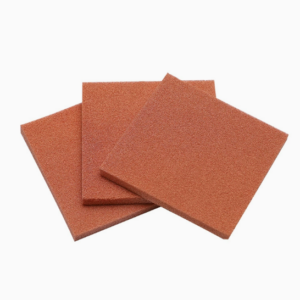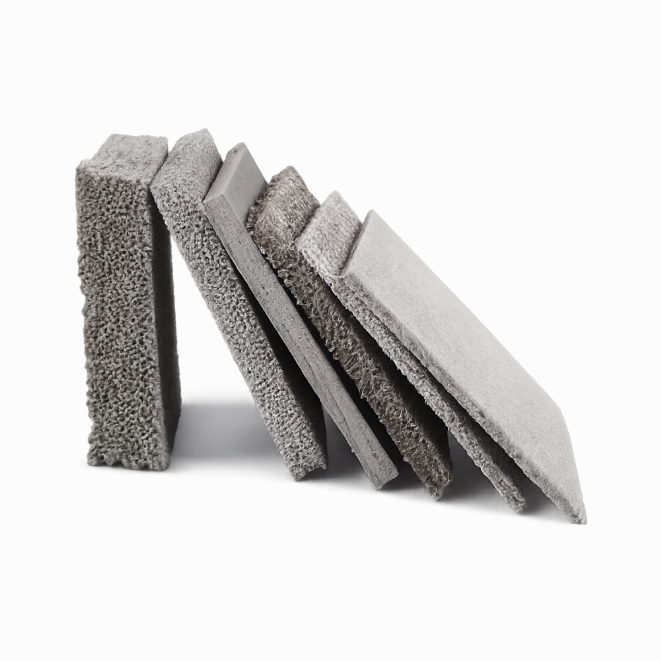
NICKEL FOAM 100PPI 75-80% POROSITY WATERPROOF ACID ALKALI 1100°C FILTERADVANCED POROUS METAL MATERIAL
|
|||||||||||||||||||||||||||||||
|
|||||||||||||||||||||||||||||||
|
TAILORED SOLUTIONS FOR RESEARCH
Contact our engineering team for technical support or official quotations.
EMAIL: inquiry@atomfair.com
|
|||||||||||||||||||||||||||||||
|
Manufacturer: Atomfair LLC
Brand: ATOMFAIR®
|
How does the 75-80% porosity of this nickel foam affect the trade-off between mechanical strength and fluid flow rate in filtration applications?
The 75-80% porosity provides a balance between structural integrity and permeability. With a bulk density of 0.1-0.8 g/cm³ and ≥98% through-hole rate, the foam maintains good metal strength while enabling low pressure drop and high flow rates, making it suitable for filter materials that require both durability and efficient fluid transport.
Can this nickel foam be integrated directly as a battery electrode current collector without additional surface treatments?
Yes, the foam's high through-hole rate (≥98%) and large specific surface area make it directly usable as a battery electrode material. It is waterproof and resistant to acid and alkali, compatible with common electrolytes. However, the 100 PPI pore density and 75-80% porosity may require optimization of active material loading for specific electrochemical performance.
What handling and storage precautions are needed to preserve the structural integrity of this nickel foam?
The nickel foam is fireproof, waterproof, and resistant to high temperatures (up to 1100°C) and acid/alkali environments. It can be welded, sheared, pressed thin, and coiled without residue. Due to its high porosity (75-80%) and lightweight nature, avoid excessive compressive forces during handling and storage to prevent permanent deformation. No special humidity control is required given its waterproof properties.
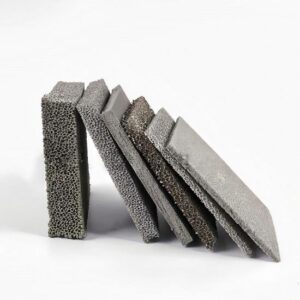
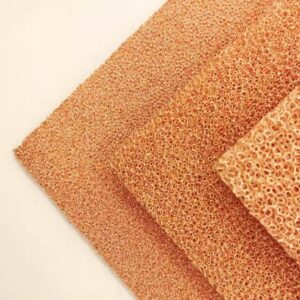
This 100PPI nickel foam (75-80% porosity, ≥98% through-hole rate) offers a rigid, acid/alkali-resistant porous substrate suitable for battery electrodes, high-temperature filtration, and catalysis, though the specified porosity range is notably lower than typical >90% foams, which may increase pressure drop in flow-through applications.
Positive
- High through-hole rate for low pressure drop: ≥98% through-hole rate ensures nearly fully permeable structure, enabling high flow rates and low pressure drop when used as a filter or catalyst support material.
- Large specific surface area for catalytic applications: The three-dimensional porous structure provides larger specific surface area compared to other porous materials at the same through-hole rate, enhancing catalytic and electrode reaction kinetics.
Trade-offs
- Limited porosity range constrains permeability: Stated porosity of 75–80% is lower than the >95% claimed in product characteristics; buyers must verify actual porosity for applications requiring maximum flow or minimal backpressure, as lower porosity increases resistance.
Every advanced material, component, equipment, and instrument in our catalog is backed by rigorous testing. We maintain strict internal quality management frameworks and align with CE conformity metrics to deliver transparent, reproducible performance data via our public open-science repository.
To request raw batch performance data, submit formal vendor registration paperwork, or execute a fast-turnaround R&D manufacturing loop, contact us at inquiry@atomfair.com.
Item is dispatched under the Atomfair Shipping & Delivery Framework (Free worldwide shipping on orders over $59 USD excl. heavy equipment). Return is governed by the Atomfair Return & Refund Policy (7-day technical return window).