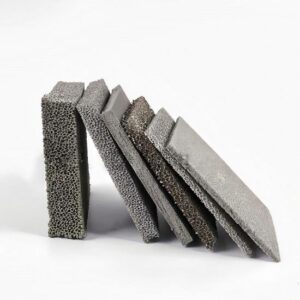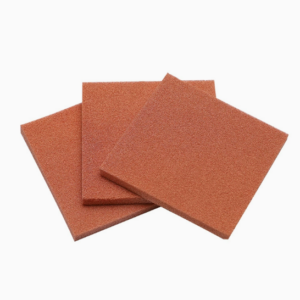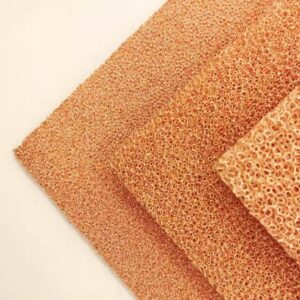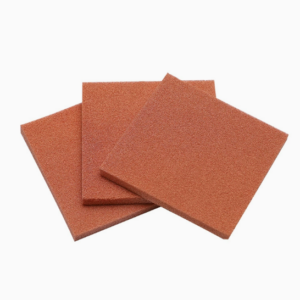
Nickel-Cobalt Foam Product Specification
1. Basic Technical Parameters
Standard Dimension Specifications
2. Core Features
3. Main Application Fields
If you’re interested, have any questions, or have specific customization requirements, please feel free to contact us at inquiry@atomfair.com.
How does the porosity (95-98%) and open pore rate (>98%) of the nickel-cobalt foam affect its performance in filtration and catalyst support applications?
The high porosity and open pore rate provide superior air permeability and ultra-high specific surface area, which are beneficial for filtration and catalyst support. The source states that the uniform pore structure ensures stable gas and fluid flow, and the high specific surface area outperforms other porous materials under the same open pore rate. However, the trade-off is that high porosity may reduce mechanical strength, but the foam is easy to process (cutting, stamping, bending) and maintains structural stability above 1100°C.
Can the nickel-cobalt foam be used as an electrode material in fuel cells with acidic or alkaline electrolytes?
Yes, the foam exhibits excellent corrosion resistance to various acids and alkalis, making it suitable for both acidic and alkaline fuel cell environments. The source lists chemical power sources, including fuel cell electrode materials, as a primary application field. Its composition of 10% nickel and 90% cobalt provides the necessary electrochemical properties.
What are the temperature limits and fire safety characteristics of the nickel-cobalt foam during handling and storage?
The foam maintains structural stability at temperatures above 1100°C and is non-flammable, as stated in the core features. This allows safe handling and storage even in high-temperature environments.
This Nickel-Cobalt Foam (SKU AFMSRHLM574) offers an ultra-high specific surface area (>98% open porosity) and excellent thermal stability above 1100°C, making it well-suited for applications in catalysis, electrochemical hydrogen production, and high-temperature filtration. Its limited thickness range of 1–2 mm may constrain use in geometries requiring thicker porous media, but the material's corrosion resistance and processability support diverse laboratory and industrial deployment.
Positive
- Ultra-high specific surface area: Porosity of 95–98% with open pore rate >98% and pore size 0.2–0.3 mm provides a very high surface-to-volume ratio, beneficial for catalytic and electrode applications.
- Excellent high-temperature stability: Maintains structural integrity above 1100°C and is non-flammable, enabling use in high-temperature processes such as catalytic combustion or thermal management.
Trade-offs
- Limited thickness range: Available thickness is restricted to 1–2 mm, which may not meet requirements for applications needing thicker porous structures for mechanical support or flow distribution.
Every advanced material, component, equipment, and instrument in our catalog is backed by rigorous testing. We maintain strict internal quality management frameworks and align with CE conformity metrics to deliver transparent, reproducible performance data via our public open-science repository.
To request raw batch performance data, submit formal vendor registration paperwork, or execute a fast-turnaround R&D manufacturing loop, contact us at inquiry@atomfair.com.
Item is dispatched under the Atomfair Shipping & Delivery Framework (Free worldwide shipping on orders over $59 USD excl. heavy equipment). Return is governed by the Atomfair Return & Refund Policy (7-day technical return window).