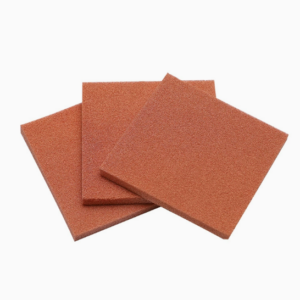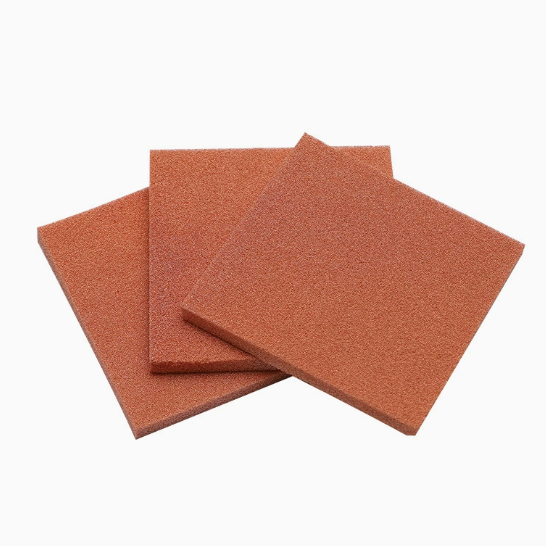
COPPER FOAM 60-98% POROSITY ≥98% THROUGH-HOLE THERMAL CONDUCTIVE ELECTRODEADVANCED POROUS METAL MATERIAL
|
|||||||||||||||||||||||||||||
|
|||||||||||||||||||||||||||||
|
TAILORED SOLUTIONS FOR RESEARCH
Contact our engineering team for technical support or official quotations.
EMAIL: inquiry@atomfair.com
|
|||||||||||||||||||||||||||||
|
Manufacturer: Atomfair LLC
Brand: ATOMFAIR®
|
What is the optimal porosity range of Atomfair copper foam for balancing thermal conductivity and mechanical strength?
The entire 60–98% porosity range simultaneously delivers thermal conductivity >6 W/(m²·K) and mechanical strength ≥2.5 MPa, as specified in the technical parameters. No trade-off is required because the through-hole rate of ≥98% ensures efficient heat transport while the porous structure maintains the minimum strength across all porosity levels.
Is Atomfair copper foam suitable as a carrier for photocatalytic air purification applications?
Yes, copper foam is described as having a large specific surface area and has been successfully applied as a carrier for photocatalytic air purification. Its high porosity (60–98%) and ≥98% through-hole rate provide extensive surface area for catalyst loading while maintaining good gas permeability.
What is the tensile strength of Atomfair copper foam and how does it affect handling?
The tensile strength ranges from 5 to 18 KPa, which is relatively low. This means the foam is mechanically delicate and should be handled with care during cutting, installation, or integration into devices to avoid tearing or permanent deformation.
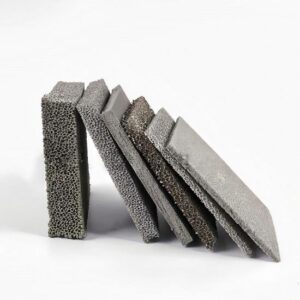
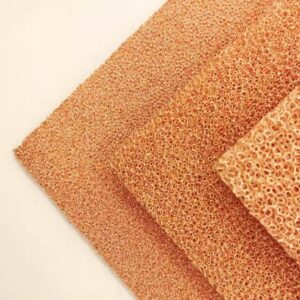
This variable copper foam product offers 60–98% porosity with ≥98% through-hole rate and thermal conductivity >6 W/(m²·K), making it suitable for battery electrodes, heat dissipation, and EMI shielding across four thickness variations from 5 mm to 20 mm.
Positive
- High through-hole porosity: Porosity of 60–98% with ≥98% through-hole rate ensures excellent fluid permeability and surface area for catalytic or electrode applications.
- Superior thermal and electrical conductivity: Thermal conductivity >6 W/(m²·K) and electrical conductivity suitable for nickel-zinc battery electrodes and heat dissipation components, with mechanical strength ≥2.5 MPa.
Trade-offs
- Low tensile strength range: Tensile strength of 5–18 KPa indicates limited mechanical robustness under tension, requiring careful handling during integration into structural assemblies.
- Bulk density constraint: Bulk density >0.1 g/cm³ may restrict buoyancy or lightweight design requirements in certain filtration or sound-absorbing setups.
Every advanced material, component, equipment, and instrument in our catalog is backed by rigorous testing. We maintain strict internal quality management frameworks and align with CE conformity metrics to deliver transparent, reproducible performance data via our public open-science repository.
To request raw batch performance data, submit formal vendor registration paperwork, or execute a fast-turnaround R&D manufacturing loop, contact us at inquiry@atomfair.com.
Item is dispatched under the Atomfair Shipping & Delivery Framework (Free worldwide shipping on orders over $59 USD excl. heavy equipment). Return is governed by the Atomfair Return & Refund Policy (7-day technical return window).