COPPER FOAM 50-98% POROSITY ≥98% THROUGH-HOLE THERMAL EMI FILTERADVANCED POROUS METAL MATERIAL
|
|||||||||||||||||||
|
|||||||||||||||||||
|
TAILORED SOLUTIONS FOR RESEARCH
Contact our engineering team for technical support or official quotations.
EMAIL: inquiry@atomfair.com
|
|||||||||||||||||||
|
Manufacturer: Atomfair LLC
Brand: ATOMFAIR®
|
How does the trade-off between porosity and mechanical integrity affect copper foam performance in electrode applications?
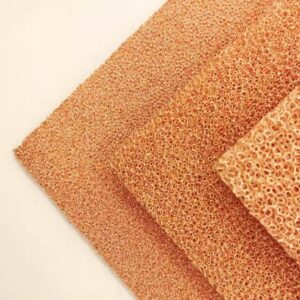
Higher porosity (up to 98%) maximizes surface area for electrochemical reactions and reduces bulk density to as low as 0.1 g/cm³, but it also decreases the foam's mechanical strength and structural integrity. For electrode applications in nickel-zinc batteries or electric double-layer capacitors, the ≥98% through-hole rate ensures ionic transport, but the optimal porosity must balance active material loading with sufficient mechanical support to prevent collapse during cycling. The source specifies a porosity range of 50%–98% and pore sizes from 0.1 mm to 10 mm (5–120 ppi), allowing engineers to select a grade that meets both conductivity and durability requirements.
Can copper foam be directly integrated as a current collector in electric double-layer capacitors without additional surface treatments?
Yes, copper foam's superior electrical conductivity and high through-hole porosity (≥98%) make it suitable as a skeletal electrode material or current collector for electric double-layer capacitors, as stated in the application areas. However, the source notes that it has been trialed and put into batch use by nickel-zinc battery manufacturers, while its use as a current collector for capacitor electrodes is still under promotion. Engineers should verify compatibility with the specific electrolyte system and consider potential corrosion issues in aqueous electrolytes, as copper may require protective coatings or alloying for long-term stability.
What handling and storage precautions are required to prevent oxidation and maintain the thermal and electrical conductivity of copper foam?
Copper foam is susceptible to surface oxidation when exposed to air, which can degrade its thermal and electrical conductivity. The source does not specify explicit storage conditions, but standard practice for high-purity copper materials dictates storage in a dry, inert atmosphere (e.g., nitrogen or argon) or vacuum-sealed packaging to minimize oxidation. For laboratory use, handling with clean gloves and avoiding contact with moisture or acidic vapors is recommended. The product's high surface area (due to 50%–98% porosity) accelerates oxidation rates, so immediate use after opening or re-storage under desiccant is advised.
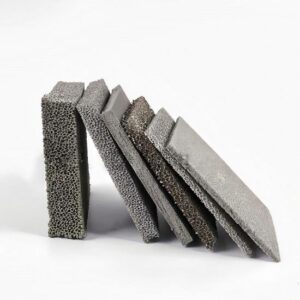
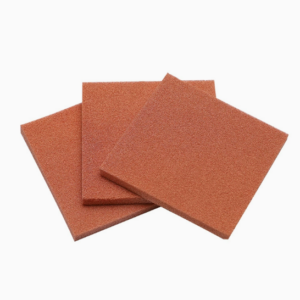
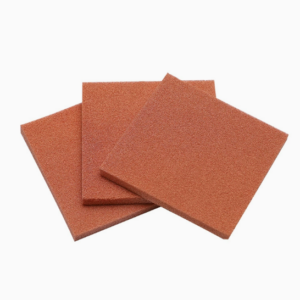
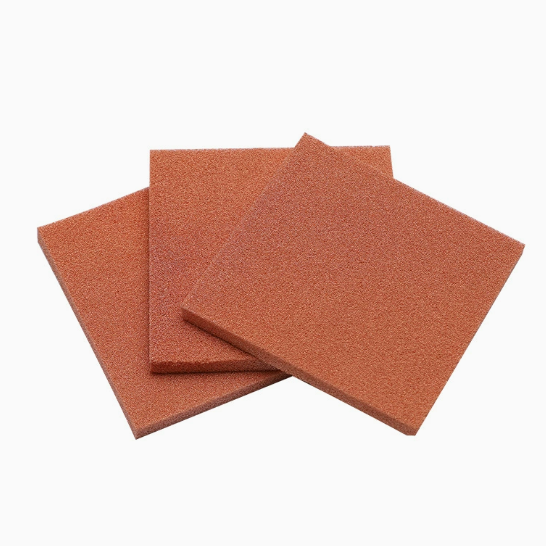
Copper foam with 50-98% porosity and ≥98% through-hole rate provides high surface area and excellent thermal/electrical conductivity, making it suitable for battery electrodes, heat sinks, EMI shielding, and filtration. Custom sizes are available for tailored integration.
Positive
- High porosity and through-hole rate: Porosity ranges from 50% to 98% with a through-hole rate ≥98%, ensuring effective fluid flow and large surface area for catalysis, filtration, and electrode applications.
- Excellent thermal and electrical conductivity: Copper's high conductivity enables efficient heat dissipation in electronics and serves as a current collector in battery electrodes, as explicitly stated in the product description.
Every advanced material, component, equipment, and instrument in our catalog is backed by rigorous testing. We maintain strict internal quality management frameworks and align with CE conformity metrics to deliver transparent, reproducible performance data via our public open-science repository.
To request raw batch performance data, submit formal vendor registration paperwork, or execute a fast-turnaround R&D manufacturing loop, contact us at inquiry@atomfair.com.
Item is dispatched under the Atomfair Shipping & Delivery Framework (Free worldwide shipping on orders over $59 USD excl. heavy equipment). Return is governed by the Atomfair Return & Refund Policy (7-day technical return window).