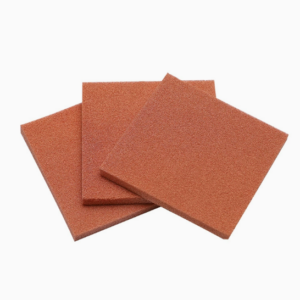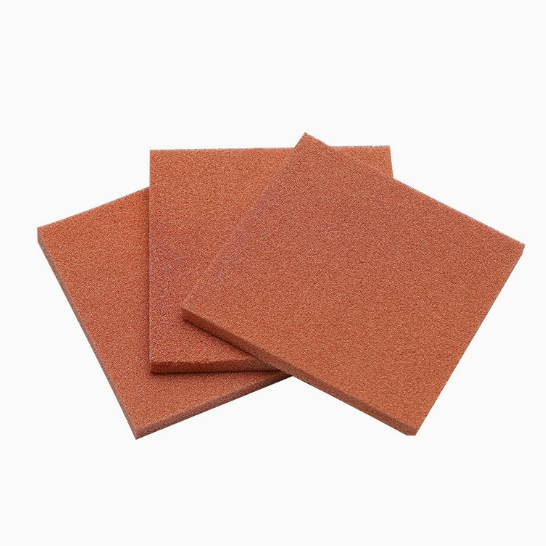
COPPER FOAM 95-98% POROSITY SOUND ABSORPTION EMI SHIELDING ELECTRODEADVANCED POROUS METAL MATERIAL
|
|||||||||||||||||||||||||
|
|||||||||||||||||||||||||
|
TAILORED SOLUTIONS FOR RESEARCH
Contact our engineering team for technical support or official quotations.
EMAIL: inquiry@atomfair.com
|
|||||||||||||||||||||||||
|
Manufacturer: Atomfair LLC
Brand: ATOMFAIR®
|
How does pore density (PPI) affect the trade-off between specific surface area and fluid flow resistance in copper foam?
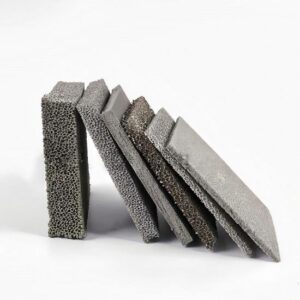
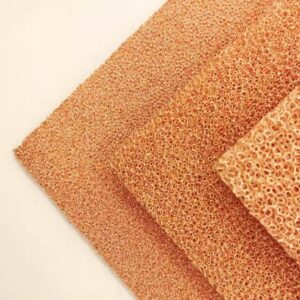
Higher PPI (up to 140) yields smaller pores (down to 0.3 mm) and a larger specific surface area, which enhances catalysis and electrode performance. However, it also increases fluid flow resistance, which may limit throughput in filtration or air permeability applications. The source confirms a PPI range of 30–140, pore size of 0.3–7 mm, and that the foam possesses a larger specific surface area compared to other porous materials while retaining stable gas and fluid flow characteristics.
What are the critical parameters to consider when integrating copper foam as an electrode material in nickel-zinc batteries?
The copper foam must match the battery design in thickness (0.8–10 mm), porosity (95–98%), and areal density (100–2000 g/m²) to ensure proper electrolyte wetting and efficient current collection. The ≥98% through-hole rate guarantees an open, interconnected structure critical for ion transport. The source explicitly lists these parameters under Technical Parameters and identifies electrode materials for nickel-zinc batteries as a key application area.
What machining capabilities are required to process copper foam for custom applications?
Copper foam can be easily cut, stamped, bent, and subjected to other standard metalworking operations using conventional sheet metal fabrication tools. No specialized equipment beyond typical workshop machinery is needed. The source states under Processing Performance that the foam 'can be easily cut, stamped, bent and subjected to other machining operations.'
Copper foam with 95-98% porosity and 30-140 PPI offers high specific surface area and multifunctional properties for battery electrodes, catalysis, filtration, and thermal management. The material is easily machinable but requires careful selection of pore density and thickness for specific applications.
Positive
- Ultra-high porosity and through-hole rate: Porosity of 95-98% and ≥98% through-hole rate provide a very large specific surface area, beneficial for electrode materials, catalyst carriers, and filtration applications.
- Multifunctional performance: Combines sound absorption, EMI shielding, thermal dissipation, and electrical conductivity in a single porous metal structure, suitable for diverse laboratory and industrial uses.
Every advanced material, component, equipment, and instrument in our catalog is backed by rigorous testing. We maintain strict internal quality management frameworks and align with CE conformity metrics to deliver transparent, reproducible performance data via our public open-science repository.
To request raw batch performance data, submit formal vendor registration paperwork, or execute a fast-turnaround R&D manufacturing loop, contact us at inquiry@atomfair.com.
Item is dispatched under the Atomfair Shipping & Delivery Framework (Free worldwide shipping on orders over $59 USD excl. heavy equipment). Return is governed by the Atomfair Return & Refund Policy (7-day technical return window).