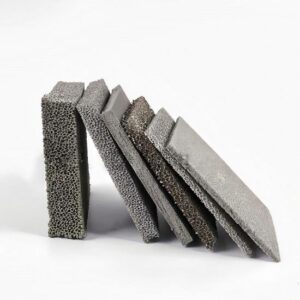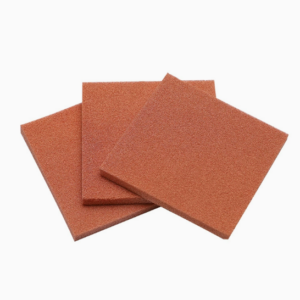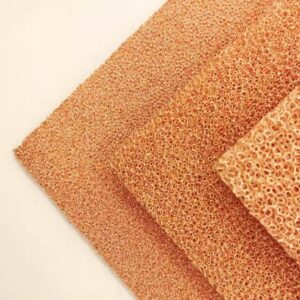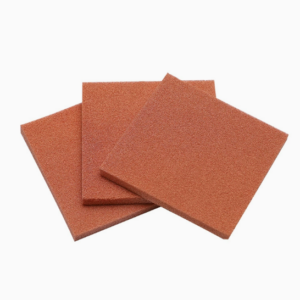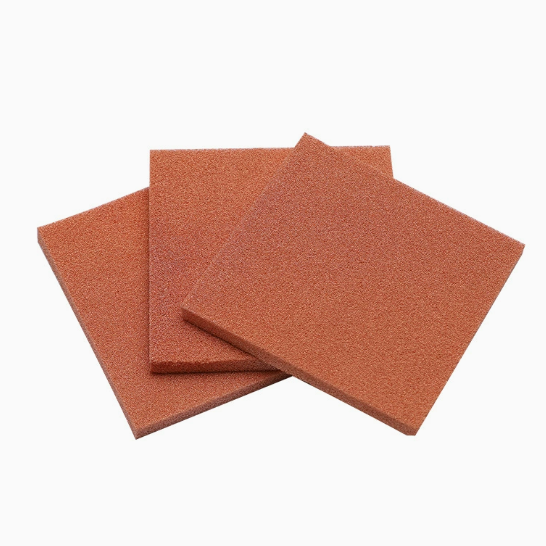
COPPER FOAM 60-98% POROSITY THERMAL CONDUCTIVE EMI SHIELDING ELECTRODEADVANCED POROUS METAL MATERIAL
|
|||||||||||||||||||||||||||||||
|
|||||||||||||||||||||||||||||||
|
TAILORED SOLUTIONS FOR RESEARCH
Contact our engineering team for technical support or official quotations.
EMAIL: inquiry@atomfair.com
|
|||||||||||||||||||||||||||||||
|
Manufacturer: Atomfair LLC
Brand: ATOMFAIR®
|
How does the porosity level (60-98%) affect the thermal conductivity and mechanical strength of copper foam?
Higher porosity reduces bulk density (0.5–1.5 g/cm³) and mechanical strength, but the copper foam maintains a thermal conductivity >6 W/(m²·K) and mechanical strength ≥2.5 MPa across the full porosity range. The through-hole rate remains ≥98%, ensuring open-cell structure for fluid flow. This trade-off allows engineers to select porosity based on application requirements for heat transfer versus structural support.
Can copper foam be directly integrated into existing nickel-zinc battery electrode designs without compatibility issues?
Yes, copper foam has superior electrical conductivity and is already used as a skeletal electrode material in nickel-zinc batteries, with trialed and batch use by several manufacturers. However, compatibility depends on the specific electrochemical environment; copper's stability differs from nickel. The source confirms application as an electrode material and current collector for electric double-layer capacitors, indicating broad electrochemical compatibility.
What handling precautions are necessary when cutting or shaping copper foam to prevent structural damage?
Copper foam has a tensile strength of only 5–18 KPa, making it fragile under tension. Care must be taken to avoid tearing during cutting or machining. Sharp tools or laser cutting are recommended to minimize edge deformation. The mechanical strength (≥2.5 MPa) provides compressive stability, but the material is delicate in tensile loading.
This copper foam product offers a tunable porous structure with 60-98% porosity and 5-130 PPI, providing high thermal conductivity (>6 W/(m²·K)) and electrical conductivity for applications in heat dissipation, battery electrodes, and EMI shielding. Its low tensile strength (5-18 KPa) necessitates careful handling and integration into supporting structures.
Positive
- High porosity and through-hole rate: Porosity of 60-98% with ≥98% through-hole rate enables excellent fluid permeability and large surface area, ideal for catalysis, filtration, and electrode applications.
- Broad PPI range and custom sizes: PPI range of 5-130 and customizable dimensions allow tailoring of pore structure and form factor to meet specific thermal management, electrochemical, or shielding requirements.
Trade-offs
- Low tensile strength limits handling: Tensile strength of 5-18 KPa is very low, requiring careful handling during integration and precluding standalone structural use without reinforcing support.
Every advanced material, component, equipment, and instrument in our catalog is backed by rigorous testing. We maintain strict internal quality management frameworks and align with CE conformity metrics to deliver transparent, reproducible performance data via our public open-science repository.
To request raw batch performance data, submit formal vendor registration paperwork, or execute a fast-turnaround R&D manufacturing loop, contact us at inquiry@atomfair.com.
Item is dispatched under the Atomfair Shipping & Delivery Framework (Free worldwide shipping on orders over $59 USD excl. heavy equipment). Return is governed by the Atomfair Return & Refund Policy (7-day technical return window).