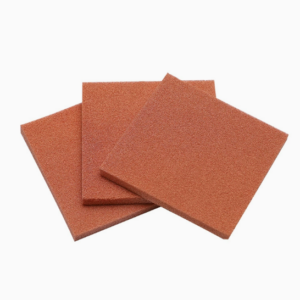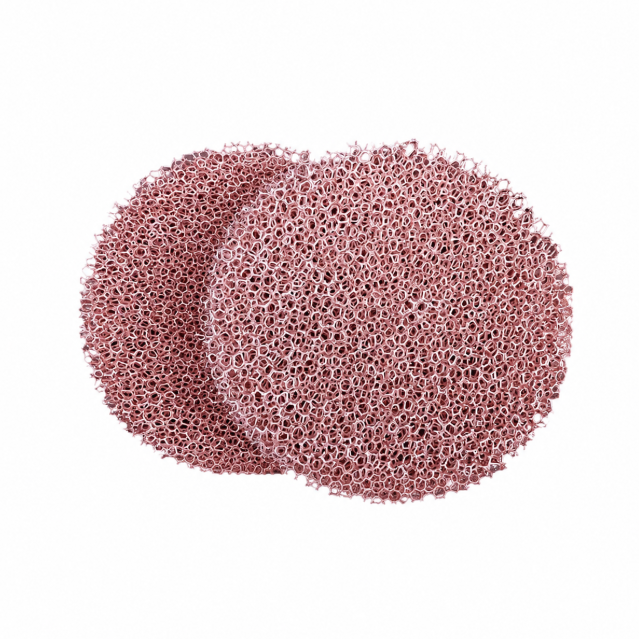
COPPER FOAM 110PPI 0.3-25MM THICK THERMAL EMI FILTERADVANCED POROUS METAL MATERIAL
|
|||||||||||||||||||||||||||||||||||||||||||||||||||||||||||||||||||||||||||||||
|
|||||||||||||||||||||||||||||||||||||||||||||||||||||||||||||||||||||||||||||||
|
TAILORED SOLUTIONS FOR RESEARCH
Contact our engineering team for technical support or official quotations.
EMAIL: inquiry@atomfair.com
|
|||||||||||||||||||||||||||||||||||||||||||||||||||||||||||||||||||||||||||||||
|
Manufacturer: Atomfair LLC
Brand: ATOMFAIR®
|
How does the 110 PPI pore density affect the trade-off between mechanical strength and thermal conductivity for this copper foam?
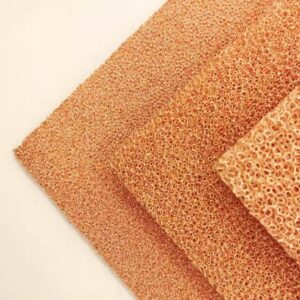
At 110 PPI, the copper foam achieves a heat transfer coefficient greater than 6 W/(m²·K) while maintaining a mechanical strength of at least 2.5 MPa, indicating a favorable balance for thermal management. The high through-hole rate (≥98%) and porosity range of 60–98% ensure minimal obstruction to heat flow, while the specified mechanical strength provides structural integrity for applications like heat sinks and electrode supports.
What compositional purity constraints must be considered when using this copper foam as an electrode material in nickel-zinc batteries?
The copper foam features a copper matrix with controlled trace impurities: nickel (0.5–5%), iron (≤100 ppm), sulfur (≤80 ppm), carbon (≤100 ppm), and silicon (≤50 ppm). These limits are critical for battery applications, as excessive iron or carbon can cause parasitic reactions, while the nickel content is intentionally added to enhance corrosion resistance and conductivity in the alkaline electrolyte environment.
What are the dimensional tolerances and handling requirements for custom-sized copper foam sheets?
Custom sizes are available with thickness tolerances of ±0.05–1.0 mm (for 0.2–80 mm range) and length/width tolerances of ±0.5 mm (for dimensions up to 500 mm). The foam's low bulk density (>0.1 g/cm³) and high porosity make it lightweight but mechanically fragile; careful handling is required to avoid crushing the pore structure, and storage in a dry, inert environment is recommended to prevent oxidation of the copper surface.
Atomfair copper foam combines high porosity (60-98%) with a through-hole rate exceeding 98% and a heat transfer coefficient above 6 W/(m²·K), making it effective for thermal management and electromagnetic shielding in battery and filtration applications. However, its low tensile strength (5-18 KPa) and moderate mechanical strength (≥2.5 MPa) impose constraints on load-bearing and mechanical processing.
Positive
- High porosity and through-hole rate: Porosity of 60-98% with ≥98% through-hole rate enables excellent fluid permeability and high surface area for electrode, catalysis, and filtration applications.
- Excellent thermal and electrical conductivity: Heat transfer coefficient >6 W/(m²·K) and high electrical conductivity support effective heat dissipation and electromagnetic shielding, as well as use as a current collector in batteries.
Trade-offs
- Low mechanical and tensile strength: Tensile strength of 5-18 KPa and mechanical strength ≥2.5 MPa indicate limited load-bearing capacity, requiring careful handling and integration to avoid deformation during assembly or operation.
- Oxidation susceptibility of copper: Copper is prone to surface oxidation in ambient conditions, potentially degrading electrical and thermal performance over time if not stored or coated appropriately; the product composition includes nickel (0.5-5%) to mitigate but does not eliminate this constraint.
Every advanced material, component, equipment, and instrument in our catalog is backed by rigorous testing. We maintain strict internal quality management frameworks and align with CE conformity metrics to deliver transparent, reproducible performance data via our public open-science repository.
To request raw batch performance data, submit formal vendor registration paperwork, or execute a fast-turnaround R&D manufacturing loop, contact us at inquiry@atomfair.com.
Item is dispatched under the Atomfair Shipping & Delivery Framework (Free worldwide shipping on orders over $59 USD excl. heavy equipment). Return is governed by the Atomfair Return & Refund Policy (7-day technical return window).