
Ball Mill Machines
Atomfair Ball Mill Machines cover laboratory and pilot-scale milling systems for powder grinding, particle-size reduction, mechanical alloying, materials mixing, and sample preparation. This category includes compact planetary mills, high-energy dual planetary mills, stirred mills, cryogenic and liquid-nitrogen systems, glove-box-compatible mills, large-volume planetary platforms, grinding jars, and matched grinding media for complete ball milling workflows.
Use this category to compare milling architecture, total jar volume, speed range, atmosphere control, cooling method, jar material, grinding media, and scale-up path. Typical applications include solid-state battery material preparation, ceramic powder processing, catalyst development, nanomaterial synthesis, pharmaceutical formulation research, soil and mineral sample grinding, trace-element sample preparation, and pilot powder process development.
Because ball milling performance depends on the full system, buyers should evaluate the mill body, jar geometry, jar material, grinding ball material, ball size ratio, batch size, heat sensitivity, contamination limits, and wet or dry process requirements together.
Show More: Ball Mill Machine Selection Guide
1. Choose by Milling Platform
| Platform | Best Fit | Selection Notes |
|---|---|---|
| Planetary Ball Mills | General laboratory grinding, powder mixing, ultrafine milling, battery and ceramic R&D | A practical first choice for universities, institutes, and R&D laboratories needing 0.2 L to large-volume configurations. |
| Dual / High-Energy Planetary Mills | Faster impact milling, mechanical alloying, nanometer-scale grinding workflows | Use when higher collision, shear, and friction energy are required. Confirm jar and media compatibility. |
| Stirred Ball Mills | Larger laboratory batches, slurry dispersion, process-development grinding | Useful when vessel volume and controlled agitation matter more than small-vial sample throughput. |
| Cryogenic / Liquid Nitrogen Mills | Heat-sensitive, elastic, volatile, or difficult-to-grind materials | Select when ambient milling causes heat buildup, agglomeration, oxidation, or material softening. |
| Glove-Box-Compatible Mills | Air-sensitive and moisture-sensitive powders | Relevant for sulfide solid electrolytes, reactive powders, and controlled-atmosphere battery workflows. |
| Horizontal / 360° Planetary Mills | Larger loads, specialized motion paths, pilot development | Consider for scale-up, stronger drive power, or process trials beyond small benchtop milling. |
2. Match Jar and Media to the Material
| Jar / Media Material | Typical Use | Buyer Consideration |
|---|---|---|
| Agate | Trace analysis, XRF/ICP sample prep, low metal contamination | Lower metallic contamination, but not suitable for every hard or high-impact material. |
| YSZ Zirconia | High-purity ultrafine grinding, ceramics, battery powders | Dense and wear-resistant; often selected for clean high-energy milling. |
| Tungsten Carbide / WC-Co | Very hard materials, intensive milling | High density and hardness; confirm tungsten or cobalt contamination tolerance. |
| Alumina / Corundum | Ceramic powders, minerals, general wear-resistant milling | Good hardness with practical cost control; check alumina contamination sensitivity. |
| Stainless Steel | Coarse grinding, robust general use | Durable and economical; not ideal where Fe/Cr/Ni contamination is unacceptable. |
| Polyurethane / PA66 Nylon | Gentle dispersion, lower noise, polymer-compatible wet milling | Best for selected slurry and low-metal-contact workflows; verify solvent compatibility. |
3. Application Paths
For battery R&D, start with planetary, high-energy, glove-box-compatible, vacuum, inert-gas, cryogenic, or liquid-nitrogen configurations depending on whether the material is oxide-based, sulfide-based, moisture-sensitive, or heat-sensitive. Jar and media selection should prioritize contamination control and chemical compatibility.
For ceramics and advanced materials, choose zirconia, alumina, corundum, tungsten carbide, or stirred and large-volume systems according to hardness, target fineness, and batch size. For mechanical alloying, high-energy or dual planetary mills are usually more relevant than gentle roller-style workflows.
For pharmaceutical, polymer, biological, or temperature-sensitive samples, cryogenic or liquid-nitrogen milling may reduce heat buildup and improve brittle fracture behavior. Final suitability depends on sample mass, moisture content, desired particle size, and cleaning requirements.
For analytical sample preparation, agate, zirconia, or carefully selected ceramic systems can support low-contamination grinding before XRF, ICP, XRD, SEM, or other laboratory analysis.
4. What to Specify Before Inquiry
Before inquiry, prepare the following information: sample material, starting particle size, target particle size, batch mass or jar volume, wet or dry milling mode, solvent if used, air or moisture sensitivity, temperature sensitivity, acceptable contamination elements, preferred jar material, grinding ball material and size, voltage, lab or pilot use, and whether jars and balls should be quoted with the main unit.
If you are scaling up from a small planetary mill, include current jar size, filling ratio, ball-to-powder ratio, speed, milling time, rest cycle, and measured particle-size result. This helps match a larger planetary, stirred, horizontal, or pilot-scale configuration without assuming a simple one-to-one scale-up.
FAQ
How can target particle size indicate whether high-energy milling is needed instead of a standard planetary mill?
If the goal is rapid refinement, mechanical alloying, solid-state reaction activation, or nanometer-scale powder preparation, a high-energy or dual planetary structure is typically more appropriate. If the main objective is routine mixing, homogenization, or moderate particle-size reduction, a standard planetary ball mill may be sufficient. Final selection should still consider material hardness, brittleness, ball-to-powder ratio, speed, milling time, and heat buildup.
How should contamination and atmosphere risks be controlled when milling solid-state electrolytes?
Oxide solid electrolytes usually require attention to contamination from Zr, Al, Fe, Cr, Ni, or other media-derived elements. Sulfide solid electrolytes also require stricter control of moisture and oxygen exposure. Depending on the material system, buyers may choose zirconia, agate, alumina, or stainless steel jars and media, and may also require vacuum, inert-gas, or glove-box-compatible milling.
Why can the same speed and milling time produce different results with different jar materials?
Jar and media density, hardness, elasticity, surface condition, and wear behavior all affect impact energy, shear efficiency, contamination risk, and powder agglomeration. For example, zirconia media has high density and can provide stronger impact, while agate is useful for low-metal-contamination sample preparation but has different energy and impact-resistance boundaries.
Which parameters should not be scaled linearly when moving from a 0.4 L or 1 L lab mill to pilot equipment?
Speed, milling time, ball-to-powder ratio, filling ratio, heat dissipation, jar geometry, and energy density should not be scaled only by volume. During scale-up, buyers should evaluate energy input per unit mass, temperature rise, powder flow behavior, media motion, and final particle-size distribution instead of comparing only total capacity.
What are the key selection differences between wet milling and dry milling?
Wet milling requires attention to solvent compatibility, sealing performance, slurry viscosity, dispersion stability, and downstream drying. Dry milling places more emphasis on dust, agglomeration, heat buildup, static charge, and oxidation risk. For battery, ceramic, catalyst, and pharmaceutical powders, the wet or dry process choice can directly affect particle-size distribution, contamination control, and repeatability.
When is cryogenic or liquid-nitrogen milling more appropriate than ambient intermittent milling?
Cryogenic or liquid-nitrogen milling is worth evaluating when materials soften, smear, stick to the jar, agglomerate, thermally degrade, lose volatile components, or resist brittle fracture under ambient milling. Polymers, biological samples, selected pharmaceuticals, elastic materials, and heat-sensitive composites often require low-temperature process review.
How should jars and grinding media be selected for mechanical alloying?
Mechanical alloying usually requires high impact energy and long milling time, so buyers should prioritize media hardness, density, wear resistance, and potential contamination elements. Tungsten carbide, stainless steel, and zirconia each have different suitability limits. Selection should depend on whether the alloy system can tolerate W, Co, Fe, Cr, Ni, Zr, or other introduced elements.
Which process variables should be checked first when ball milling results are unstable?
Start by reviewing loading amount, ball-to-powder ratio, ball size combination, jar material, speed, single-run time, intermittent cooling cycle, sample moisture content, agglomeration state, and cleaning residue. For sensitive materials, also check atmosphere exposure, sealing condition, and raw-material batch variation.
Showing 33–48 of 99 results
-
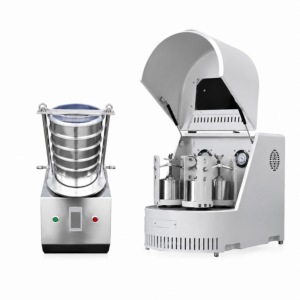
Glove Box Planetary Ball Mill PBM-0.2S 0.2L ATOMFAIR®
Price range: $2,033.00 through $3,529.00 -
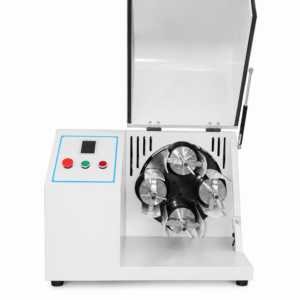
Heavy-Duty Horizontal Planetary Ball Mill 0.75kW ATOMFAIR®
Price range: $3,063.00 through $10,703.00 -
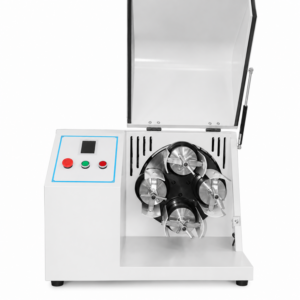
Heavy-Duty Horizontal Planetary Ball Mill 11kW ATOMFAIR®
Price range: $26,092.00 through $81,968.00 -
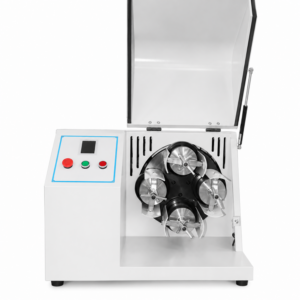
Heavy-Duty Horizontal Planetary Ball Mill 5.5kW ATOMFAIR®
Price range: $13,555.00 through $48,255.00 -
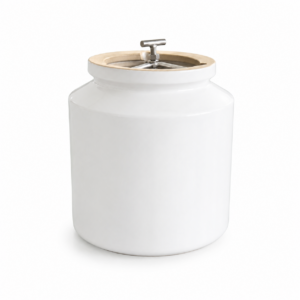
Heavy-Wall Roller Ceramic Grinding Jars 5–20 L
Price range: $91.00 through $120.00 -
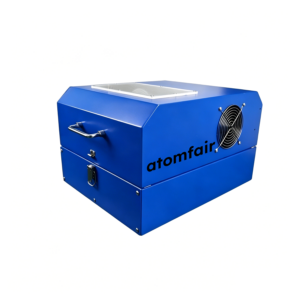
High-Speed Vibrating Ball Mill HSVM-638 0.1μm ATOMFAIR®
$2,653.00 -
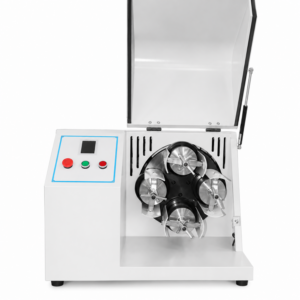
Horizontal Planetary Ball Mill 1.5kW HPBM-2-6H ATOMFAIR®
Price range: $5,019.00 through $12,659.00 -
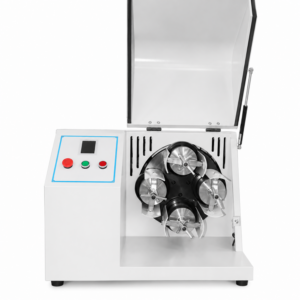
Horizontal Planetary Ball Mill HPBM-(8-12) 1.5 kW ATOMFAIR®
Price range: $7,064.00 through $21,352.00 -
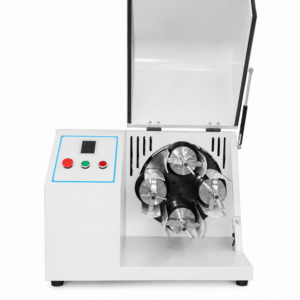
Horizontal Planetary Ball Mill HPBM-16 3kW ATOMFAIR®
Price range: $9,364.00 through $30,772.00 -
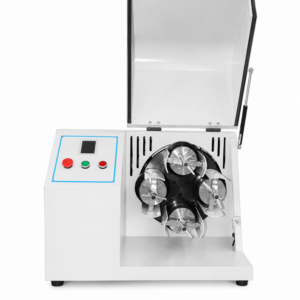
Horizontal Planetary Ball Mill HPBM-20 4KW ATOMFAIR®
Price range: $11,420.00 through $31,180.00 -
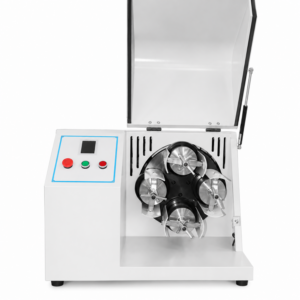
HPBM-60 Horizontal Planetary Ball Mill 7.5kW ATOMFAIR®
Price range: $17,216.00 through $58,000.00 -
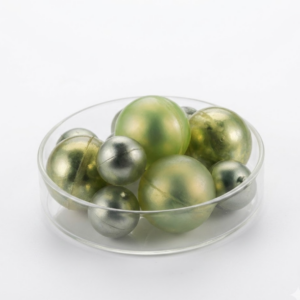
IC-PU Polyurethane-Coated Iron Balls 1kg Mixed
$90.00 -
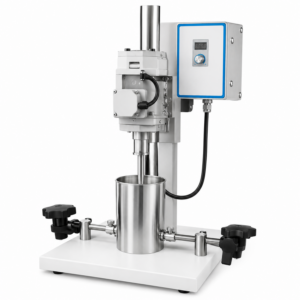
Laboratory Stirred Ball Mill SBM-10L 10 L ATOMFAIR®
Price range: $3,351.00 through $12,026.00 -
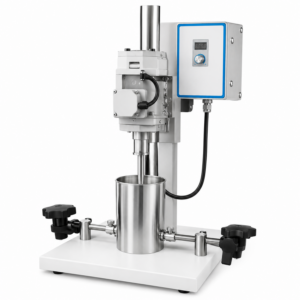
Laboratory Stirred Ball Mill SBM-15L 15 L ATOMFAIR®
Price range: $4,112.00 through $14,308.00 -
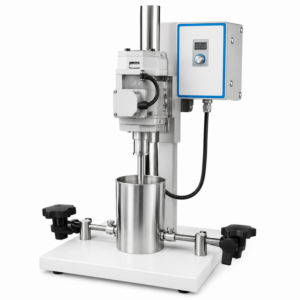
Laboratory Stirred Ball Mill SBM-1L 1 L 0.37 kW ATOMFAIR®
Price range: $1,553.00 through $2,887.00 -
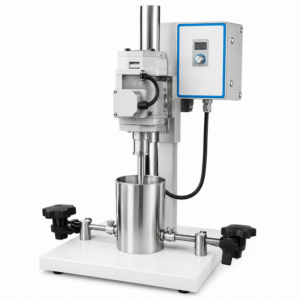
Laboratory Stirred Ball Mill SBM-20L 20 L ATOMFAIR®
Price range: $5,102.00 through $16,269.00