
Description
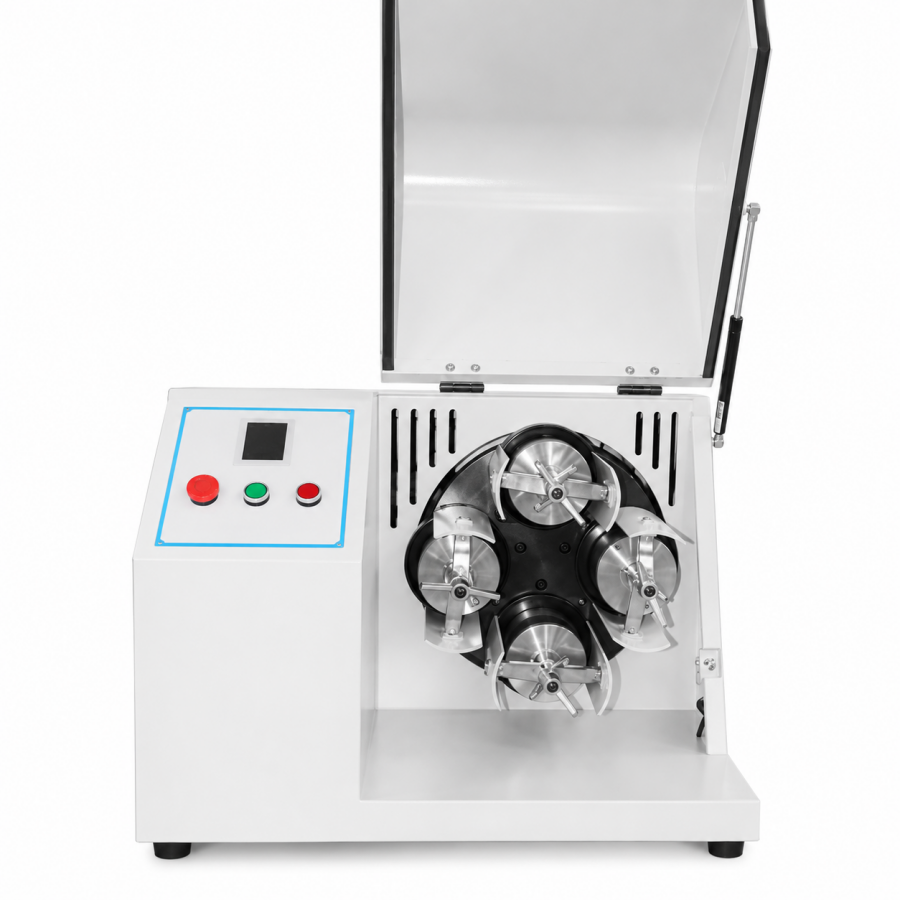
HPBM-(2-6)(H) HEAVY-DUTY HORIZONTAL PLANETARY BALL MILL 1.5KWLABORATORY & PRODUCTION GRADE EQUIPMENT
|
||||||||||||||||||||||||||||||||||||||||||||||||||||||||||||||||||||||||||||||||||||||||
|
||||||||||||||||||||||||||||||||||||||||||||||||||||||||||||||||||||||||||||||||||||||||
|
TAILORED SOLUTIONS FOR RESEARCH
Contact our engineering team for technical support or official quotations.
EMAIL: inquiry@atomfair.com
|
||||||||||||||||||||||||||||||||||||||||||||||||||||||||||||||||||||||||||||||||||||||||
|
Manufacturer: Atomfair LLC
Brand: ATOMFAIR®
|
This equipment operates with a 1.5 kW motor and high-speed planetary motion, generating mechanical and electrical hazards requiring controlled installation and handling. Grinding jars and media must be ordered separately and selected for material compatibility to prevent contamination or mechanical failure.
- Electrical Safety Constraint: The 1.5 kW motor requires a properly grounded electrical supply and must be operated within rated voltage to prevent electrical shock or equipment damage.
- Mechanical Stability Constraint: The dual-disk support bracket structure requires a level, vibration-dampened surface to maintain stability during high-speed operation and prevent mechanical resonance.
- Jar and Media Compatibility Constraint: Grinding jars and balls must be selected from compatible materials (e.g., Al₂O₃, YSZ, agate) to avoid cross-contamination or chemical reaction with the sample.
- Operational Safety Constraint: The brake locking function must be engaged during jar lifting, loading, and locking to prevent accidental movement and ensure operator safety.
This procedure covers the safe setup, loading, and operation of the heavy-duty horizontal planetary ball mill for grinding applications. Follow these steps to ensure proper handling and avoid mechanical or electrical hazards.
Required Equipment: HPBM-(2-6)(H) main grinding unit, Grinding jars (0.5 L to 1.5 L, ordered separately), Grinding balls (ordered separately)
- Inspect the equipment
Inspect the main unit for any visible damage or loose components before connecting to the power supply. - Select and load grinding jars
Select grinding jars and balls compatible with the sample material and securely load them into the jar holders. - Engage the brake locking function
Engage the brake locking function to secure the jars during loading and prevent accidental rotation. - Set operating parameters
Set the desired rotation speed and timing using the microcomputer touch screen, ensuring forward and reverse control is configured as needed. - Start the grinding process
Start the grinding process and monitor the equipment for unusual noise or vibration during operation. - Stop and unload jars
Stop the mill and allow it to come to a complete halt before disengaging the brake and unloading the jars.
How does the 1.5 kW motor and dual-end double disc support frame of the HPBM-(2-6)(H) affect grinding throughput and jar capacity compared to lighter planetary mills?
The 1.5 kW motor combined with the dual-end double disc support frame significantly boosts load capacity and operational stability, enabling use of either 4×0.5 L jars (total 2 L) or 4×1.5 L jars (total 6 L) at a jar rotation speed of 0–670 rpm. This design supports higher throughput for pilot and small-batch production while maintaining the drive ratio of 0.134, a trade-off that prioritizes mechanical rigidity and uninterrupted milling over the lower mass and footprint of lighter units.
What jar and grinding ball material options are compatible with the HPBM-(2-6)(H) for avoiding cross-contamination when milling lithium battery materials or ceramics?
The HPBM-(2-6)(H) accepts 4×0.5 L or 4×1.5 L jars and corresponding grinding balls in eight materials: WC-Co, Al₂O₃ (95 %), Agate (natural SiO₂ – ideal for zero-metal analysis), YSZ (yttria-stabilized zirconia), stainless steel, polyurethane, ceramic, and nylon. Each jar and ball set is sold separately, allowing the operator to match contamination‑free media to the target material, e.g., Agate for silicate‑based samples or YSZ for high‑hardness ceramic precursors.
What are the installation and safety requirements for operating the HPBM-(2-6)(H) 1.5 kW planetary ball mill in a laboratory?
The 266‑kg unit (1220×620×810 mm) requires a stable, vibration‑resistant floor capable of supporting its weight, a 1.5 kW electrical supply, and adequate clearance for the integrated lifting and screen discharging mechanism with brake‑locking safety function. The microcomputer touch control system includes forward‑reverse cycle operation, timing, and power‑off memory, ensuring safe unattended operation once the jars and balls are correctly installed.
The HPBM-(2-6)(H) is a heavy-duty horizontal planetary ball mill with a 1.5 kW motor, dual-end double disc support frame for enhanced rigidity and load capacity, and microcomputer touch control with forward-reverse cycle and power-off memory. It is designed for pilot trials and small-batch grinding, but grinding jars and balls must be purchased separately, and its 266 kg weight and 1220×620×810 mm footprint require dedicated lab space and handling equipment.
Positive
- Dual-end double disc support frame: The dual-end double disc support frame structure greatly boosts overall rigidity, load capacity, and operational stability compared to light horizontal planetary mills, enabling reliable pilot-scale production.
- Microcomputer touch control system: The microcomputer touch control system supports forward-reverse cycle operation, timing, and power-off memory, providing precise and automated process control for reproducible grinding results.
Trade-offs
- Grinding jars and media sold separately: Grinding jars and grinding balls are not included with the main unit and must be ordered separately, requiring additional procurement and compatibility planning before operation.
- Large footprint and heavy weight: With overall dimensions of 1220×620×810 mm and a net weight of 266 kg, the mill demands substantial bench space and a structural support capable of handling its mass, as well as appropriate lifting equipment for installation.
Every advanced material, component, equipment, and instrument in our catalog is backed by rigorous testing. We maintain strict internal quality management frameworks and align with CE conformity metrics to deliver transparent, reproducible performance data via our public open-science repository.
To request raw batch performance data, submit formal vendor registration paperwork, or execute a fast-turnaround R&D manufacturing loop, contact us at inquiry@atomfair.com.
Item is dispatched under the Atomfair Shipping & Delivery Framework (Free worldwide shipping on orders over $59 USD). Return is governed by the Atomfair Return & Refund Policy (7-day technical return window).
