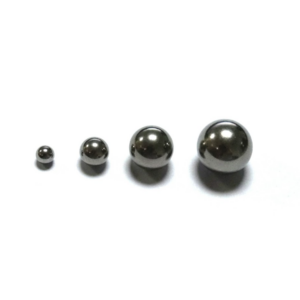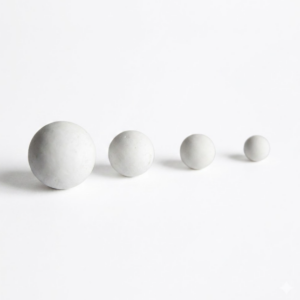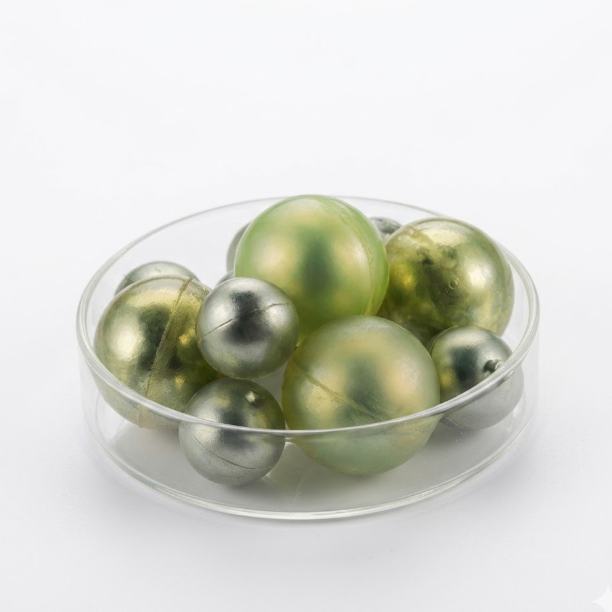
IC-PU Polyurethane-Coated Iron Balls 1kg Mixed

$90.00

Institutional Procurement & Supply Compliance: As a verified US supplier, Atomfair accepts formal institutional Purchase Orders (POs), contract billing schedules, and custom procurement loops for university and national laboratories, and corporate R&D departments globally.

IC-PU polyurethane-coated iron grinding balls, mixed Φ25/20/15mm at 1kg, Shore A 80–95 and 3.5–5.5 g/cm3 for gentle slurry dispersion. Order now.

SKU: AF-B-PUF-1KG-MX
Category: ,
Tags:
Brands:

Description

ATOMFAIR IC-PU POLYURETHANE COATED IRON GRINDING BALLS MIXED SIZE 1KG

RESEARCH GRADE MATERIAL

Product Overview

ATOMFAIR® Polyurethane Coated Iron Grinding Balls (IC-PU) feature an internal cast iron or steel core completely encapsulated by a high-wear-resistant polyurethane outer layer via integrated molding. With IC-PU Shore A 80–95 density 3.5–5.5 g/cm³ specifications, these flexible dispersion media solve the critical limitation of pure polyurethane balls—insufficient grinding weight—by incorporating a heavy metal core while maintaining a soft elastic surface. Purpose-built for gentle mixing slurry homogenization soft dispersion, the polyurethane outer layer provides cushioning impact that protects brittle and heat-sensitive material crystal structures from over-grinding, while the iron core integrated PU anti-wear non-delamination bonding process ensures the core and outer layer remain firmly adhered during extended operation. Compared to stainless steel and ceramic balls, IC-PU balls dramatically reduce operating noise and equipment vibration, extending ball mill spindle and jar service life. This listing is a mixed-size configuration (Φ25mm + Φ20mm + Φ15mm) with a total net weight of 1kg, specifically designed to maximize mixing and dispersion efficiency. Multi-ball size ratio grinding delivers significantly higher efficiency than single-diameter media—the large balls provide primary impact force for breaking large particles, medium balls further refine particles, and small balls increase contact points for final fine grinding and homogenization. Custom sizes, mixing ratios, and weight are available upon request at inquiry@atomfair.com.

Technical Specifications

PARAMETER DETAILS
1. Core Material & Composition
Material Composition Internal Cast Iron/Steel Core + Outer Cast Polyurethane Integrated Coating
Abbreviation IC-PU
Bonding Process Special Adhesion Process; Metal-PU Firmly Bonded, Non-Delaminating
Overall Density 3.5–5.5 g/cm³ (Adjustable; Far Higher than Pure PU Balls)
Outer Layer Hardness Shore A 80–95 (Custom: Shore A 10–100 Available)
Wear Characteristics Tear-Resistant, Solvent Wear-Resistant; Lower Long-Term Loss than Rubber Balls
Chemical Resistance Resistant to Most Organic Solvents, Weak Acids & Alkalis (Not for Concentrated Strong Acids/Alkalis)
Maximum Operating Temperature ≤100°C (High Temperature Accelerates PU Aging and Cracking)
Contamination Risk Trace PU Debris Under Normal Use; Fe Impurity Release Only if Outer Layer is Worn Through
2. Mixed Size Configuration
Listing Specification Mixed Size: Φ25mm + Φ20mm + Φ15mm · 1 kg Net Weight
Mixing Ratio (Quantity) Large Ball (Φ25mm) : Medium Ball (Φ20mm) : Small Ball (Φ15mm) ≈ 4 : 2 : 1
Large Ball (Φ25mm) Function Provides primary impact force, responsible for breaking large particles
Medium Ball (Φ20mm) Function Bridges coarse and fine grinding, further refines particles
Small Ball (Φ15mm) Function Increases contact points, final fine grinding and homogenization—critical for uniform particle size distribution
Efficiency Advantage Multi-ball size ratio grinding delivers significantly higher efficiency than single-diameter media
3. Performance & Quality Metrics
Surface Quality Dense, Smooth, Non-Stick PU Surface; Easy Cleaning
Diameter Range Customizable Specifications — Φ10 mm–Φ50 mm
Custom Configurations Custom diameters (Φ10 mm–Φ50 mm), Shore hardness (A10–A100), mixing ratios, and batch quantities are available upon request. Please contact us via email at inquiry@atomfair.com.

Key Features & Advantages

  • Optimized Mixed-Size Ratio (4:2:1) for Maximum Efficiency: Multi-ball size ratio grinding delivers significantly higher efficiency than single-diameter media. The Φ25mm large balls provide primary impact force for breaking large particles, Φ20mm medium balls further refine particles, and Φ15mm small balls increase contact points for final fine grinding and homogenization.
  • Iron Core Weighted Design for Effective Mixing Energy: The built-in iron core raises overall density to 3.5–5.5 g/cm³, solving the fundamental limitation of pure PU balls—insufficient weight for adequate grinding action—while preserving the soft outer surface for gentle material interaction.
  • High-Elasticity Cushioned Impact Protects Crystal Structure: The polyurethane outer layer delivers soft, cushioned impacts that protect brittle and heat-sensitive materials from excessive crushing and crystal structure damage, preserving particle morphology critical for electrochemical and pharmaceutical applications.
  • Dramatic Noise and Vibration Reduction: Operating noise is significantly lower compared to stainless steel and ceramic grinding balls, with reduced equipment vibration that extends ball mill spindle, jar, and component service life.
  • Non-Stick Smooth Surface for Easy Cleaning: The dense, smooth PU surface resists adhesion of viscous slurries, enabling easier material discharge and simplified jar cleaning compared to metal or ceramic media.

APPLICATION SCOPE: Lithium battery industry: graphite anode materials, conductive agents, lithium battery slurry pre-dispersion and gentle homogenization—prevents over-grinding that compromises electrochemical performance. Coatings, inks, and pigments: color pastes, organic pigments, and toner powder mixing and dispersion—avoids pigment discoloration and excessive particle size reduction caused by hard ceramic ball impact. Food, biological, and pharmaceutical raw materials: gentle mixing of heat-sensitive and fragile powders—protects active ingredients from degradation. Chemical organic powders and soft fillers: talc, calcium carbonate, resin powders, and other low-hardness material mixing and refinement. Compatible with planetary ball mills, roller ball mills, and stirred ball mills.
PACKAGING: This listing is priced for 1 kg mixed-size configuration (Φ25mm + Φ20mm + Φ15mm) with mixing ratio Large : Medium : Small ≈ 4 : 2 : 1 by quantity. Packaged in sealed plastic bottles or vacuum-sealed bags to prevent contamination. Custom diameters (Φ10 mm–Φ50 mm), Shore hardness (A10–A100), mixing ratios, and batch quantities are available upon request.
RECOMMENDED JAR PAIRING: Best paired with PU jars, nylon (PA) jars, PTFE jars, and other polymer soft jars. Not recommended for use with corundum, zirconia, cemented carbide, or other high-hardness ceramic/metal jars—hard jar surfaces will rapidly wear the PU outer layer of the balls.
IMPORTANT NOTICE: Prohibited for grinding high-hardness materials: materials with Mohs hardness ≥7, silicon carbide, quartz, and other hard powders will rapidly scratch and tear the PU outer layer, exposing the iron core and introducing significant iron contamination. Corrosion limitation: do not immerse long-term in concentrated acids, concentrated alkalis, or hydrofluoric acid—strong corrosive liquids will swell and corrode the PU outer layer. Temperature limit: operating temperature must not exceed 100°C; high temperatures accelerate PU aging, peeling, and delamination. Regular inspection and replacement: replace balls immediately if surface damage, exposed metal, cracking, or large-area peeling appears—to prevent iron ion contamination of product. Not suitable for ultrafine nano-grinding: IC-PU balls are designed exclusively for mixing, dispersion, and pre-mixing; they cannot achieve ultrafine grinding of hard materials. For ultrafine grinding applications, use zirconia or alumina balls instead. Contamination risk alert: strictly prohibited for high-end lithium battery and high-purity electronic ceramic applications where iron impurities are unacceptable—damaged outer layers will release Fe metal contamination. For custom sizes, mixing ratios, and batch quantities, contact us at inquiry@atomfair.com.
TAILORED SOLUTIONS FOR RESEARCH
Contact our engineering team for technical support or official quotations.
EMAIL: inquiry@atomfair.com
Manufacturer: Atomfair LLC
Brand: ATOMFair®

This document describes the operational constraints and compatibility requirements for ATOMAIR IC-PU grinding balls. Adherence to these limits prevents premature wear, contamination, and equipment damage.

  • Temperature Limit: Operating temperature must not exceed 100°C to prevent accelerated PU aging and cracking.
  • Jar Compatibility: Use only with soft polymer jars (PU, nylon, PTFE) to avoid wear of the PU outer layer.
  • Material Hardness Limit: Do not use for grinding materials with Mohs hardness ≥7 to prevent scratching and tearing of the PU coating.
  • Chemical Resistance: Avoid long-term immersion in concentrated acids, alkalis, or hydrofluoric acid to prevent swelling and corrosion.
  • Inspection and Replacement: Inspect balls regularly for surface damage and replace immediately if exposed metal is visible to prevent iron contamination.

How does the iron core increase grinding efficiency while simultaneously raising the risk of iron contamination, and under what conditions does contamination become a concern?

The iron core increases overall density to 3.5–5.5 g/cm³, providing sufficient grinding weight absent in pure PU balls. However, contamination only occurs if the PU outer layer is worn through, releasing Fe impurities. Conditions that accelerate wear include grinding materials with Mohs hardness ≥7 (e.g., silicon carbide, quartz), using high-hardness ceramic/metal jars (corundum, zirconia), or exceeding the maximum operating temperature of ≤100°C. Regular inspection for surface damage or exposed metal is required to prevent iron contamination.

Can IC-PU grinding balls be used in high-purity lithium battery slurry preparation, or do they introduce unacceptable contamination risks?

No, IC-PU balls are strictly prohibited for high-end lithium battery applications where iron impurities are unacceptable. Damaged outer layers release Fe metal contamination, and even trace PU debris under normal use may compromise purity. The description explicitly warns against use in high-purity electronic ceramic applications. For such sensitive processes, zirconia or alumina balls are recommended instead.

What are the essential storage and operational conditions to prevent premature failure of the polyurethane coating on IC-PU balls?

The polyurethane coating requires operating temperatures ≤100°C to avoid accelerated aging and cracking. Avoid long-term immersion in concentrated acids, concentrated alkalis, or hydrofluoric acid, which cause swelling and corrosion. For storage, keep in sealed containers to prevent contamination (as provided in packaging). Regularly inspect for cracking, peeling, or exposed metal and replace immediately. Pair only with soft polymer jars (PU, nylon, PTFE) to prevent rapid abrasion.

The Atomfair IC-PU Polyurethane Coated Iron Grinding Balls Mixed Size 1kg combine a high-density iron core (3.5–5.5 g/cm³) with a soft polyurethane outer layer (Shore A 80–95) to provide cushioned impact for gentle mixing and dispersion of brittle or heat-sensitive materials, while the mixed-size ratio (Φ25mm:Φ20mm:Φ15mm ≈ 4:2:1) enhances grinding efficiency over single-diameter media.

Positive

  • Weighted iron core for effective grinding: The internal iron core raises overall density to 3.5–5.5 g/cm³, overcoming the insufficient grinding weight of pure polyurethane balls while preserving the soft outer surface for gentle material interaction.
  • Mixed-size ratio boosts dispersion efficiency: The 4:2:1 ratio of Φ25mm, Φ20mm, and Φ15mm balls provides primary impact, intermediate refinement, and fine homogenization, delivering significantly higher mixing efficiency than single-diameter media.

Trade-offs

  • Limited to low-hardness materials only: Prohibited for materials with Mohs hardness ≥7 (e.g., silicon carbide, quartz) as hard powders rapidly scratch and tear the PU outer layer, exposing the iron core and causing iron contamination.
  • Temperature and chemical exposure constraints: Operating temperature must not exceed 100°C to avoid accelerated PU aging and cracking; long-term immersion in concentrated acids, alkalis, or hydrofluoric acid will swell and corrode the outer layer.

Every advanced material, component, equipment, and instrument in our catalog is backed by rigorous testing. We maintain strict internal quality management frameworks and align with CE conformity metrics to deliver transparent, reproducible performance data via our public open-science repository.

To request raw batch performance data, submit formal vendor registration paperwork, or execute a fast-turnaround R&D manufacturing loop, contact us at inquiry@atomfair.com.

Item is dispatched under the Atomfair Shipping & Delivery Framework (Free worldwide shipping on orders over $59 USD). Return is governed by the Atomfair Return & Refund Policy (7-day technical return window).