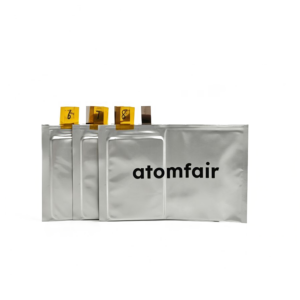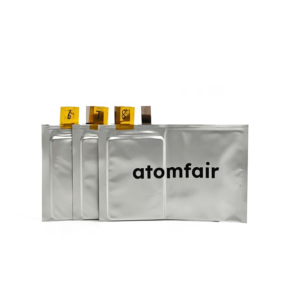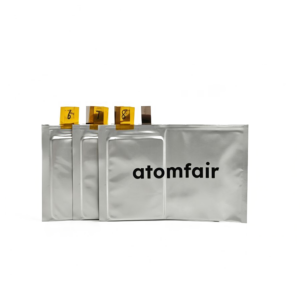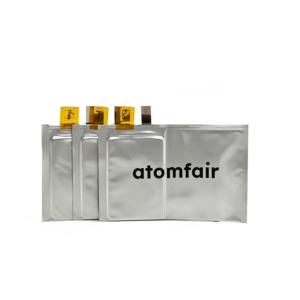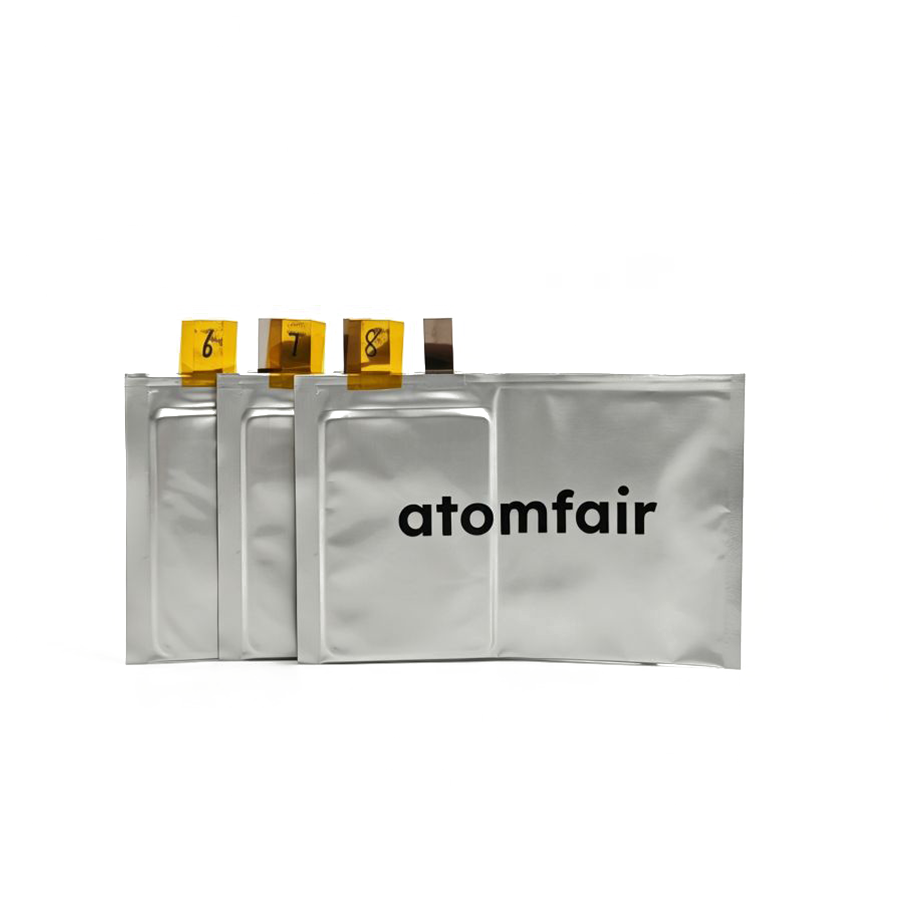
ATOMFAIR® 1AH NFM ANODE-FREE DRY POUCH CELLSODIUM (Na) ION TECHNOLOGY
|
|||||||||||||||||||||||||
|
|||||||||||||||||||||||||
|
TAILORED SOLUTIONS FOR RESEARCH
Contact our engineering team for technical support or official institutional quotations.
EMAIL: inquiry@atomfair.com
|
|||||||||||||||||||||||||
|
Manufacturer: Atomfair LLC
Brand: ATOMFAIR®
|
|||||||||||||||||||||||||
This document outlines critical constraints for handling and storage of the dry pouch cell prior to activation. Adherence to these constraints prevents material degradation and ensures experimental reproducibility.
- Atmosphere Sensitivity: Store and handle the dry cell exclusively in an inert atmosphere glovebox with moisture and oxygen levels below 1 ppm to prevent electrode and separator degradation.
- Electrolyte Compatibility: Only use electrolyte formulations compatible with NFM positive electrode and hard carbon negative electrode to avoid adverse reactions.
- Moisture Control: Minimize exposure to ambient atmosphere; any exposure above 1 ppm moisture risks irreversible capacity loss.
- Physical Integrity: Do not puncture, deform, or short-circuit the dry pouch cell, as this compromises the electrode alignment and separator integrity.
- Sealing Requirement: After electrolyte filling, seal the pouch cell immediately using a heat sealer with controlled temperature and pressure to ensure hermetic closure.
This procedure describes the safe handling and electrolyte filling of the dry pouch cell for electrochemical testing. Follow these steps inside an inert atmosphere glovebox to maintain cell integrity.
Required Equipment: Inert atmosphere glovebox, Heat sealer
- Transfer to glovebox
Transfer the dry pouch cell into an inert atmosphere glovebox with moisture and oxygen levels below 1 ppm. - Fill with electrolyte
Fill the dry cell with a compatible sodium-ion electrolyte using a syringe, ensuring no air bubbles remain. - Seal the pouch
Seal the pouch cell using a heat sealer at the recommended temperature and pressure for the pouch material. - Rest for wetting
Allow the sealed cell to rest for a period sufficient to enable complete electrolyte wetting of the electrodes. - Perform formation cycles
Perform initial charge-discharge cycles at a conservative rate to form a stable solid electrolyte interphase.
How does the anode-free architecture of the 1AH NFM dry pouch cell trade off energy density against cycling stability in sodium-ion battery research?
The anode-free design eliminates conventional anode materials to reduce weight and manufacturing complexity, thereby enhancing energy density. However, this architecture shifts sodium plating/stripping to the current collector, which can impact cycling stability if the electrolyte and interface are not optimized. The dry cell format provides a clean slate for researchers to experimentally study these trade-offs.
What electrolyte formulations are compatible with this 1AH NFM anode-free dry pouch cell, and what integration constraints exist for standard battery testing equipment?
This dry pouch cell ships without electrolyte (dry core configuration), giving researchers full freedom to infuse their preferred sodium-ion electrolyte formulations. The electrode dimensions (NFM cathode 60×80 mm, hard carbon anode 63×84 mm) are typical for pouch cell testing, but users must ensure their electrolyte wetting and vacuum sealing procedures are compatible with the dry pouch format to avoid short circuits or delamination.
What storage and handling protocols are critical for maintaining the integrity of the 1AH NFM anode-free dry pouch cell prior to electrolyte infusion?
The dry pouch cell must be stored in a cool, dry environment to prevent electrode degradation and moisture absorption. Before electrolyte infusion, handling should be performed in an inert atmosphere glovebox to avoid exposure to moisture and oxygen, as the anodeless hard carbon electrode is highly reactive. The manufacturer ships the cell with default areal density and NP ratio, so any modification requires prior consultation with customer service.
The Atomfair 1AH NFM Anode-Free Dry Pouch Cell is a sodium-ion battery designed for R&D, featuring an anode-free architecture that reduces weight and enhances energy density, but requires electrolyte addition by the user and is shipped with default design parameters that may need pre-order customization.
Positive
- Anode-free architecture for higher energy density: The elimination of conventional anode materials reduces weight and manufacturing complexity while enhancing energy density, providing measurable performance benefits for next-generation battery R&D.
- Customizable design for prototyping flexibility: The dry pouch cell allows customization of capacity, dimensions, and terminal configurations to meet specific experimental needs, offering researchers a versatile platform.
Trade-offs
- Electrolyte not included: The cell is shipped as a dry core configuration without electrolyte, requiring researchers to source and inject electrolyte themselves, adding an extra preparation step and infrastructure requirement.
- Default parameters may require pre-order adjustment: Shipped with default areal density, load capacity, and NP ratio; researchers needing specific parameters must contact customer service for customization prior to ordering.
Every advanced material, component, equipment, and instrument in our catalog is backed by rigorous testing. We maintain strict internal quality management frameworks and align with CE conformity metrics to deliver transparent, reproducible performance data via our public open-science repository.
To request raw batch performance data, submit formal vendor registration paperwork, or execute a fast-turnaround R&D manufacturing loop, contact us at inquiry@atomfair.com.
Item is dispatched under the Atomfair Shipping & Delivery Framework (Free worldwide shipping on orders over $59 USD excl. heavy equipment). Return is governed by the Atomfair Return & Refund Policy (7-day technical return window).