
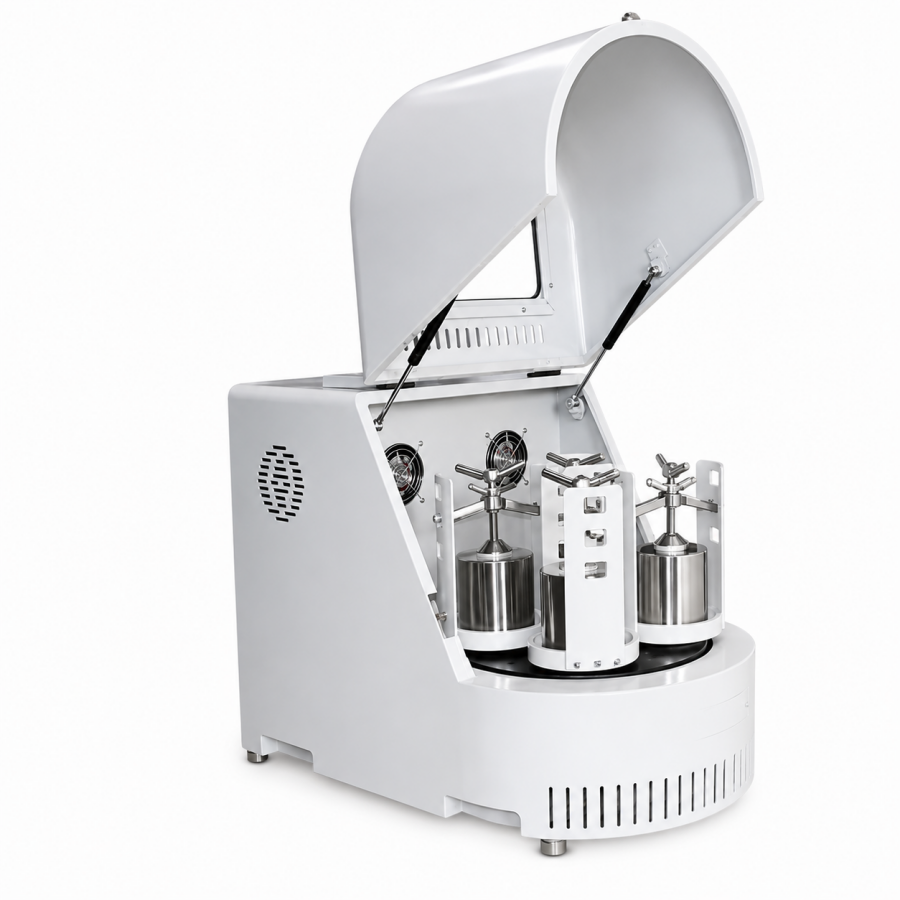
Description
SPBM-6A LATERAL PLANETARY BALL MILL (LABORATORY TYPE)LABORATORY & PRODUCTION GRADE EQUIPMENT
|
|||||||||||||||||||||||||||||||||||||||||||||||||||||||||||||||||||||||||||||||||||||||||||||||||||||||||||||||||||||||||||||||||||||||||||||||||||||||||||||||||||||||||||||||||||||||||||||||
|
|||||||||||||||||||||||||||||||||||||||||||||||||||||||||||||||||||||||||||||||||||||||||||||||||||||||||||||||||||||||||||||||||||||||||||||||||||||||||||||||||||||||||||||||||||||||||||||||
|
TAILORED SOLUTIONS FOR RESEARCH
Contact our engineering team for technical support or official quotations.
EMAIL: inquiry@atomfair.com
|
|||||||||||||||||||||||||||||||||||||||||||||||||||||||||||||||||||||||||||||||||||||||||||||||||||||||||||||||||||||||||||||||||||||||||||||||||||||||||||||||||||||||||||||||||||||||||||||||
|
Manufacturer: Atomfair LLC
Brand: ATOMFAIR®
|
The SPBM-6A requires a stable 220V/50Hz single-phase power supply with a 0.75 kW motor and frequency conversion stepless speed regulation. The safety lock switch must be engaged before operation, and overload protection is integrated to prevent electrical hazards.
- Vacuum Atmosphere Grinding Constraint: When using optional vacuum grinding jars, ensure proper sealing before initiating the grinding cycle to maintain inert gas or vacuum conditions for air-sensitive materials.
- Grinding Jar and Ball Compatibility Constraint: Select jar and ball materials (e.g., Al₂O₃, PU, PTFE, SS, WC-Co, Agate, YSZ) compatible with the target material to avoid cross-contamination and chemical reaction risks.
- Noise and Operational Safety Constraint: Operating noise is 60 ± 5 dB, requiring hearing protection in prolonged use, and the unit must be placed on a stable, level surface to prevent mechanical imbalance.
This procedure covers the safe setup, loading, and operation of the SPBM-6A for ultrafine grinding of materials. Proper selection of grinding jars and balls, engagement of safety interlocks, and adherence to programmable timing are critical for reproducible results.
Required Equipment: ATOMFAIR SPBM-6A main grinding unit, Compatible grinding jars (1–1.5 L, e.g., Al₂O₃, PU, PTFE, SS), Compatible grinding balls (e.g., WC-Co, Al₂O₃, Agate, YSZ), Optional vacuum grinding jars (50–1000 mL) with sealing gaskets
- Inspect the unit and power supply
Inspect the SPBM-6A for any visible damage and confirm the power supply matches 220V/50Hz single-phase with a 0.75 kW motor rating. - Select and load grinding jars and balls
Select grinding jars and balls made of materials compatible with your target sample to avoid contamination, then load the jars with sample and balls, ensuring the fill volume does not exceed two-thirds of the jar capacity. - Secure jars onto the four-station platform
Secure each loaded grinding jar onto the four-station platform using the locking mechanism, verifying that all jars are evenly balanced to prevent vibration during operation. - Engage the safety lock switch
Engage the safety lock switch on the main unit to ensure the lid is closed and locked before powering on the mill. - Set programmable parameters
Set the total running time (1–9999 min) and bidirectional rotation interval (1–999 min) using the frequency conversion stepless speed regulation control panel. - Start the grinding cycle
Start the grinding cycle by pressing the run button, monitoring the revolution speed (0–335 rpm) and jar speed (0–670 rpm) on the LED display. - Stop and unload after cycle completion
Stop the mill after the programmed cycle completes, allow the jars to cool if necessary, then disengage the safety lock and carefully remove the jars for sample recovery.
How does the fixed 1:2 revolution-to-rotation ratio of the SPBM-6A affect milling performance for materials with significantly different hardness?
The SPBM-6A operates at a fixed 1:2 ratio (revolution 0–335 rpm, jar 0–670 rpm) designed for high-energy density and ultrafine grinding down to 0.1 μm. While this ratio is optimized for general use, it cannot be adjusted to independently tune impact and shear forces. For unusually hard or ductile materials, users may need to compensate by selecting different jar materials or ball sizes, though the source does not provide specific performance data for such cases.
Can the SPBM-6A be used to grind air-sensitive materials such as lithium metal or sulfides, and what accessories are necessary?
Yes, the SPBM-6A supports vacuum atmosphere grinding for air-sensitive materials when equipped with optional vacuum grinding jars (50–1000 mL). The system includes a vacuum atmosphere grinding safety interlock that must be engaged before operation. The grinding jars and balls must be ordered separately and selected to be compatible with the target material to avoid contamination.
What are the electrical and physical installation requirements for the SPBM-6A in a standard laboratory?
The SPBM-6A requires a 220V/50Hz single-phase power supply with a 0.75 kW motor and frequency conversion stepless speed regulation. The unit weighs 85 kg and has dimensions of 760 × 470 × 600 mm, requiring a sturdy benchtop or floor space of at least that footprint. Operating noise is 60 ± 5 dB, so no special acoustic isolation is needed, and standard lab ventilation is sufficient.
The SPBM-6A vertical semi-circular planetary ball mill provides high-energy planetary grinding capable of 0.1 μm particle size output and four-station simultaneous processing, but requires separate purchase of grinding jars and balls, and vacuum atmosphere grinding depends on optional vacuum jars with proper sealing.
Positive
- 0.1 μm ultrafine grinding capability: Planetary motion with revolution-to-rotation ratio of 1:2 delivers high energy density, achieving minimum particle sizes down to 0.1 μm for advanced material research.
- Four-station parallel sample processing: Standard four-jar configuration enables simultaneous preparation of up to four different samples, increasing throughput for comparative studies in materials science.
Trade-offs
- Grinding jars and balls sold separately: The main unit does not include jars or media; compatible jars (e.g., Al₂O₃, YSZ, agate) and balls must be ordered separately, increasing initial procurement complexity and cost.
- Vacuum grinding requires optional accessories: Inert gas or vacuum atmosphere grinding is possible only with optional vacuum grinding jars (50–1000 mL), and proper sealing must be verified before operation to maintain atmosphere integrity.
Every advanced material, component, equipment, and instrument in our catalog is backed by rigorous testing. We maintain strict internal quality management frameworks and align with CE conformity metrics to deliver transparent, reproducible performance data via our public open-science repository.
To request raw batch performance data, submit formal vendor registration paperwork, or execute a fast-turnaround R&D manufacturing loop, contact us at inquiry@atomfair.com.
Item is dispatched under the Atomfair Shipping & Delivery Framework (Free worldwide shipping on orders over $59 USD). Return is governed by the Atomfair Return & Refund Policy (7-day technical return window).
