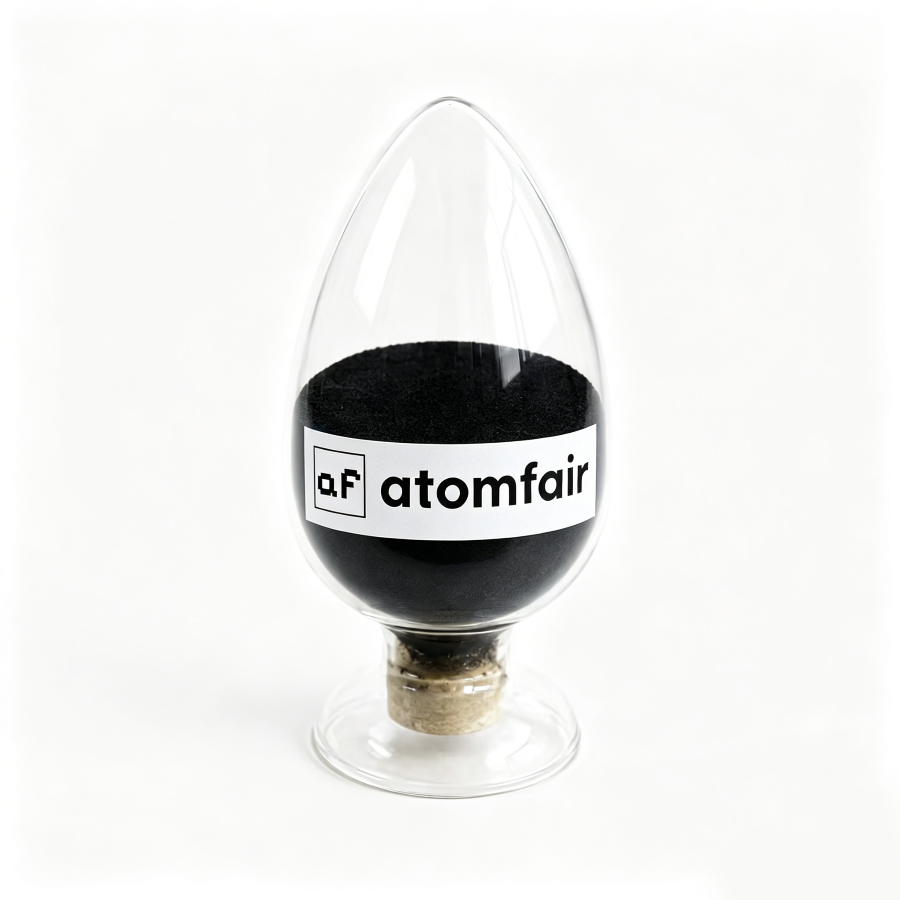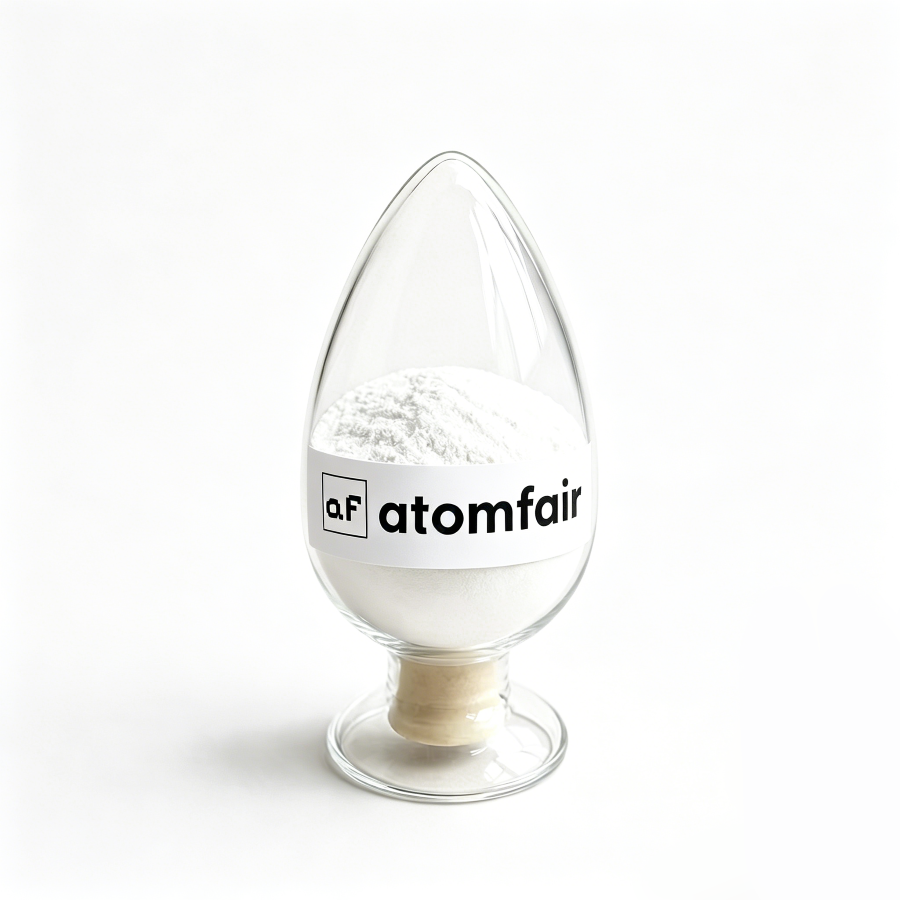
Nickel Iron Manganese Zinc Hydroxide Precursor PowderCOMMERCIAL GRADE · PRODUCTION
|
|||||||||||||||||||||||||||
|
|||||||||||||||||||||||||||
|
TAILORED SOLUTIONS FOR RESEARCH
Contact our engineering team for technical support or official institutional quotations.
EMAIL: INQUIRY@ATOMFAIR.COM
|
|||||||||||||||||||||||||||
|
Manufacturer: PRODUCTION DIVISION · ADVANCED ENERGY STORAGE DIVISION
Brand: INDUSTRIAL TESTING HARDWARE
Specifications are representative and subject to change without notice. For the latest version and compliance certificates, contact official sales channel.
|
This powder exhibits a moisture content of 4600 ppm and pH of 8.77, requiring controlled humidity storage to maintain consistency. Avoid exposure to atmospheric moisture to prevent alteration of particle size distribution and tap density.
- moisture sensitivity: Store the material in a sealed container under low-humidity conditions to preserve the measured moisture content and prevent agglomeration.
How does the specified 4600 ppm moisture content in Ni-Fe-Mn-Zn hydroxide precursor affect calcination reproducibility for sodium-ion cathode synthesis?
The 4600 ppm moisture content provides a consistent baseline that minimizes batch-to-batch variability during calcination. The material's pH of 8.77 combined with a controlled D50 of 5.028 µm ensures reproducible solid-state reactions. Under ISO-compliant processing, this moisture level is tightly controlled to prevent uncontrolled phase evolution, though strict handling in anhydrous inert gas environments is still required.
Can this Ni-Fe-Mn-Zn hydroxide precursor be integrated into existing co-precipitation workflows for layered sodium-ion cathode materials?
Yes, this research-grade precursor is engineered for advanced sodium-ion cathode synthesis. The uniform chemical distribution of Ni (24.98 mol%), Fe (33.33 mol%), Mn (36.12 mol%), and Zn (5.57 mol%) supports consistent transition-metal layering. Its particle size distribution (D50 = 5.028 µm) and tap density of 1.44 g/cm³ are optimized for micro-sintering integration, but the material must be handled exclusively in anhydrous inert gas to maintain integrity.
What specific storage and handling conditions are required to prevent oxidation or phase degradation of this hydroxide precursor?
Store in vacuum-sealed research-grade protective containers under anhydrous inert gas atmosphere. The material's 4600 ppm residual moisture and pH of 8.77 indicate sensitivity to ambient exposure; any contact with air can cause oxidation or phase degradation before thermal validation. Containers should be opened only in a glovebox with inert gas, and the product must be kept tightly sealed at all times.
This Ni-Fe-Mn-Zn hydroxide precursor powder delivers high tap density and uniform elemental distribution for sodium-ion cathode R&D, but its strong moisture sensitivity necessitates strict anhydrous inert-gas handling to avoid phase degradation.
Positive
- Homogeneous Elemental Distribution: The precursor exhibits an uncompromised structural matrix with highly uniform chemical distribution of Ni-Fe-Mn-Zn across every batch, ensuring consistent cathode stoichiometry during solid-state reactions.
- Optimized Particle Morphology: With a controlled D50 of 5.028 µm and tap density of 1.44 g/cm³, the powder supports high packing density and micro-sintering integration, improving mechanical integrity in electrode fabrication.
Trade-offs
- Moisture Sensitivity: The product is highly sensitive to moisture and ambient conditions; containers must be tightly sealed or handling confined to an anhydrous inert gas environment to prevent oxidation or phase degradation prior to thermal validation.
- Application-Specific Scope: This material is explicitly designed for sodium-ion battery cathode R&D and co-precipitation testing platforms, making it unsuitable for general-purpose transition metal hydroxide applications without additional adaptation.
Every advanced material, component, equipment, and instrument in our catalog is backed by rigorous testing. We maintain strict internal quality management frameworks and align with CE conformity metrics to deliver transparent, reproducible performance data via our public open-science repository.
To request raw batch performance data, submit formal vendor registration paperwork, or execute a fast-turnaround R&D manufacturing loop, contact us at inquiry@atomfair.com.
Item is dispatched under the Atomfair Shipping & Delivery Framework (Free worldwide shipping on orders over $59 USD excl. heavy equipment). Return is governed by the Atomfair Return & Refund Policy (7-day technical return window).