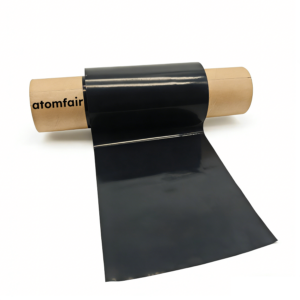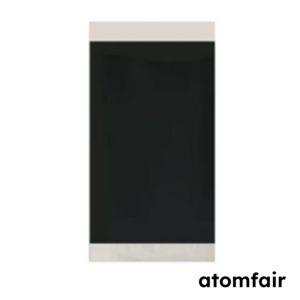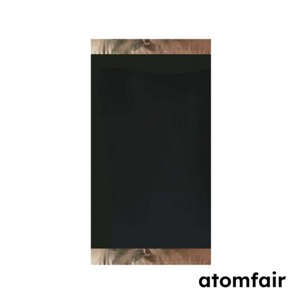
ATOMFAIR® NCM811-S04 LITHIUM NICKEL COBALT MANGANESE OXIDE (NCM811) ELECTRODE SHEETRESEARCH GRADE MATERIAL | DRY PROCESS
|
|||||||||||||||||||||||||||||||||||||||||
|
|||||||||||||||||||||||||||||||||||||||||
|
TAILORED SOLUTIONS FOR RESEARCH
Contact our engineering team for technical support or custom fabrication inquiries.
EMAIL: inquiry@atomfair.com
|
|||||||||||||||||||||||||||||||||||||||||
|
Manufacturer: Atomfair LLC
Brand: ATOMFAIR®
|
|||||||||||||||||||||||||||||||||||||||||
Store under inert atmosphere (argon or nitrogen) to prevent moisture-induced degradation of the NCM811 active material. Handle exclusively in a dry-room or glovebox environment to avoid exposure to ambient humidity and oxygen.
- Moisture sensitivity: Exposure to ambient moisture can cause lithium leaching and capacity fade, requiring storage in an inert atmosphere with dew point below -40°C.
- Mechanical integrity: The single-sided coating is fragile and may delaminate if subjected to sharp bending or excessive pressure during handling.
- Electrochemical activity: The cathode material can undergo exothermic reactions if short-circuited, necessitating isolation from conductive surfaces.
- Containment requirement: Sheets should remain in sealed, moisture-barrier packaging with desiccant until ready for use.
- Skin and inhalation hazard: NCM811 dust or particles may cause skin or respiratory irritation, requiring use of gloves and fume hood during cutting or processing.
This procedure outlines the steps to safely retrieve, inspect, and prepare NCM811 electrode sheets for coin cell assembly. All steps must be performed in an argon-filled glovebox to maintain material integrity and operator safety.
Required Equipment: Argon-filled glovebox, Ceramic or plastic tweezers, Precision electrode cutter, Analytical balance with anti-static kit
- Inspect packaging
Inspect the sealed moisture-barrier packaging for any signs of damage or pinholes before opening. - Transfer to glovebox
Transfer the sealed package into the argon-filled glovebox via the antechamber and allow sufficient purge time to remove any adsorbed moisture. - Open and retrieve sheet
Open the package inside the glovebox and carefully retrieve one electrode sheet using ceramic tweezers. - Cut electrode to size
Cut the electrode sheet to the desired dimensions using a precision cutter or scalpel on a clean, antistatic mat. - Weigh electrode
Weigh the cut electrode on an analytical balance and record the mass for electrochemical calculations. - Assemble cell
Assemble the electrode into a coin cell or pouch cell with appropriate electrolyte and separator for testing.
For a 40 mg/cm² single-sided NCM811 cathode on a 12 μm carbon-coated aluminum foil, how does the substrate thickness and areal loading trade off against electrode flexibility and risk of cracking during cell assembly?
The 12 μm substrate with a 4.4 mg/cm² current collector areal density provides a lightweight current collector, but the 40 mg/cm² coating increases electrode stiffness. The dry process coating is noted for robust mechanical cohesion, which reduces cracking risk. However, the substrate thickness tolerance of +0.5 -0.5 μm may cause variation in electrode dimensional stability during handling.
Can the NCM811-S04 single-sided cathode be used directly in a symmetrical coin cell configuration for half-cell testing, or are additional current collector layers required?
Yes, the single-sided cathode with 40 mg/cm² coating on a 12 μm carbon‑coated aluminum substrate is ideal for half-cell testing against lithium metal. The carbon coating minimizes interfacial resistance, and the 120×90 mm coating area can be punched into standard coin cell electrodes. No additional current collector layers are required beyond the supplied substrate.
What vacuum drying protocol is recommended for the NCM811-S04 electrode sheets before cell assembly to ensure optimal electrochemical performance?
The electrode sheets require vacuum baking at 100°C for 12 hours to remove adsorbed moisture, as specified in the product notice. This step is critical because NCM811 is moisture-sensitive and can degrade if not properly dried. The carbon-coated aluminum substrate and dry process may reduce residual moisture content, but the 12‑hour, 100°C vacuum protocol is the stated pre-treatment standard.
This NCM811 single-sided cathode with 40 mg/cm² dry-process coating and 96% active material ratio offers high active phase load for lithium-ion battery R&D. The carbon-coated aluminum substrate minimizes resistance, but the electrode requires 12-hour vacuum baking at 100°C prior to use and is intended only for laboratory research.
Positive
- High active material ratio: Formulated with 96.00% active material chemistry layout, enabling precise and reproducible electrochemical analysis.
- Dry process coating uniformity: Yields robust mechanical cohesion and precise 40 mg/cm² film thickness on the single-sided profile, ensuring consistent batch performance.
Trade-offs
- Pre-use vacuum baking required: Standard protocol mandates 12 hours of vacuum baking at 100°C before electrode deployment, adding a preparatory step to laboratory workflows.
- Restricted to laboratory research: Sold exclusively for R&D use, limiting applicability to pilot or production-scale battery manufacturing.
Every advanced material, component, equipment, and instrument in our catalog is backed by rigorous testing. We maintain strict internal quality management frameworks and align with CE conformity metrics to deliver transparent, reproducible performance data via our public open-science repository.
To request raw batch performance data, submit formal vendor registration paperwork, or execute a fast-turnaround R&D manufacturing loop, contact us at inquiry@atomfair.com.
Item is dispatched under the Atomfair Shipping & Delivery Framework (Free worldwide shipping on orders over $59 USD excl. heavy equipment). Return is governed by the Atomfair Return & Refund Policy (7-day technical return window).