Description
ATOMFAIR® NFPP-S05 SODIUM IRON PHOSPHATE PYROPHOSPHATE (NFPP) ELECTRODE SHEETRESEARCH GRADE MATERIAL
|
||||||||||||||||||||||||||||||||||||||||||||||
|
||||||||||||||||||||||||||||||||||||||||||||||
|
|||
|
TAILORED SOLUTIONS FOR RESEARCH
Contact our engineering team for technical support or official institutional quotations.
EMAIL: inquiry@atomfair.com
|
|||
|
Manufacturer: ATOMFAIR LLC
Brand: ATOMFAIR®
|
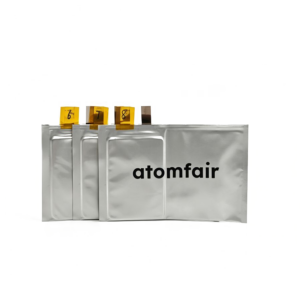
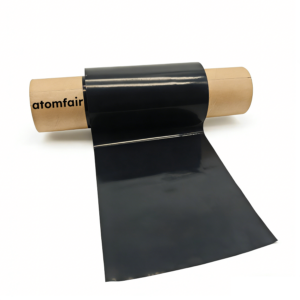
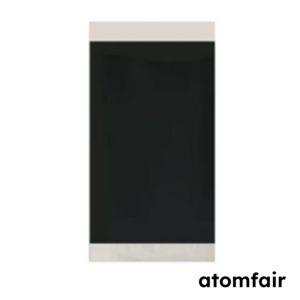
This electrode sheet is double-side coated with 62 mg/cm² NFPP on carbon-coated aluminum foil via a dry process. It is intended for sodium-ion battery R&D and provides high reliability for electrochemical performance analysis.
- Coating Design Parameters: The double-side coating has an areal density of 62 mg/cm² with an active material ratio of 94.5%.
- Substrate Specifications: The substrate is carbon-coated aluminum foil with an areal density of 4.4 mg/cm² and thickness of 12 +0.5 +0.5 μm.
How is the electrode sheet baking time determined?
It is 12 hours under vacuum baking at 100°C.
How does the 2.3 g/cm³ compaction density of the NFPP electrode affect its rate capability and electrolyte wetting?
The compaction density of 2.3 g/cm³ indicates a dense electrode coating that increases volumetric energy density but reduces porosity and electrolyte penetration, potentially limiting high-rate performance. The dry process and 94.5% active material ratio contribute to structural uniformity, but the trade-off between density and ion transport must be considered for rate-critical battery designs.
Can this double-side coated NFPP electrode be directly used in pouch cell assembly without additional preconditioning?
Yes, the electrode is ready for use after vacuum baking at 100°C for 12 hours as specified. The carbon-coated aluminum foil substrate ensures stable current collection, and the coating area of 90×120 mm is suitable for pouch cells. However, electrode punching and alignment are required due to double-sided coating, and electrolyte optimization is recommended for best performance.
The NFPP Double Side Cathode offers high active material loading (94.5%) and areal density (62 mg/cm²) via dry process, suitable for sodium-ion battery research. However, users must account for the 12-hour vacuum baking step and the limited 90×120 mm coating area when planning cell assembly workflows.
Positive
- High active material loading at 94.5%: The electrode sheet contains 94.5% active material by weight, minimizing the proportion of binders and conductive additives, which can improve overall energy density and electrochemical performance in sodium-ion cells.
- Double-side dry process coating at 62 mg/cm²: The double-side coating with 62 mg/cm² areal density, produced by a dry process, enables high areal capacity and consistent electrode architecture, delivering reliable performance for sodium-ion battery R&D.
Trade-offs
- Requires 12-hour vacuum baking at 100°C: Prior to cell assembly, the electrode sheet must be vacuum-baked at 100°C for 12 hours, adding processing time and necessitating compatible vacuum oven infrastructure.
- Limited coating area of 90×120 mm: The coating dimensions are 90×120 mm, which restricts electrode size and may require trimming or multiple sheets for larger cell formats, affecting experimental flexibility.
Every advanced material, component, equipment, and instrument in our catalog is backed by rigorous testing. We maintain strict internal quality management frameworks and align with CE conformity metrics to deliver transparent, reproducible performance data via our public open-science repository.
To request raw batch performance data, submit formal vendor registration paperwork, or execute a fast-turnaround R&D manufacturing loop, contact us at inquiry@atomfair.com.
Item is dispatched under the Atomfair Shipping & Delivery Framework (Free worldwide shipping on orders over $59 USD excl. heavy equipment). Return is governed by the Atomfair Return & Refund Policy (7-day technical return window).