Description
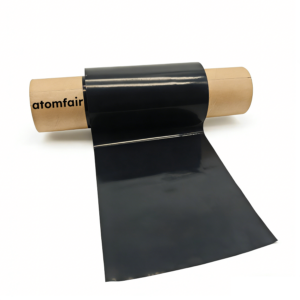
ATOMFAIR® LMR-S05 LITHIUM-RICH MANGANESE-BASED CATHODE (LMR) ELECTRODE SHEETRESEARCH GRADE MATERIAL | DRY PROCESS
|
|||||||||||||||||||||||||||||||||||||||||
|
|||||||||||||||||||||||||||||||||||||||||
|
TAILORED SOLUTIONS FOR RESEARCH
Contact our engineering team for technical support or official quotations.
EMAIL: inquiry@atomfair.com
|
|||||||||||||||||||||||||||||||||||||||||
|
Manufacturer: Atomfair LLC
Brand: ATOMFAIR®
|
|||||||||||||||||||||||||||||||||||||||||
Store the LMR-S05 cathode sheets in an argon-filled glovebox with moisture and oxygen levels below 0.1 ppm to prevent degradation. Avoid exposure to air, moisture, and static discharge to maintain electrode integrity and electrochemical performance.
- Atmosphere Constraint: Store electrode sheets exclusively under inert argon atmosphere to prevent reactivity with ambient oxygen and moisture.
- Humidity Constraint: Maintain relative humidity below 0.1 ppm in the storage environment to avoid lithium leaching and structural degradation.
- Temperature Constraint: Keep storage temperature between 15°C and 25°C to minimize thermal stress and capacity fade.
- Electrical Safety: Prevent electrical short circuits by isolating electrodes from conductive surfaces and using antistatic packaging.
- Mechanical Integrity: Handle sheets by the edges to avoid deformation or delamination of the dry-processed coating from the substrate.
This procedure outlines the steps to safely handle and assemble LMR-S05 cathode sheets into test coin cells. Follow all steps under inert atmosphere to preserve electrode quality and ensure reproducible electrochemical testing.
Required Equipment: Argon-filled glovebox, Precision disc cutter, Vacuum oven, Coin cell crimper
- Inspect Electrode
Inspect each LMR-S05 sheet for visible defects such as cracks, pinholes, or delamination before use. - Transfer to Glovebox
Transfer the selected sheets into an argon-filled glovebox with moisture and oxygen below 0.1 ppm using the antechamber. - Cut Electrodes
Cut the sheet into circular or rectangular electrodes of desired dimensions using a precision disc cutter to ensure consistent geometry. - Dry Electrodes
Dry the cut electrodes in a vacuum oven at 110°C for 12 hours to remove any adsorbed moisture. - Assemble Cell
Assemble the coin cell by placing the dried cathode, separator, lithium anode, and electrolyte in the proper order inside the glovebox. - Crimp Cell
Crimp the coin cell using a hydraulic crimper to seal the cell and prevent electrolyte leakage. - Condition Cell
Allow the assembled cell to rest for at least 4 hours before electrochemical testing to ensure full electrolyte wetting.
How does the 30 mg/cm² coating density of the LMR-S05 cathode affect its areal capacity and potential rate capability trade-offs?
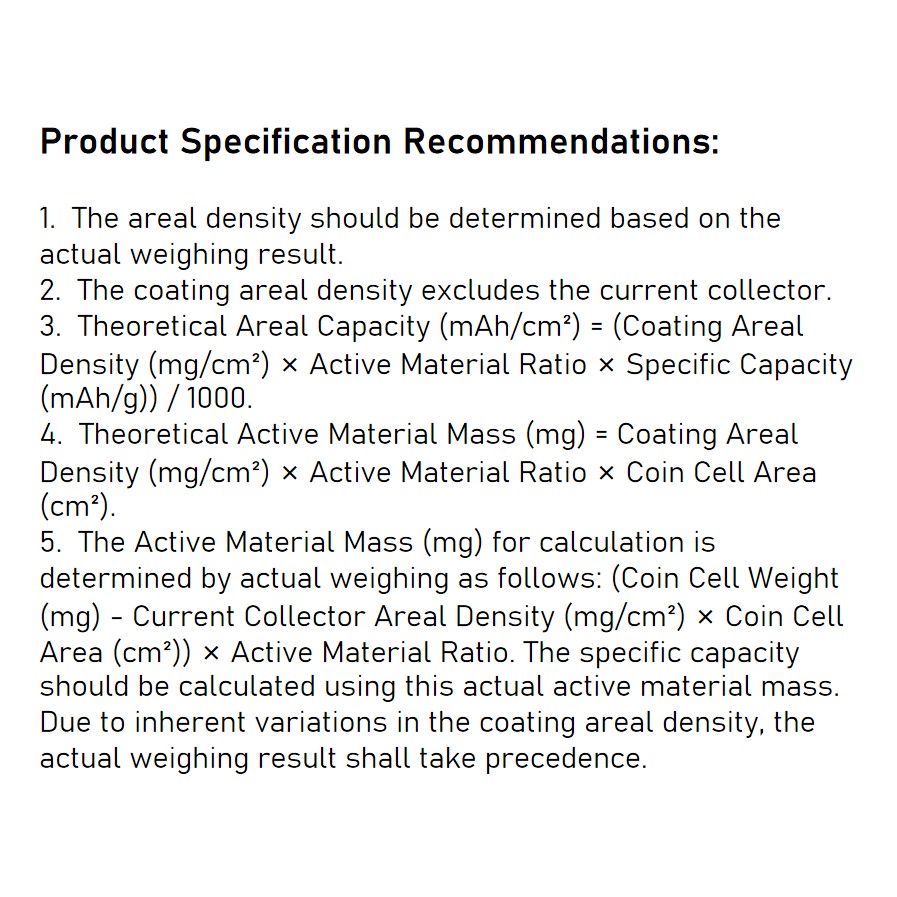
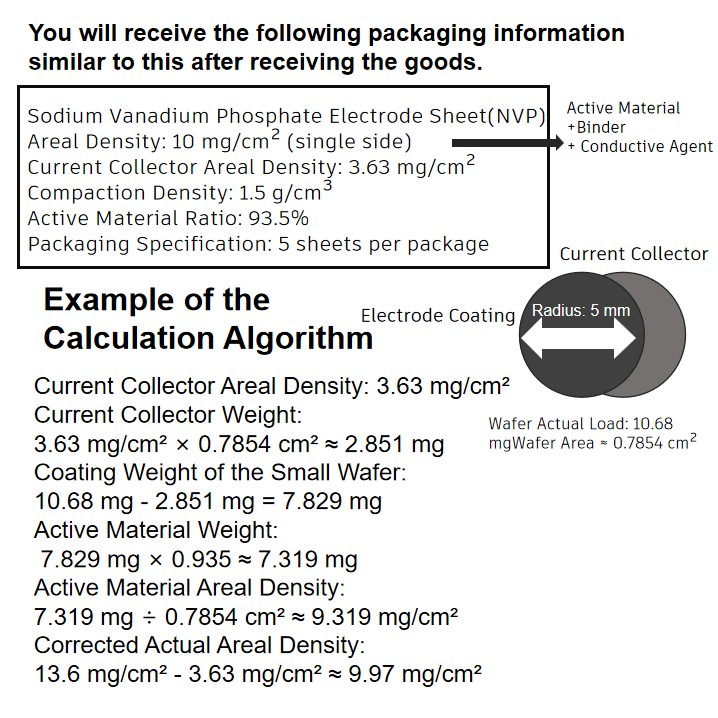
The 30 mg/cm² coating density yields an areal capacity of 9 mAh/cm² based on the rated 300 mAh/g capacity, providing high energy density for laboratory R&D. However, such high loading typically increases ionic resistance; the dry process and 96% active material ratio ensure robust film uniformity to mitigate some rate limitations. The carbon-coated aluminum current collector further reduces contact polarization to support stable cycling.
What cell formats are compatible with the LMR-S05 cathode sheet given its 120×90 mm coating area?
The LMR-S05's coating area of 120×90 mm on a 140×90 mm substrate is designed for punching into standard coin cell electrodes of 15-20 mm diameter. The substrate thickness of 12+0.5+0.5 μm and areal density of 4.4 mg/cm² are suitable for automated punching. The single-sided coating requires proper orientation with the coated side facing the separator in cell assembly.
What is the required pretreatment for the LMR-S05 cathode sheets before electrochemical testing?
Standard protocol mandates vacuum baking the LMR-S05 sheets at 100°C for exactly 12 hours to remove residual moisture. This pretreatment is essential for the dry-processed coating to achieve the specified 300 mAh/g capacity and prevent electrolyte side reactions. The carbon-coated aluminum substrate is stable under these conditions.
This single-sided LMR electrode sheet delivers 300 mAh/g capacity with 96% active material via dry process on carbon-coated foil, suitable for advanced lithium-ion battery research. The mandatory 12-hour vacuum baking protocol and research-only designation are key operational considerations.
Positive
- 300 mAh/g capacity with 96% active material: Offers a design capacity of 300 mAh/g with a 96% active material matrix, enabling high-energy-density cell evaluations in next-generation lithium-ion battery R&D.
- Carbon-coated aluminum foil reduces polarization: The carbon-modified interlayer on the aluminum current collector minimizes contact polarization and enhances cycling stability, extending test cell performance metrics.
Trade-offs
- Pre-use vacuum baking required: Sheets must be vacuum-baked at 100°C for 12 hours prior to cell assembly, adding processing time and requiring dedicated vacuum oven infrastructure.
- Limited to laboratory R&D use: Product is explicitly sold for laboratory research only, not intended for pilot or production-scale deployment, which may restrict scalability studies.
Every advanced material, component, equipment, and instrument in our catalog is backed by rigorous testing. We maintain strict internal quality management frameworks and align with CE conformity metrics to deliver transparent, reproducible performance data via our public open-science repository.
To request raw batch performance data, submit formal vendor registration paperwork, or execute a fast-turnaround R&D manufacturing loop, contact us at inquiry@atomfair.com.
Item is dispatched under the Atomfair Shipping & Delivery Framework (Free worldwide shipping on orders over $59 USD excl. heavy equipment). Return is governed by the Atomfair Return & Refund Policy (7-day technical return window).