
Dry Bath Incubator
ATOMFAIR Dry Bath Incubators support precise temperature control for tubes, vials, PCR strips, microplates, deep-well plates, blood-collection tubes, and small laboratory vessels. This category includes compact mini dry baths, digital heating dry baths, heating/cooling dry baths, constant 4°C dry baths, heating-shaking dry baths, and a wide range of interchangeable heating blocks.
For buyers, the key decision is not only the maximum temperature. A suitable dry bath system should match the sample format, vessel volume, number of positions, required heating or cooling range, temperature accuracy, timer needs, shaking requirement, and block compatibility. Existing options in this category cover room-temperature-plus heating up to 60°C, 100°C, 105°C, 120°C, and 150°C, as well as selected cooling platforms down to application-dependent sub-ambient ranges.
Most users should first choose the instrument platform, then select compatible blocks for 0.2 mL, 0.5 mL, 1.5 mL, 2 mL, 5 mL, 15 mL, 50 mL, PCR plates, chromatography vials, blood-collection tubes, magnetic plates, or deep-well plates. For non-standard vessels, please confirm hole diameter, hole depth, block geometry, and platform compatibility before inquiry.
Show More Dry Bath Incubator Selection Guide
I. Choose by Temperature-Control Function
| Product Family | Typical Use | Selection Notes |
|---|---|---|
| Mini Dry Baths | Small tube incubation, quick heating, compact bench use | Suitable when sample count is modest and space is limited. |
| Digital Heating Dry Baths | Routine tube and block heating | Choose by maximum temperature, block positions, timer range, and uniformity. |
| Heating/Cooling Dry Baths | Enzyme reactions, sample stabilization, temperature-sensitive workflows | Useful when sub-ambient control is needed in addition to heating. |
| Constant 4°C Dry Baths | Cold holding and sample temperature maintenance | Suitable for workflows that require stable low-temperature holding rather than heating ramps. |
| Heating-Shaking Dry Baths | Mixing, incubation, sample reaction acceleration | Confirm rpm range, compatible blocks, vessel sealing, and spill risk. |
| Heating/Cooling/Shaking Dry Baths | Combined thermal control and agitation | Best for workflows that need both temperature cycling flexibility and mixing. |
II. Choose Blocks by Sample Format
| Sample Format | Current Coverage | Buyer Checkpoints |
|---|---|---|
| Microcentrifuge Tubes | 0.2 mL, 0.5 mL, 1.5 mL, 2 mL formats | Confirm tube profile, well diameter, well depth, and number of positions. |
| Conical Tubes | 5 mL, 15 mL, 50 mL blocks | Match conical-bottom geometry and platform size before ordering. |
| PCR Plates and Strips | 0.2 mL 96-well and strip-compatible blocks | Confirm plate skirt type, strip tube fit, and lid clearance. |
| Blood-Collection Tubes | Dedicated multi-position tube blocks | Check tube diameter, cap height, and workflow temperature. |
| Vials and Specialty Vessels | Chromatography vial blocks and mixed-format blocks | Useful when multiple vessel types are used in one lab. |
| Magnetic / Deep-Well Plate Blocks | Magnetic plate and deep-well plate modules | Confirm plate footprint, shaking requirement, and magnetic bead workflow compatibility. |
III. Platform Compatibility Matters
Dry bath blocks are not universal across all instruments. Mini HCL100, Mini HC100, and Mini H100 platforms use mini-format blocks, while H100-series, HB120-series, and HB105/HB150-series instruments use their own compatible block families. Before purchasing blocks separately, confirm the dry bath model, block footprint, vessel size, required temperature range, and whether shaking or cooling is involved.
For laboratories with multiple workflows, a modular setup is often more flexible than a single fixed block. A typical configuration may include one heating/cooling dry bath, one standard 1.5/2 mL tube block, one PCR plate block, one 15 mL or 50 mL conical tube block, and one specialty block for vials, blood tubes, or magnetic bead workflows.
IV. Application Paths
| Workflow | Recommended Configuration |
|---|---|
| Molecular biology incubation | Mini or H100-series dry bath with 0.2 mL, 1.5 mL, 2 mL, or PCR plate blocks. |
| Sample preparation and reagent warming | Digital heating dry bath with tube blocks matched to common vessel sizes. |
| Temperature-sensitive sample holding | Heating/cooling dry bath or constant 4°C dry bath, depending on target temperature. |
| Mixing and incubation | Heating-shaking or heating/cooling/shaking dry bath with compatible sealed vessels. |
| Clinical or sample tube workflows | HB120-style blood-collection tube or high-capacity tube blocks. |
| Magnetic bead workflows | Magnetic plate or deep-well plate modules with compatible dry bath platforms. |
FAQ
How do I choose between a dry bath and a water bath?
A dry bath uses metal blocks to transfer heat to tubes or vessels, reducing liquid handling and bath maintenance. A water bath provides liquid immersion and may be better for larger containers or applications requiring full surrounding contact. If the product is a true water bath, it should usually be listed separately from dry bath incubators.
What temperature range should I choose?
For routine warming and incubation, 60°C or 100°C platforms may be sufficient. For higher-temperature digestion, denaturation, or materials-related workflows, 120°C or 150°C platforms may be more suitable. For cold holding or temperature-sensitive assays, consider heating/cooling or constant 4°C models.
Are dry bath heating blocks interchangeable?
Only within compatible platform families. Always check whether the block is made for Mini, H100, HB120, HB105/HB150, or another platform before purchase.
What does temperature accuracy mean in practical use?
Accuracy describes how closely the controller reaches the set temperature under defined conditions. Actual sample temperature may also depend on block fit, tube wall thickness, sample volume, lid condition, ambient temperature, and equilibration time.
When should I choose a heating-shaking dry bath?
Choose a shaking model when incubation also requires mixing, such as reagent dissolution, sample extraction, enzyme reactions, or bead-based workflows. Confirm rpm range, block compatibility, tube sealing, and safe sample volume.
Which block should I use for PCR plates or strip tubes?
Use a PCR-compatible block designed for 0.2 mL 96-well plates or 8-strip tubes. Confirm the exact plate style and lid clearance before ordering.
Can I request a custom dry bath block?
Custom blocks are typically possible for non-standard vessels, but the request should include vessel diameter, vessel height, required hole depth, number of positions, target temperature, and compatible dry bath platform.
Showing 17–32 of 54 results
-
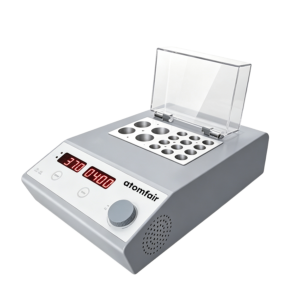
Dry Bath Incubator HB150-S2 150 °C LED 200 W ATOMFAIR®
$390.00 -
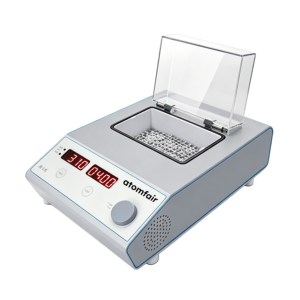
Dry Bath Incubator HB150-S2 25-150°C 200 W ATOMFAIR®
$410.00 -
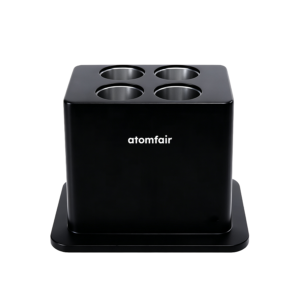
H100-Series Dry Bath Heating Block 4×50 mL ATOMFAIR®
$214.00 -
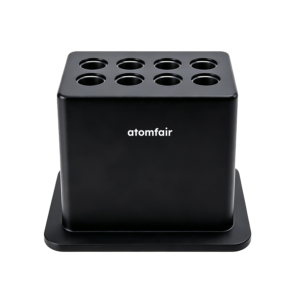
H100-Series Dry Bath Heating Block 8×15 mL ATOMFAIR®
$244.00 -
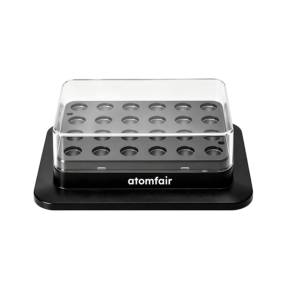
H100-Series Heating Block 24 × 1.5 mL Accessory ATOMFAIR®
$136.00 -
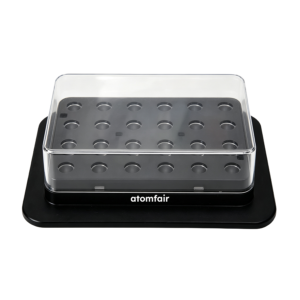
H100-Series Heating Block 24×0.5 mL Tube Module ATOMFAIR®
$136.00 -
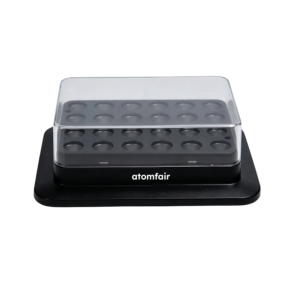
H100-Series Heating Block 24×1.5 mL Vials ATOMFAIR®
$136.00 -
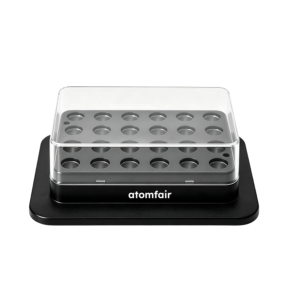
H100-Series Heating Block 24×2 mL for H100-Pro ATOMFAIR®
$136.00 -
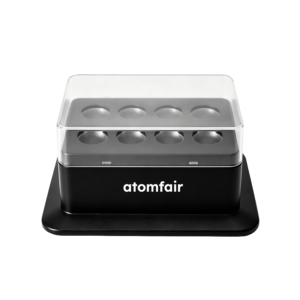
H100-Series Heating Block 8×5 mL Conical Tube ATOMFAIR®
$191.00 -
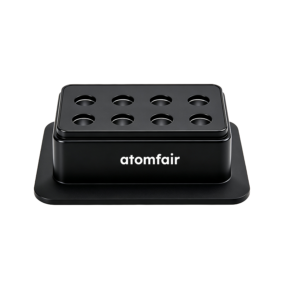
H100-Series Heating Block, 8×5 mL Conical Tubes ATOMFAIR®
$152.00 -
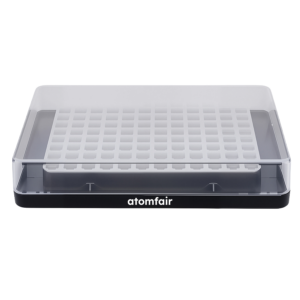
H100-Series PCR Plate Block 0.2 mL 96-Well ATOMFAIR®
$136.00 -
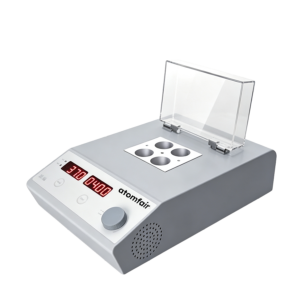
HB105-S1 Dry Bath Incubator 105°C 100 W LED ATOMFAIR®
$255.00 -
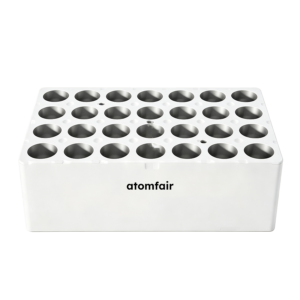
HB120 Heating Block 28×5/15 mL Compatible Module ATOMFAIR®
$105.00 -
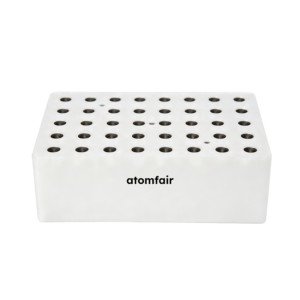
HB120 Heating Block 40 × 0.5 mL for Tubes ATOMFAIR®
$105.00 -
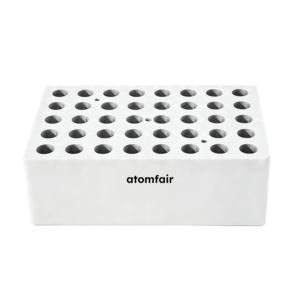
HB120 Heating Block 40 × 2 mL Dry Bath Accessory ATOMFAIR®
$105.00 -
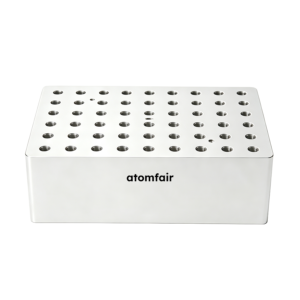
HB120 Heating Block 54×0.2 mL Dry Bath Module ATOMFAIR®
$105.00