
Battery Equipment & Instruments
ATOMFAIR® Battery Equipment & Instruments covers key stages in battery material processing, electrode preparation, cell assembly, sealing, welding, performance testing, and quality control. This category supports laboratory research, corporate pilot validation, process scale-up, and selected industrial production-line applications.
The category is suitable for lithium-ion batteries, sodium-ion batteries, solid-state batteries, lithium metal batteries, supercapacitors, pouch cells, cylindrical cells, and coin cells. Users can select equipment according to target cell format, process stage, automation level, sample size, working width, pressure range, temperature range, atmosphere requirements, test parameters, and throughput needs.
For early-stage development, mixing, filtration, coating, rolling, cutting, sealing, and testing equipment can help users complete material screening and cell validation efficiently. For pilot-scale and industrial support, automatic coating, slitting, die cutting, stacking, welding, sealing, OCV/internal resistance testing, short-circuit testing, sorting, and environmental testing equipment can support more consistent batch evaluation and process control.
Show More
Main Application Areas
| Application Area | Typical Equipment | Use Cases |
|---|---|---|
| Material Weighing & Mixing | Precision balances, automatic weighing and feeding systems, planetary vacuum mixers, V-type mixers, ball mills | Batching and mixing of cathode materials, anode materials, conductive additives, binders, solid electrolytes, and composite powders |
| Slurry Processing | Vacuum mixers, slurry filters, magnetic filtration units, dispersion equipment | Slurry homogenization, filtration, degassing, impurity removal, and viscosity control |
| Electrode Coating & Film Forming | Automatic coaters, pilot coating machines, multi-roll film forming systems, composite laminating equipment | Wet electrodes, dry-process electrodes, separators, composite films, and functional film preparation |
| Rolling & Pressing | Electric rolling mills, heated rolling mills, hydraulic rolling mills, tablet presses, isostatic presses | Electrode densification, powder pressing, solid-state battery interface compression, and sheet sample preparation |
| Cutting & Slitting | Disc cutters, slitting machines, die cutting machines, lithium metal anode slitters | Coin cell electrodes, pouch cell electrodes, cylindrical cell electrodes, and lithium metal foil processing |
| Cell Assembly | Glove boxes, coin cell crimpers, stacking machines, case loaders, grooving machines, sealing machines | Assembly of coin cells, pouch cells, cylindrical cells, solid-state batteries, and supercapacitors |
| Sealing & Welding | Top and side sealers, vacuum pre-sealers, secondary sealers, ultrasonic welders, laser marking machines | Pouch sealing, tab welding, case sealing, marking, and post-assembly processing |
| Testing & Quality Control | Battery testers, OCV testers, internal resistance testers, short-circuit testers, environmental chambers | Cell performance screening, safety testing, outgoing inspection, and process stability evaluation |
Equipment Selection by Cell Format
| Cell Format | Recommended Equipment Combination |
|---|---|
| Coin Cells | Balance, mixer, slurry filter, coating machine, rolling mill, disc cutter, glove box, coin cell crimper, battery tester |
| Pouch Cells | Coating machine, rolling mill, slitter, die cutter, stacking machine, aluminum-laminated film forming machine, tab welder, top and side sealer, vacuum pre-sealer, secondary sealer, testing equipment |
| Cylindrical Cells | Electrode slitting equipment, winding-related equipment, case loading machine, grooving machine, sealing machine, wrapping machine, OCV/internal resistance tester, sorting equipment |
| Solid-State Batteries | Ball mill, tablet press, heated rolling mill, lithium metal slitter, solid-state battery preparation platform, isostatic press, test fixtures |
| Dry-Process Electrodes | Automatic weighing and feeding system, fibrillation equipment, fiber network strengthening equipment, multi-roll film forming system, composite laminator, heated rolling equipment |
| Supercapacitors | Mixing equipment, coating equipment, rolling equipment, cutting equipment, filling/sealing equipment, short-circuit and performance testing equipment |
Selection by Operating Scale
| Operating Scale | Selection Focus |
|---|---|
| Laboratory R&D | Equipment flexibility, sample size, ease of operation, glove box compatibility, and small-batch experiment efficiency |
| Corporate R&D Centers | Process repeatability, parameter control, data recording, scalability, and compatibility with multiple material systems |
| Pilot Validation | Working width, cycle time, automation level, alignment accuracy, yield, and continuous operation stability |
| Industrial Support | Throughput, equipment integration, maintenance convenience, safety protection, quality inspection, and compatibility with existing production lines |
Key Selection Parameters
| Parameter | What to Confirm |
|---|---|
| Cell Type | Coin, pouch, cylindrical, prismatic, solid-state battery, or supercapacitor |
| Process Stage | Mixing, coating, rolling, cutting, stacking, welding, sealing, testing, or sorting |
| Sample Size | Electrode width, coating width, cutting size, cell size, and sealing width |
| Accuracy Requirements | Coating accuracy, rolling thickness precision, cutting burr control, stacking alignment, and test resolution |
| Throughput Needs | Single experiments, small-batch validation, pilot-line cycle time, or industrial continuous production requirements |
| Material Properties | High viscosity, moisture sensitivity, oxidation sensitivity, lithium metal content, solid electrolyte content, or inert-atmosphere requirements |
| Safety Requirements | Vacuum, explosion protection, temperature control, short-circuit protection, overvoltage protection, atmosphere control, and operator protection |
| Customization Needs | Fixtures, dies, sealing heads, welding horns, working width, voltage/current range, or automation interfaces |
Common Procurement Paths
For a new battery R&D laboratory, users can start with core sample-preparation and testing equipment, including weighing, mixing, coating, rolling, cutting, sealing, and battery testing systems. This setup supports material screening, formulation comparison, and small-cell validation.
For pouch or cylindrical cell pilot lines, equipment should be configured around the complete process chain, including electrode processing, assembly, welding, sealing, electrolyte-related steps, OCV testing, internal resistance testing, short-circuit testing, and sorting. These applications should pay close attention to cycle time, yield, alignment accuracy, and upstream/downstream equipment connection.
For solid-state batteries and dry-process electrodes, equipment selection should focus on powder processing, fibrillation, film forming, hot pressing, lamination, lithium metal handling, and pressure-assisted testing. These applications have higher requirements for material sensitivity, interfacial contact, and process parameter control, so users should specify the material system, target sample structure, and operating environment during inquiry.
FAQ
How should I decide between laboratory equipment and pilot-scale equipment?
The key factors are sample quantity, repeatability requirements, and future scale-up plans. If the current work is mainly material screening and formulation comparison, compact coating, rolling, cutting, sealing, and testing equipment is usually more suitable. If stable cycle time, batch consistency, process parameter recording, or customer sample validation is already required, semi-automatic or pilot-scale equipment should be prioritized.
For coating equipment, how do I know whether I need a laboratory coater or a pilot coating machine?
The decision mainly depends on coating width, coating accuracy, drying method, continuity, and repeatability. Laboratory coaters are suitable for small sheets and formulation screening. Pilot coating machines are better for continuous coating, wider substrates, multi-zone drying, and process validation closer to production conditions.
When selecting a rolling mill, which matters more: pressure, roll width, or heating function?
It depends on the material system and target electrode. Conventional wet electrodes usually require attention to roll width, roll-gap precision, and pressure stability. High-density electrodes, solid-state battery sheets, and dry-process electrodes often require greater focus on pressure range, temperature control, and thickness uniformity.
Which equipment most commonly affects yield in pouch cell production?
Stacking/alignment, tab welding, top and side sealing, vacuum pre-sealing, secondary sealing, and electrolyte-related equipment often have a strong impact on yield. Users should confirm alignment accuracy, sealing head width, temperature control precision, vacuum capability, welding material compatibility, and target cell dimensions.
Can cylindrical cell equipment support different cell models?
Some equipment can adapt to different specifications by changing molds, fixtures, or process parameters, but not all equipment is universal. Grooving, sealing, case loading, wrapping, and sorting equipment usually need to be checked against the target cell model, such as 18650, 21700, or custom cylindrical formats.
Why should I specify the material system when selecting solid-state battery equipment?
Oxide, sulfide, polymer, and composite solid electrolytes have very different processing conditions. The need for inert atmosphere, heated rolling, pressure assistance, lithium metal handling, dry film forming, or special dies depends directly on the material system. It is usually not enough to select equipment only under the general label of solid-state battery equipment.
Can dry-process electrode equipment and traditional wet-process electrode equipment be shared?
Some downstream equipment can be shared, such as rolling, cutting, stacking, welding, and testing equipment. However, the front-end dry-process stage usually requires dedicated equipment for fibrillation, dry powder mixing, film forming, and composite lamination. If the target route is solvent-free processing, dry-process compatibility should be confirmed separately.
Can the equipment be placed inside a glove box or dry room?
This should be confirmed item by item. Small cutting tools, tablet presses, sealing tools, electrolyte dosing tools, and test fixtures are often easier to integrate with glove boxes. Larger coating, rolling, stacking, and sealing equipment is usually more suitable for dry rooms or localized inert-atmosphere solutions. Users should specify oxygen/moisture control requirements and available site space during inquiry.
How should testing equipment be matched to production or R&D needs?
Material R&D usually focuses on channel count, current range, rate testing, and data export. Production quality control places more emphasis on OCV, internal resistance, short-circuit detection, testing speed, sorting logic, and connection with automation lines. Users should not only check voltage range, but also confirm accuracy, cycle time, and data management requirements.
Which equipment types should be checked first for customization feasibility?
Equipment closely related to cell dimensions, material contact surfaces, or production-line interfaces should be checked first. Examples include cutting dies, slitting blades, sealing heads, welding horns, fixtures, stacking jigs, electrolyte injection needles, test fixtures, working width, and automation interfaces.
Showing 129–134 of 134 results
-
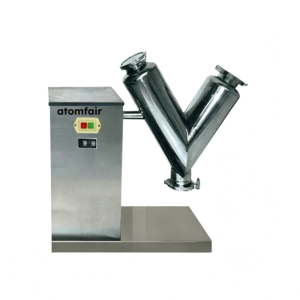
V-Type Mixer VM-574 3L 20-60 RPM Digital Timer ATOMFAIR®
$1,504.00 -
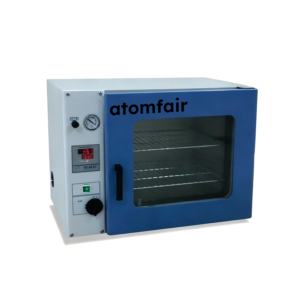
Vacuum Drying Oven 25L Explosion-Proof SUS304
$1,199.00 -
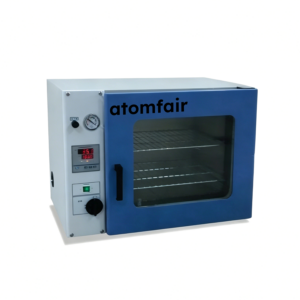
Vacuum Drying Oven 50L 250°C SUS304 Chamber
$1,374.00 -
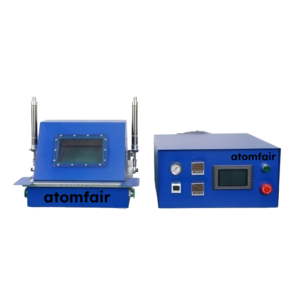
Vacuum Pre-Sealing Machine 200mm Copper Heads
$4,152.00 -
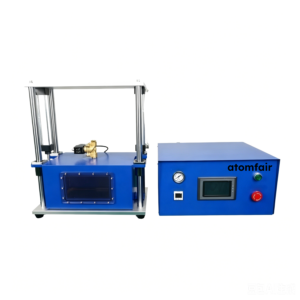
Vacuum Standing Chamber -95kPa Pouch Cylindrical
$3,669.00 -
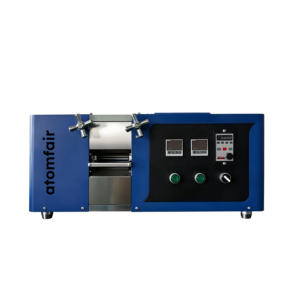
Vertical HMR2076 Heating Rolling Mill ±2μm 200°C ATOMFAIR®
$2,000.00