Description
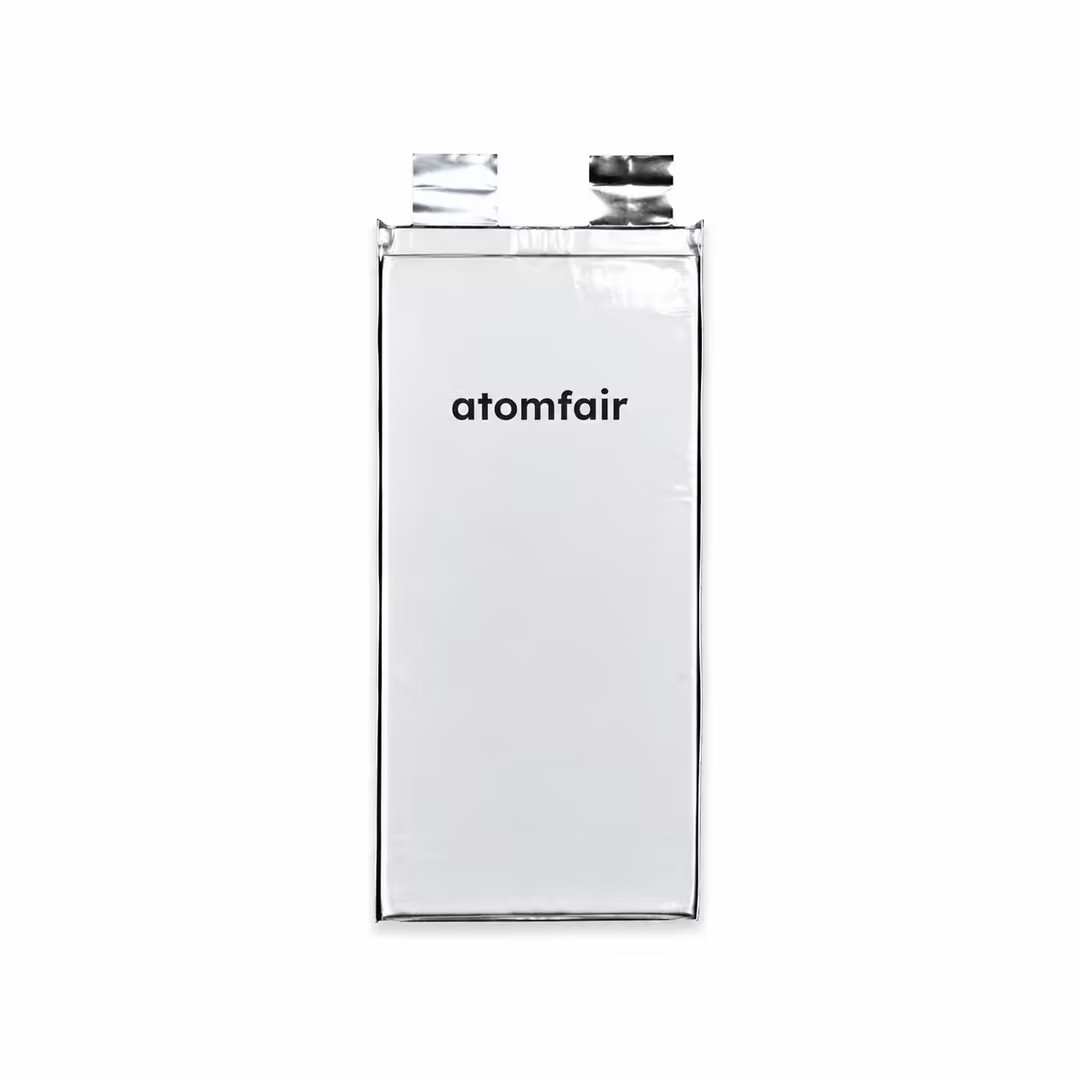
2AH HIGH-PERFORMANCE AND HIGH-SAFETY SOLID-STATE BATTERY | ATOMFAIRCOMMERCIAL GRADE · PRODUCTION
|
|||||||||||||||||||||||||||||||||||
|
|||||||||||||||||||||||||||||||||||
|
TAILORED SOLUTIONS FOR RESEARCH
Contact our engineering team for technical support or official institutional quotations.
EMAIL: INQUIRY@ATOMFAIR.COM
|
|||||||||||||||||||||||||||||||||||
|
MANUFACTURER: ATOMFAIR LLC
BRAND: ATOMFAIR®
|
This document outlines critical safety and storage constraints for the 2Ah solid-state battery. Adherence mitigates risks of thermal runaway, mechanical damage, and capacity degradation.
- Storage Condition: Store in a dry, ventilated area maintained at 15–30°C to minimize degradation and prevent moisture ingress.
- Charge Limitation: Do not exceed a 2C continuous charge rate to avoid thermal runaway and preserve cycle life.
- Discharge Limitation: Continuous discharge must not exceed 5C; peak discharge of 10C is only permitted for 5 seconds when state of charge is at least 30%.
- Mechanical Integrity: Do not disassemble, puncture, or expose the battery to fire to prevent violent chemical reaction and explosion.
- Temperature Range: Operate and charge the battery only within the ambient temperature range of -20°C to 70°C to ensure safe performance.
Follow these steps to safely handle, charge, and store the solid-state battery. Improper handling may cause fire, explosion, or reduced cycle life.
Required Equipment: CC/CV charger with current limit ≤ 2C, Temperature and voltage monitoring device, Personal protective equipment (PPE), Shock-damping hazardous material transport packaging
- Visual Inspection
Inspect the battery for physical damage, swelling, or terminal corrosion before initial use. - Temperature Verification
Confirm the ambient temperature is within the allowed operating range of -20°C to 70°C. - Charger Connection
Connect the battery to a CC/CV charger with charging current not exceeding 2C continuous charge rate. - Monitor Charge
Monitor battery voltage and temperature during the charge cycle to detect any abnormal rise. - Peak Discharge Precondition
Verify state of charge is ≥30% before applying a peak discharge of 10C for up to 5 seconds. - Post-Use Storage
After use, store the battery in a dry, ventilated area maintained at 15–30°C. - End-of-Life Disposal
Dispose of the battery at end of life through a certified lithium battery recycling facility.
What is the trade-off between energy density and cycle life for the 2Ah solid-state battery under high-rate discharge conditions?
The battery achieves 300 Wh/kg gravimetric energy density with a verified cycle life of 300 cycles at ≥80% capacity retention when tested at 1C charge and 4C discharge. While it supports a 5C continuous discharge and 10C peak discharge, the cycle life at those higher rates is not specified. Operating at sustained 5C discharge may reduce longevity, and peak 10C discharge requires SOC ≥30% and is limited to 5s duration.
What are the key integration constraints for using this solid-state pouch cell in a drone or portable device?
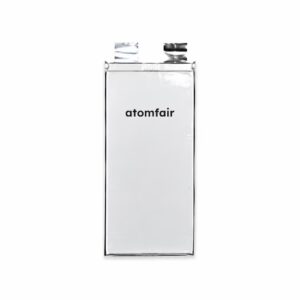
The battery measures 7.0 × 28 × 54 mm and weighs 24 g, making it suitable for space-constrained applications like drones and wearables. Critical constraints include charging only within -20°C to 70°C, not exceeding 2C continuous charge, and ensuring SOC ≥30% before any 10C peak discharge. It uses a composite solid-state electrolyte (C-SSE) that eliminates leakage risks, but thermal management must respect the 5C continuous discharge limit.
What are the required storage, handling, and safety protocols for the Atomfair 2Ah solid-state battery?
Store the battery in a dry, ventilated area between 15°C and 30°C. Do not disassemble, puncture, or expose to fire. It ships in hazardous-material packaging with factory batch inspection certificates. For operation, charge only within -20°C to 70°C, limit continuous charge to 2C, continuous discharge to 5C, and peak discharge (10C, 5s) to SOC ≥30% conditions.
The 2Ah solid-state pouch cell delivers 300 Wh/kg with a composite solid-state electrolyte, offering high safety and wide temperature tolerance, but requires strict adherence to charge/discharge limits and storage conditions.
Positive
- High-Safety Solid-State Electrolyte: The composite solid-state electrolyte (C-SSE) eliminates liquid leakage risks and enhances thermal stability, making the battery intrinsically safer for lab and field deployment.
- Ultra-High Energy Density in Compact Form: With 300 Wh/kg gravimetric and 695 Wh/L volumetric energy density, this 2Ah cell supports extended runtime in space-constrained applications such as drones, wearables, and medical devices.
Trade-offs
- Stringent Charge/Discharge Limits: Continuous charge is limited to 2C and continuous discharge to 5C; peak 10C discharge (5s) requires SOC ≥30%, demanding careful current management in high-rate applications.
- Narrow Storage Temperature Range: The cell must be stored in a dry, ventilated area between 15-30°C, imposing infrastructure requirements for inventory and long-term storage outside of operational use.
Every advanced material, component, equipment, and instrument in our catalog is backed by rigorous testing. We maintain strict internal quality management frameworks and align with CE conformity metrics to deliver transparent, reproducible performance data via our public open-science repository.
To request raw batch performance data, submit formal vendor registration paperwork, or execute a fast-turnaround R&D manufacturing loop, contact us at inquiry@atomfair.com.
Item is dispatched under the Atomfair Shipping & Delivery Framework (Free worldwide shipping on orders over $59 USD). Return is governed by the Atomfair Return & Refund Policy (7-day technical return window).