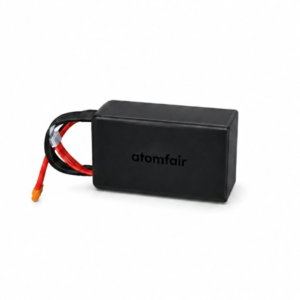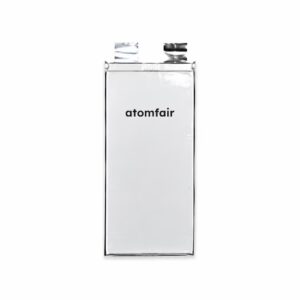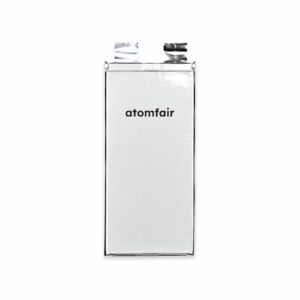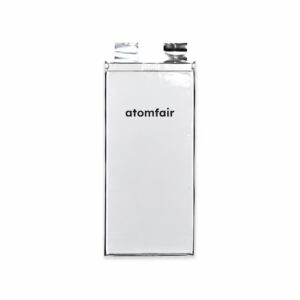
Description
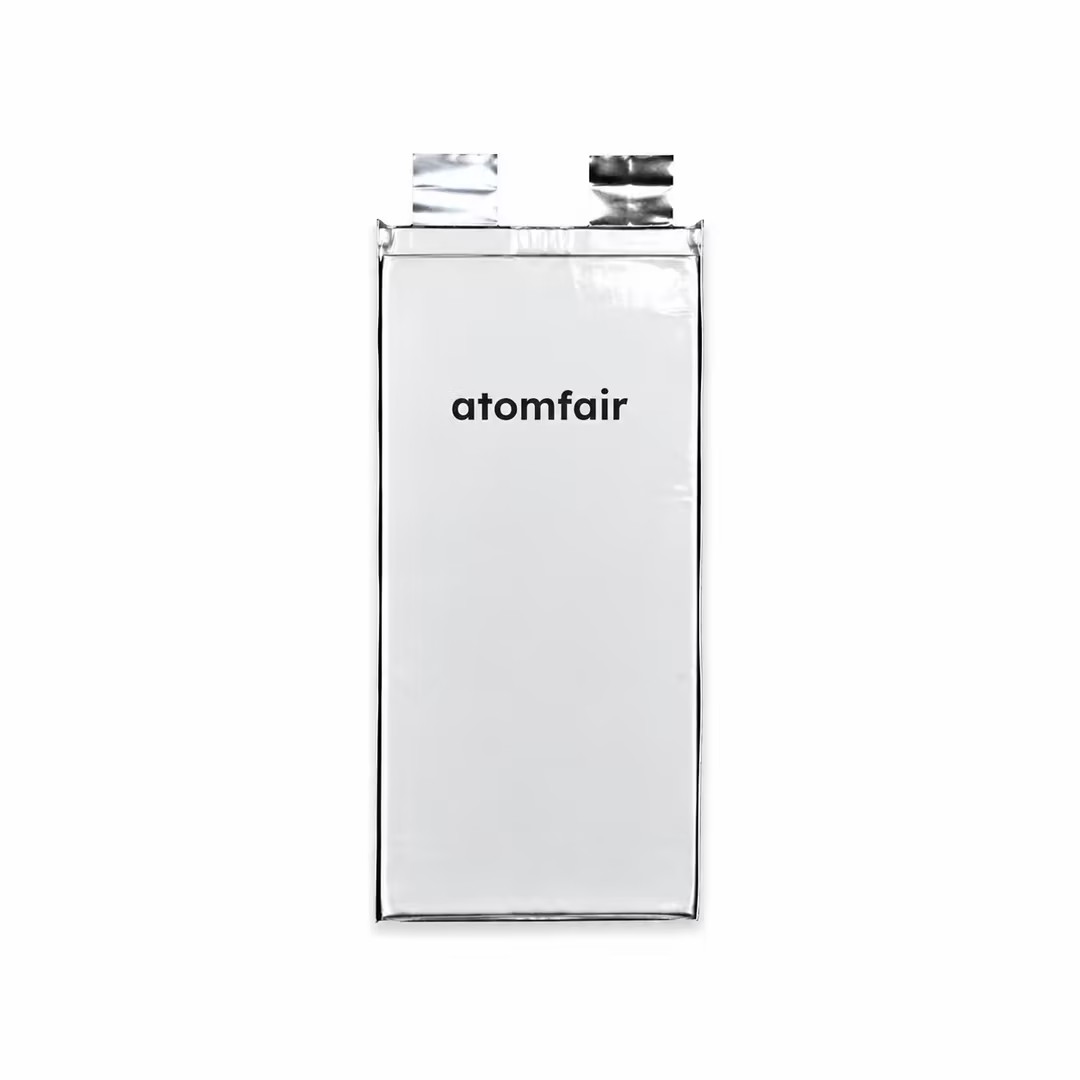
410Wh/kg HIGH ENERGY DENSITY Lithium-Ion POUCH CELL | ATOMFAIRCOMMERCIAL GRADE · PRODUCTION
|
|||||||||||||||||||||||||||||||||||||||||||||||||||||
|
|||||||||||||||||||||||||||||||||||||||||||||||||||||
|
TAILORED SOLUTIONS FOR RESEARCH
Contact our engineering team for technical support or official institutional quotations.
EMAIL: INQUIRY@ATOMFAIR.COM
|
|||||||||||||||||||||||||||||||||||||||||||||||||||||
|
MANUFACTURER: ATOMFAIR LLC
BRAND: ATOMFAIR®
|
|||||||||||||||||||||||||||||||||||||||||||||||||||||
Store the cell in a dry, ventilated area between 15°C and 30°C to prevent degradation and maintain safety. Operate the cell within the specified voltage (2.50V to 4.30V) and temperature ranges (charge: 0°C to +35°C, discharge: -20°C to +45°C) to avoid damage and ensure reliable performance.
- Charge Temperature Constraint: Charge the cell only between 0°C and 35°C to prevent lithium plating or thermal stress.
- Discharge Temperature Constraint: Discharge the cell only between -20°C and 45°C to maintain capacity and avoid internal damage.
- Voltage Window Constraint: Operate the cell strictly between 2.50V and 4.30V to prevent over-discharge or overcharge conditions.
- Mechanical Handling Constraint: Protect the cell from mechanical stress, puncture, and deformation; keep in original packaging until use.
- Fire and Disassembly Prohibition: Never disassemble, incinerate, or expose the cell to fire due to risk of thermal runaway.
Follow these steps to safely inspect, charge, and store the high-energy pouch cell. Adhere to the specified voltage and temperature limits to ensure safe operation and maximize cycle life.
Required Equipment: Calibrated multimeter, CC/CV battery charger, Temperature monitoring device
- Inspect cell
Inspect the pouch cell for physical damage, swelling, or leakage before any use. - Verify voltage
Verify the open-circuit voltage (OCV) is between 2.50V and 4.30V using a calibrated multimeter. - Connect charger
Connect the cell to a CC/CV charger set to a charge current of 0.2C (14A) for standard charging. - Charge cell
Charge the cell at an ambient temperature of 25°C until the voltage reaches 4.20V for optimal cycle life. - Discharge operations
Discharge the cell at a continuous current up to 2.0C (140A) within the temperature range of -20°C to +45°C. - Store cell
Store the cell in a dry, ventilated area at 15-30°C when not in use, away from flammable materials. - Prohibited actions
Avoid disassembling, puncturing, or exposing the cell to fire or high temperatures.
What is the trade-off between the 410 Wh/kg energy density and the cycle life of this NMC/SiC pouch cell?
The cell achieves ultra-high gravimetric energy density of ≥410 Wh/kg (≥850 Wh/L volumetric) using an NMC/Gr+SiC chemistry, which typically limits cycle life to ≥500 cycles under standard test conditions (0.5C charge/discharge, 4.20V–2.75V, 25°C). The ultra-low internal resistance (≤1.0 mΩ) enables high pulse discharge (5.0C for 5s), but aggressive cycling at high rates may further reduce longevity. This trade-off favors applications like electric vehicle powertrains or portable storage where compact energy capacity is prioritized over extended cycle life.
What are the charging temperature constraints for integrating this 410 Wh/kg pouch cell into a cold-weather system?
The cell must be charged only within 0°C to +35°C; charging below 0°C is prohibited to prevent lithium plating and irreversible capacity loss. Discharge is permitted from -20°C to +45°C, so the cell can operate in sub-zero environments but requires active preheating before charging. This constraint is critical for system designers integrating the cell into electric vehicles or stationary storage in cold climates, and the storage temperature is specified as 15–30°C in a dry ventilated area.
What storage and handling precautions are required for this high-energy density NMC/SiC pouch cell to ensure safety and performance?
Store the cell in its original heavy, shock-absorbing hazardous material packaging in a dry, ventilated area between 15–30°C until use. Avoid mechanical stress, disassembly, and exposure to fire, and strictly follow the recommended charge/discharge profiles (standard 0.2C, max 0.5C charge) to prevent overcharge conditions. The cell is sensitive to abuse due to its high-energy NMC/SiC chemistry, and each batch ships with a detailed test report for capacity, IR, thickness, and OCV to ensure traceable quality.
This 70Ah NMC/SiC pouch cell provides 410 Wh/kg gravimetric energy density and ≤1.0 mΩ internal resistance, enabling high discharge rates, but demands careful handling due to mechanical and overcharge sensitivity and a restricted charge temperature range of 0–35°C.
Positive
- Ultra-high energy density: Achieves ≥410 Wh/kg gravimetric and ≥850 Wh/L volumetric energy density at 0.2C, enabling compact, high-capacity system designs for EVs and stationary storage.
- Low internal resistance for high-rate discharge: AC internal resistance ≤1.0 mΩ supports continuous discharge up to 2.0C and pulse discharge up to 5.0C (5s), delivering responsive power for dynamic loads.
Trade-offs
- Sensitive to mechanical stress and overcharge: The high-energy-density cell is explicitly noted as sensitive to mechanical stress and overcharge conditions, requiring careful handling and strict adherence to charge/discharge protocols to avoid damage.
- Restricted charge temperature window: Charge operation is limited to 0°C to +35°C, which may necessitate active thermal management in cold or hot environments to maintain safe charging.
Every advanced material, component, equipment, and instrument in our catalog is backed by rigorous testing. We maintain strict internal quality management frameworks and align with CE conformity metrics to deliver transparent, reproducible performance data via our public open-science repository.
To request raw batch performance data, submit formal vendor registration paperwork, or execute a fast-turnaround R&D manufacturing loop, contact us at inquiry@atomfair.com.
Item is dispatched under the Atomfair Shipping & Delivery Framework (Free worldwide shipping on orders over $59 USD). Return is governed by the Atomfair Return & Refund Policy (7-day technical return window).