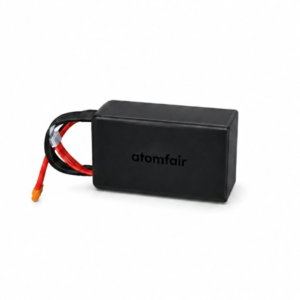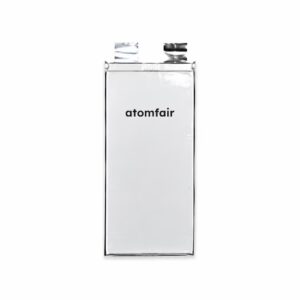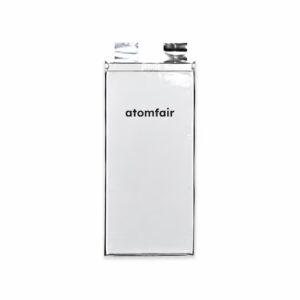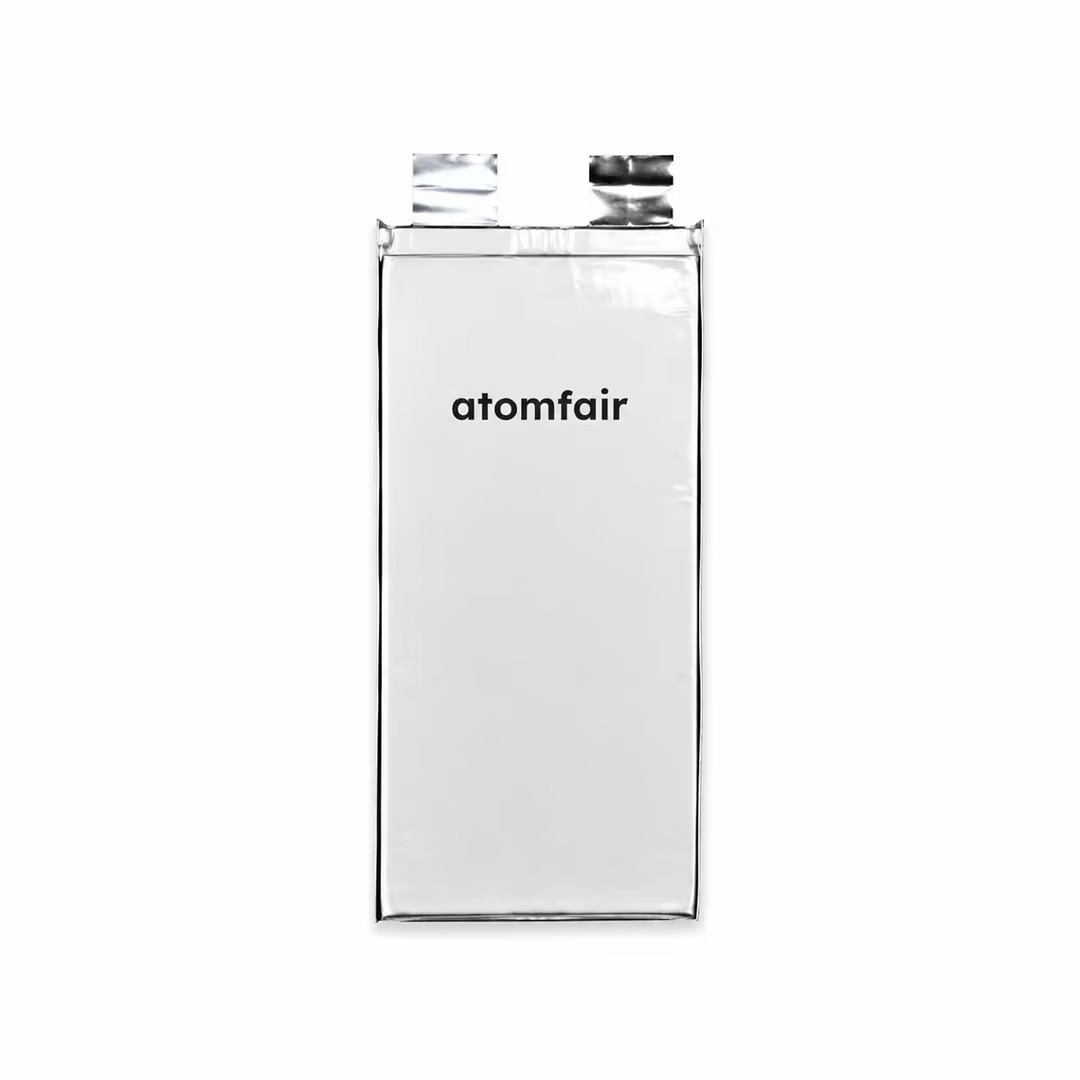
Description
High-Energy-Density Anode-Free Battery Series | ATOMFAIRCOMMERCIAL GRADE · PRODUCTION
|
|||||||||||||||||||||||||||||||||||||||||||
|
|||||||||||||||||||||||||||||||||||||||||||
|
TAILORED SOLUTIONS FOR RESEARCH
Contact our engineering team for technical support or official institutional quotations.
EMAIL: inquiry@atomfair.com
|
|||||||||||||||||||||||||||||||||||||||||||
|
Manufacturer: Atomfair LLC
Brand: ATOMFAIR®
|
|||||||||||||||||||||||||||||||||||||||||||
Store cells in moisture-barrier vacuum-sealed packaging to prevent humidity exposure. Never exceed 4.2V charge voltage or discharge below 2.5V, and always use a BMS designed for high-voltage NCM chemistry with proper compression fixtures during assembly.
- Humidity Sensitivity: Anode-free cells are sensitive to humidity; maintain dry storage conditions.
- Mechanical Pressure Requirement: Cells require proper compression fixtures during assembly to maintain performance and safety.
- Voltage Limits: Charge voltage must never exceed 4.2V and discharge must not go below 2.5V.
- BMS Requirement: Always pair with a BMS designed for high-voltage NCM chemistry.
- Safety Vent: Each cell includes a built-in safety vent for overpressure relief.
Follow these steps to safely handle and prepare the anode-free cell for use. Proper compression, BMS integration, and voltage verification are critical to prevent damage or hazard.
Required Equipment: Compression fixture, Battery Management System (BMS)
- Inspect Packaging
Inspect the moisture-barrier vacuum-sealed packaging for any tears or punctures before opening. - Transfer to Dry Environment
Transfer the cell to a dry environment with controlled humidity below the recommended threshold. - Install Compression Fixture
Install the cell in a compression fixture applying appropriate mechanical pressure as specified by the manufacturer. - Connect BMS
What is the trade-off between energy density and cell thickness across the ATOMFAIR AFEDA series pouch sizes?
All three models (AFEDA5474172, AFEDA7887188, AFEDA8074250) deliver >460 Wh/kg regardless of thickness, so gravimetric energy density is consistent. The trade-off is capacity versus physical space: the thinnest cell at 5.4 mm offers 22 Ah, while the thicker 7.8 mm cell provides 46 Ah and the 8.0 mm cell provides 52 Ah. Users select based on volume constraints while maintaining the same energy density.
What BMS and mechanical assembly constraints are required for integrating ATOMFAIR anode-free cells into a battery pack?
The cells require a BMS designed for high-voltage NCM chemistry, with a nominal voltage of 3.8 V and absolute limits of 4.2 V charge and 2.5 V discharge. Mechanical compression fixtures must be used during assembly because the anode-free architecture is sensitive to pressure. Humidity control is also critical; cells are shipped in moisture-barrier vacuum-sealed packaging and must be kept dry during integration.
What are the storage and handling requirements for the ATOMFAIR anode-free pouch cells to maintain safety and performance?
Store cells in their original moisture-barrier vacuum-sealed aluminum foil bags inside anti-static cartons. Handle using proper compression fixtures to avoid mechanical damage to the anode-free structure. Never exceed 4.2 V charge or discharge below 2.5 V. The cells incorporate a built-in explosion-proof vent and pass nail penetration and overcharge tests with zero fire or explosion, but must be kept away from humidity and paired with a compatible BMS.
The ATOMFAIR anode-free battery series delivers >460Wh/kg energy density with 5C continuous discharge capability, but requires careful mechanical compression and a dedicated high-voltage NCM BMS to manage voltage limits and moisture sensitivity.
Positive
- Ultra-high energy density >460Wh/kg: The anode-free architecture and high-voltage NCM cathode enable single-cell gravimetric energy density exceeding 460Wh/kg, significantly reducing weight for aerospace, eVTOL, and long-range EV applications.
- 5C continuous discharge capability: Despite the high energy density, the cells support 5C continuous discharge, making them suitable for power-intensive applications such as UAVs and portable military electronics without compromising runtime.
Trade-offs
- Sensitive to mechanical pressure and humidity: Anode-free cells require proper compression fixtures during assembly and are sensitive to ambient humidity, demanding careful handling and moisture-barrier packaging to maintain performance and safety.
- Strict voltage limits with BMS requirement: Charge voltage must not exceed 4.2V and discharge must not drop below 2.5V. A BMS specifically designed for high-voltage NCM chemistry is mandatory to prevent overcharge or deep discharge conditions.
Every advanced material, component, equipment, and instrument in our catalog is backed by rigorous testing. We maintain strict internal quality management frameworks and align with CE conformity metrics to deliver transparent, reproducible performance data via our public open-science repository.
To request raw batch performance data, submit formal vendor registration paperwork, or execute a fast-turnaround R&D manufacturing loop, contact us at inquiry@atomfair.com.
Item is dispatched under the Atomfair Shipping & Delivery Framework (Free worldwide shipping on orders over $59 USD). Return is governed by the Atomfair Return & Refund Policy (7-day technical return window).