Description
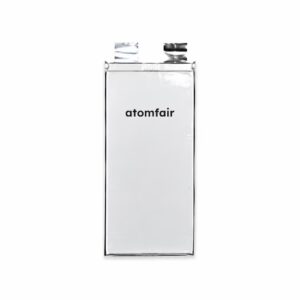
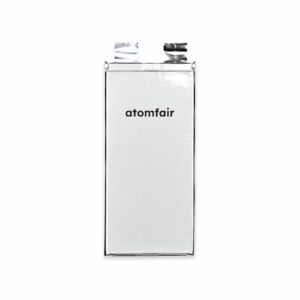
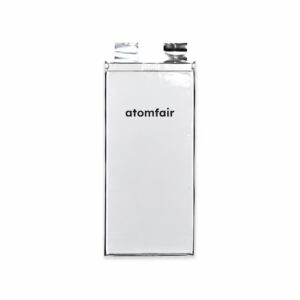
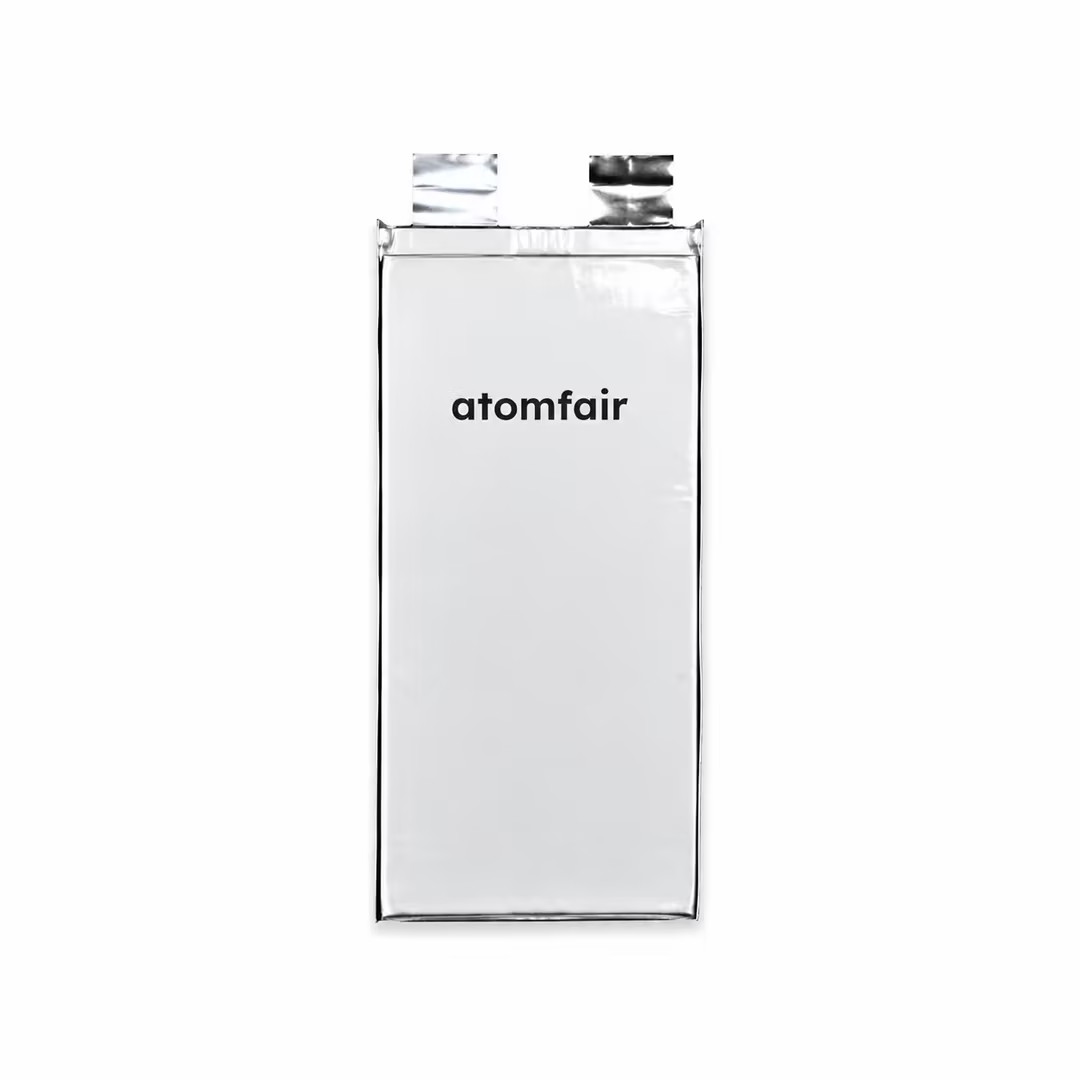
62AH HIGH-PERFORMANCE AND HIGH-SAFETY SOLID-STATE BATTERY | ATOMFAIRCOMMERCIAL GRADE · PRODUCTION
|
|||||||||||||||||||||||||||||||||||||
|
|||||||||||||||||||||||||||||||||||||
|
TAILORED SOLUTIONS FOR RESEARCH
Contact our engineering team for technical support or official institutional quotations.
EMAIL: INQUIRY@ATOMFAIR.COM
|
|||||||||||||||||||||||||||||||||||||
|
MANUFACTURER: ATOMFAIR LLC
BRAND: ATOMFAIR®
|
|||||||||||||||||||||||||||||||||||||
Store in a dry, ventilated area between 15-30°C to prevent thermal degradation. Charge only within -30°C to 70°C and avoid exceeding 3C continuous charge or 5C continuous discharge to mitigate failure risks.
- Thermal Stability Constraint: Operating outside -30°C to 70°C may compromise electrolyte integrity and accelerate capacity fade.
- Discharge Rate Constraint: Peak discharge at 8C for 30s requires state of charge ≥30% to prevent voltage collapse.
- Mechanical Integrity Constraint: Do not disassemble, puncture, or expose to fire to avoid thermal runaway or electrolyte release.
Inspect the pouch cell for physical damage before deployment. Charge within specified limits to activate the composite solid-state electrolyte safely.
Required Equipment: Calibrated battery cycler with temperature monitoring, Dry, ventilated storage enclosure (15-30°C)
- Inspect packaging and cell
Inspect the shock-damping transport packaging and cell terminals for visible damage or deformation before unsealing. - Verify environmental conditions
Confirm the storage or operating environment is dry, ventilated, and within 15-30°C for initial handling. - Connect to charging system
Connect the cell to a calibrated battery cycler set to a constant current of 3C or less, ensuring polarity matches. - Initiate first charge cycle
Begin charging at 0.5C to 1C until nominal voltage (3.65V) is reached, monitoring cell temperature continuously. - Verify capacity retention
After full charge, discharge at 1C to 2.5V cutoff and confirm capacity ≥62 Ah per batch certificate.
How does the 5C continuous discharge capability of the 62Ah solid-state battery affect its cycle life under high-rate cycling?
The battery is rated for ≤1000 cycles at 1C/1C charge/discharge with ≥80% capacity retention. While it supports 5C continuous discharge and 8C peak for 30s, sustained high-rate cycling will reduce cycle life compared to the 1C/1C baseline. The specifications do not provide explicit cycle life data at 5C, so engineers should expect lower longevity under continuous high-rate discharge.
What charging voltage and current constraints must be considered when integrating this 62Ah solid-state battery into an existing 3.65V nominal powertrain?
The battery has a nominal voltage of 3.65V and a maximum continuous charge current of 3C (186A for 62Ah). Charging must occur within the operating temperature range of -30°C to 70°C. For peak 8C discharge, state of charge must be ≥30%. The source does not specify a maximum charge voltage, so integration should assume standard NCM limits (typically 4.2V) unless confirmed by the manufacturer.
What storage and handling conditions are required to preserve the performance and safety of the 62Ah solid-state battery?
Store the battery in a dry, ventilated area between 15-30°C. Do not disassemble, puncture, or expose to fire. The battery ships in shock-damping hazardous material packaging and should be charged only within -30°C to 70°C. Never exceed 3C continuous charge or 5C continuous discharge, and for peak 8C discharge ensure SOC ≥30%.
The 62 Ah NCM-Gr/Si,C-SSE solid-state pouch cell delivers 310 Wh/kg and 640 Wh/L with a composite electrolyte that eliminates liquid leakage, but requires SOC ≥30% for its 8C peak discharge (30s) and narrow storage conditions (15–30°C).
Positive
- Solid-state electrolyte eliminates leakage: The composite solid-state electrolyte (C-SSE) removes liquid leakage risks, enhancing thermal stability and intrinsic safety for high-energy applications.
- High gravimetric and volumetric energy density: At 310 Wh/kg and 640 Wh/L, this cell enables extended range for electric vehicles and eVTOL without proportionally increasing mass or volume.
Trade-offs
- Peak discharge limited to 30 s with SOC floor: The 8C peak discharge burst (30 s) requires SOC ≥30%, restricting high-power draws at low states of charge.
- Narrow storage temperature range: Storage is specified at 15–30°C in a dry, ventilated area, which is narrower than the operating range and may require climate-controlled warehousing.
Every advanced material, component, equipment, and instrument in our catalog is backed by rigorous testing. We maintain strict internal quality management frameworks and align with CE conformity metrics to deliver transparent, reproducible performance data via our public open-science repository.
To request raw batch performance data, submit formal vendor registration paperwork, or execute a fast-turnaround R&D manufacturing loop, contact us at inquiry@atomfair.com.
Item is dispatched under the Atomfair Shipping & Delivery Framework (Free worldwide shipping on orders over $59 USD). Return is governed by the Atomfair Return & Refund Policy (7-day technical return window).