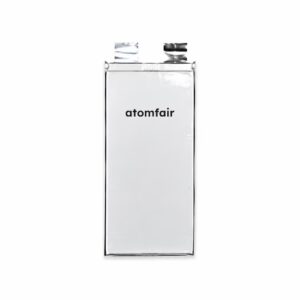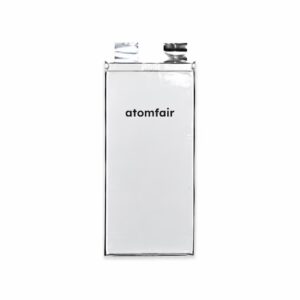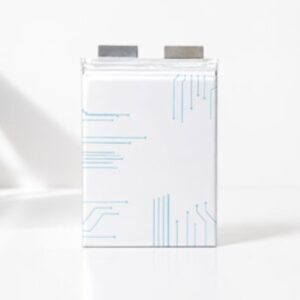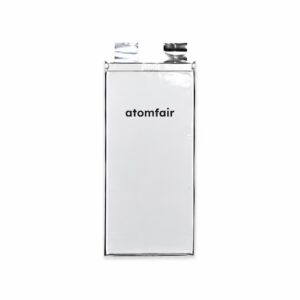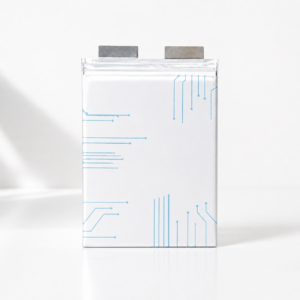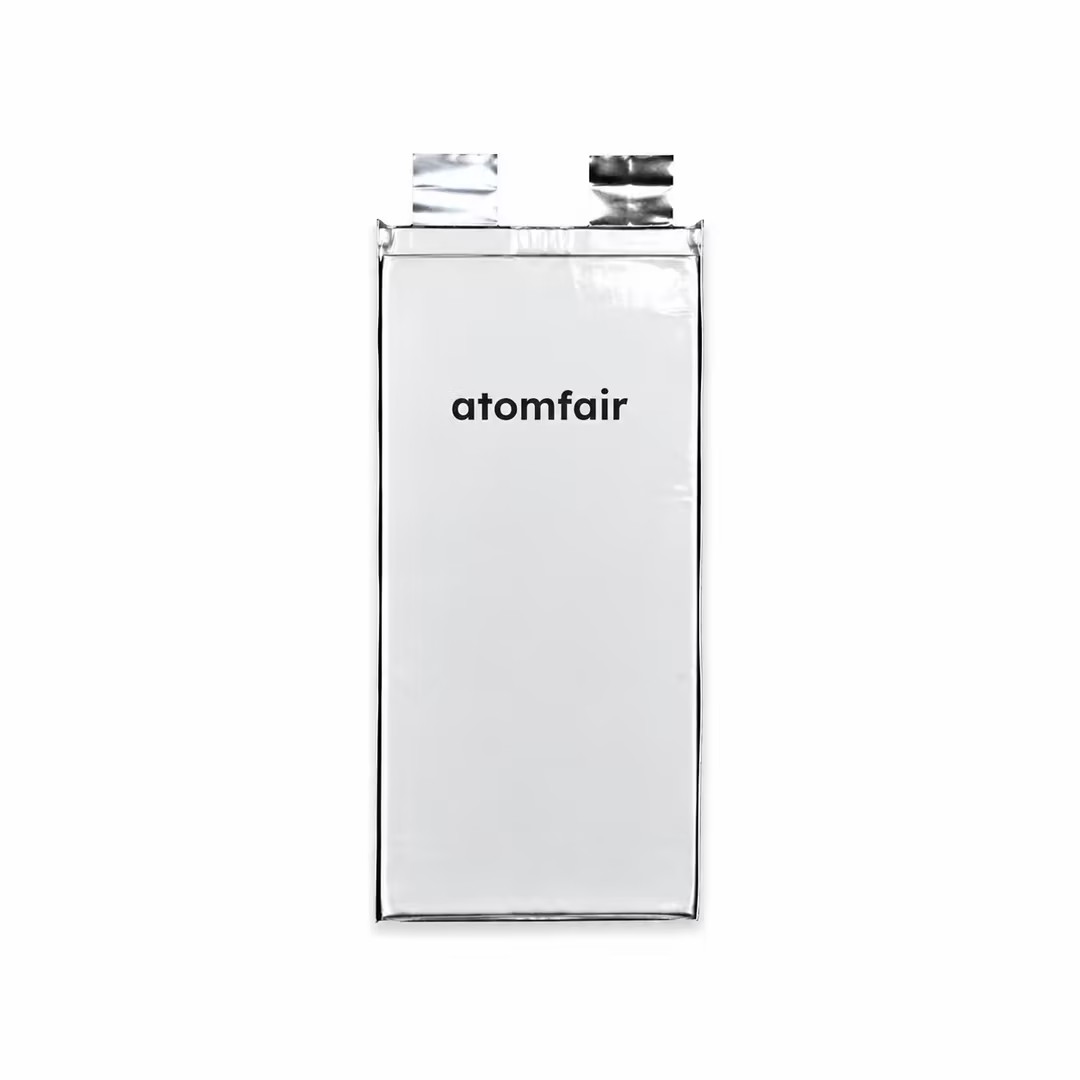
Description
Powerful High-Energy-Density Battery Series | ATOMFAIRCOMMERCIAL GRADE · PRODUCTION
|
||||||||||||||||||||||||||||||||||||||||
|
||||||||||||||||||||||||||||||||||||||||
|
TAILORED SOLUTIONS FOR RESEARCH
Contact our engineering team for technical support or official institutional quotations.
EMAIL: inquiry@atomfair.com
|
||||||||||||||||||||||||||||||||||||||||
|
Manufacturer: Atomfair LLC
Brand: ATOMFAIR®
|
This document defines the safe operating boundaries and degradation factors for the ATOMFAIR semi-solid battery series. Strict adherence to these constraints is required to prevent thermal runaway, capacity fade, and mechanical failure.
- Charge Temperature Window: Charge only within 0°C to 45°C (AFPED10374172) or 0°C to 50°C (AFPED10161231) to avoid lithium plating and internal short circuits.
- Discharge Temperature Range: Discharge is permitted from -20°C to 55°C for both models, with reduced capacity below 0°C.
- Voltage Limits: Never exceed 4.25V (AFPED10374172) or 4.35V (AFPED10161231) during charge, and never discharge below 2.7V or 2.75V respectively to prevent irreversible cell damage.
- C-Rate Restrictions: Continuous charge must be limited to 1C and continuous discharge to 3C to avoid excessive heat generation and electrode degradation.
- Cycle Life Threshold: Expected lifetime is 1500 cycles to 80% state of health under rated conditions; deeper discharge or higher rates will accelerate capacity loss.
These steps detail the correct procedure to first energize and subsequently handle the battery during routine use. Following this sequence minimizes risk of electrical hazard and ensures rated performance.
Required Equipment: CC/CV charger with programmable voltage and current limits, Multimeter with voltage resolution to 0.01V, Temperature probe or chamber capable of maintaining 0–45°C
- Pre-use Visual and Physical Inspection
Inspect the pouch cell for any swelling, cracks, electrolyte leakage, or deformation and reject units that show any of these defects. - Connect to Charger with Correct Polarity
Connect the cell to the CC/CV charger ensuring positive and negative terminals match, and set the charger to the model-specific maximum voltage (4.25V or 4.35V). - Initiate Charge at 1C Rate
Begin charging at constant current of 1C (25.5A for AFPED10374172 or 58A for AFPED10161231) until the voltage limit is reached, then allow constant voltage phase until current drops below 0.05C. - Monitor Cell Temperature During Charge
Verify the cell surface temperature stays below 60°C throughout charging; if it exceeds, reduce the charge current or ambient temperature immediately. - Discharge Within Voltage and Temperature Limits
Connect the load and discharge at up to 3C while monitoring voltage to never drop below the minimum (2.7V or 2.75V) and confirming ambient temperature stays within -20°C to 55°C. - Store at Safe State-of-Charge
For storage longer than 7 days, charge or discharge the cell to 50% state of charge and keep in a dry, non-condensing environment below 30°C.
How does the cycle life of the AFPED10374172 (25.5Ah) model compare to the AFPED10161231 (58Ah) model under identical 1C/3C cycling conditions?
The AFPED10161231 (58Ah) model delivers a significantly longer cycle life of ≥1500 cycles at 80% SOH, while the AFPED10374172 (25.5Ah) model is rated for ≥800 cycles at 80% SOH under 0.5C charge/3C discharge. This difference is attributable to the larger cell's optimized semi-solid electrolyte architecture and higher nominal voltage of 3.75V versus 3.6V, which reduces internal resistance growth over extended cycling.
Can the AFPED10161231 (58Ah) cell be integrated into a robotic system originally designed for a 3.6V nominal battery without modifying the BMS voltage thresholds?
No, direct substitution is not recommended because the AFPED10161231 operates at a nominal voltage of 3.75V with an operating range of 2.75V to 4.35V, whereas the AFPED10374172 operates at 3.6V nominal with a 2.7V to 4.25V range. The BMS must be reconfigured to accommodate the higher upper voltage limit and shifted discharge cutoff to prevent over-discharge or under-voltage protection faults during robotic operation.
What specific storage and preconditioning procedures are required before first use of these semi-solid pouch cells to prevent capacity loss?
Cells must be preconditioned at 25°C before first use and stored in moisture-barrier vacuum-sealed aluminum foil bags within anti-static cartons to prevent electrolyte degradation. Avoid exposing cells to temperatures above 60°C for extended periods, and always use a compatible BMS with over-discharge, over-current, and cell balancing protection to maintain safe operation within the specified voltage windows.
The ATOMFAIR semi-solid battery series offers high energy density (up to 58Ah) in a slim pouch format with stable 1C/3C rates and wide temperature operation, making it suitable for robotics and industrial applications; however, it requires a dedicated BMS and careful temperature management during charging and storage.
Positive
- High energy density in compact pouch: Up to 58Ah capacity in a 10mm-thick pouch cell enables high-power storage in space-constrained robotic platforms, reducing design trade-offs between power and volume.
- Stable power across wide temperature range: Discharge capability from -20°C to +60°C with 1C/3C charge/discharge rates ensures consistent performance in both indoor and outdoor robotic applications under variable thermal conditions.
Trade-offs
- Requires external BMS for safe operation: A compatible battery management system (BMS) with over-discharge, over-current, and cell balancing is mandatory to prevent damage and ensure cycle life, adding system complexity.
- Restricted charge temperature and preconditioning needed: Charge temperature is limited to 0–50°C (model-dependent) and cells require preconditioning at 25°C before first use; prolonged exposure above 60°C must be avoided, imposing operational handling constraints.
Every advanced material, component, equipment, and instrument in our catalog is backed by rigorous testing. We maintain strict internal quality management frameworks and align with CE conformity metrics to deliver transparent, reproducible performance data via our public open-science repository.
To request raw batch performance data, submit formal vendor registration paperwork, or execute a fast-turnaround R&D manufacturing loop, contact us at inquiry@atomfair.com.
Item is dispatched under the Atomfair Shipping & Delivery Framework (Free worldwide shipping on orders over $59 USD). Return is governed by the Atomfair Return & Refund Policy (7-day technical return window).