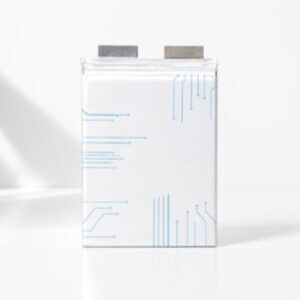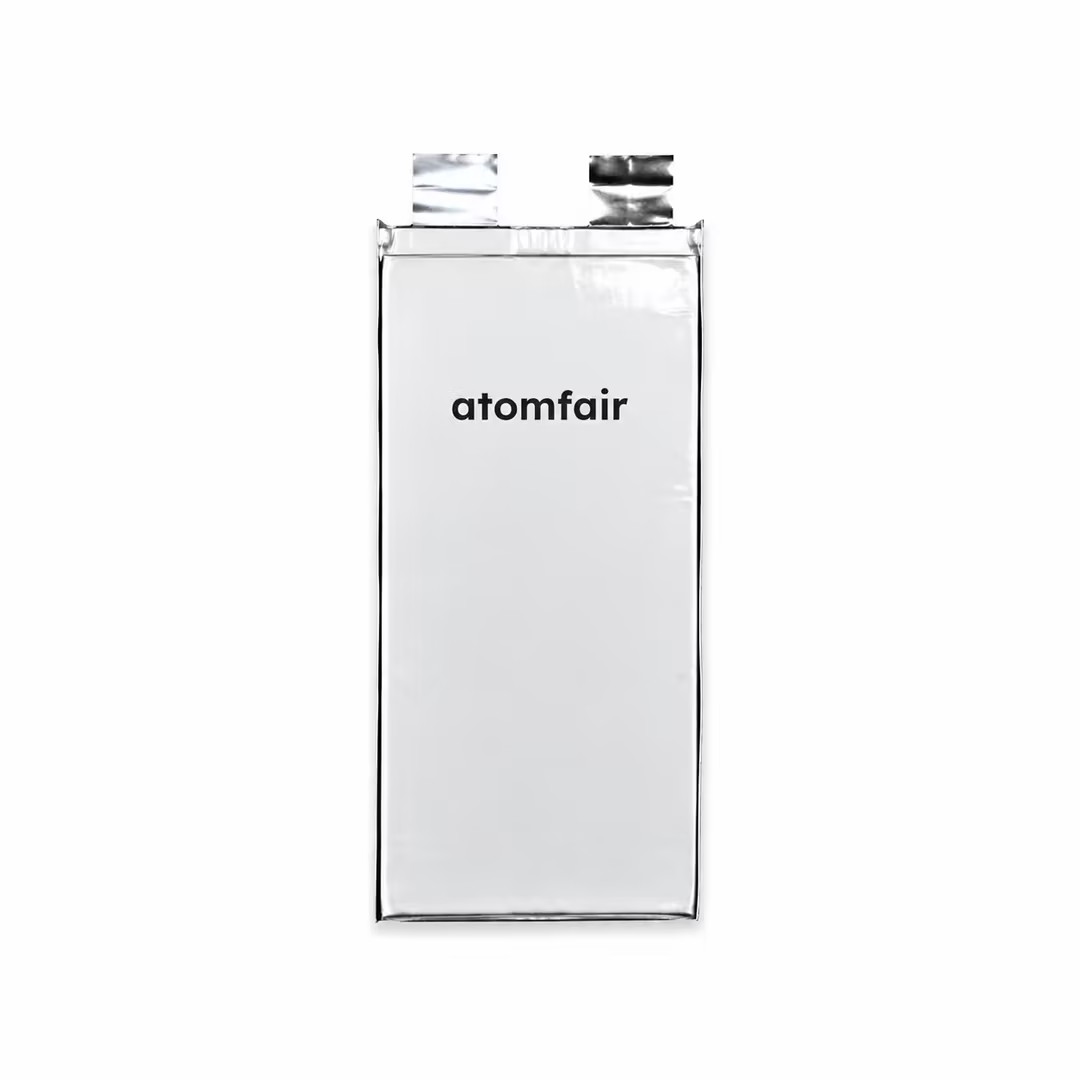
Description
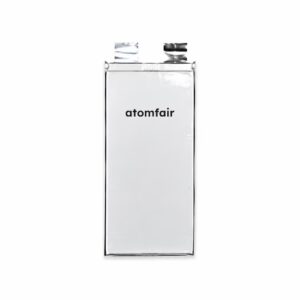
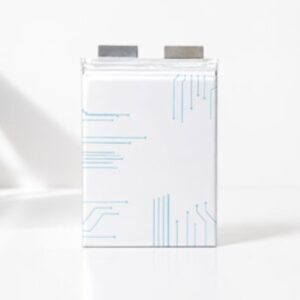
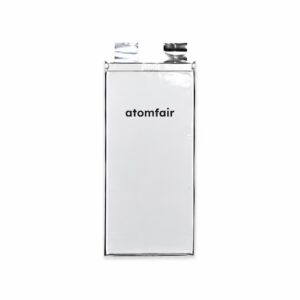
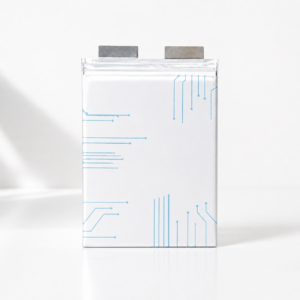
310 Wh/kg High Energy Density Lithium-Ion Pouch CellCOMMERCIAL GRADE · PRODUCTION
|
|||||||||||||||||||||||||||||||||||||||||||
|
|||||||||||||||||||||||||||||||||||||||||||
|
TAILORED SOLUTIONS FOR PRODUCTION
Contact our engineering team for technical support or official commercial quotations.
EMAIL: INQUIRY@ATOMFAIR.COM
|
|||||||||||||||||||||||||||||||||||||||||||
|
Manufacturer: PRODUCTION DIVISION · ADVANCED ENERGY STORAGE DIVISION
Brand: INDUSTRIAL TESTING HARDWARE
Specifications are representative and subject to change without notice. For the latest version and compliance certificates, contact official sales channel.
|
The cell must be operated within specified current limits to prevent thermal runaway. Mechanical integrity of the pouch enclosure must be maintained to avoid electrolyte leakage.
- Current Compliance: Continuous discharge must not exceed 3.0C (105 A) and pulse discharge must not exceed 5.0C (175 A).
- Mechanical Handling: The pouch cell must not be punctured, creased, or subjected to compressive forces that could damage the laminate seal.
- Charge Protocol: Initial capacity evaluation should be performed at a constant 0.2C (7 A) charge rate to the nominal 3.6 V potential.
This procedure outlines the safe initialization and cycling of the cell for laboratory testing. Follow these steps to prevent damage and ensure data reproducibility.
Required Equipment: Battery Cycler, Battery Management System
- Visual Inspection
Inspect the pouch cell for any signs of swelling, puncture, or terminal corrosion before handling. - Electrical Connection
Connect the cell terminals to the battery cycler using cables rated for at least 105 A continuous current. - Initial Charge
Charge the cell at a constant current of 7 A (0.2C) until the voltage reaches 3.6 V to establish nominal charge. - Discharge Limitation
Set the cycler to limit discharge current to 105 A (3.0C) and avoid exceeding 175 A (5.0C) pulse duration.
How does the silicon oxide anode content affect cycle life at 3.0C continuous discharge compared to standard graphite-only NMC pouch cells?
The SiOx blend boosts gravimetric density beyond 310 Wh/kg but introduces volumetric expansion stress during cycling. At the rated 3.0C continuous discharge, the cell maintains structural particle integrity, though cycle life may be reduced relative to pure graphite anodes due to silicon's inherent volume change; the product description does not specify cycle life figures, so quantitative comparison is not possible from the provided data.
Can this 35 Ah pouch cell be integrated directly into an existing 48V EV prototype battery pack without modifying the BMS voltage thresholds?
Yes, the cell's 2.50 V to 4.25 V operating window is compatible with standard 48V pack architectures when configured in a 12-series string (43.2 V nominal). However, the BMS must support a maximum charge voltage of 4.25 V per cell and a 2.0C charge rate; the low 1.6 mΩ internal resistance minimizes balancing overhead, but the pack designer must verify thermal management for the 3.0C continuous discharge limit.
What are the mandatory storage and handling conditions to prevent lithium plating or electrolyte leakage in this flexible laminate pouch cell?
Store at 50% state of charge in a dry, temperature-controlled environment between 0 °C and +45 °C to avoid lithium plating during storage. The flexible multi-layer aluminum laminate enclosure requires protection from puncture and compressive forces; do not stack cells without rigid separators, and avoid charging below 0 °C as specified by the thermal charging scope window.
This 35 Ah NMC/Gr+SiOx pouch cell delivers 310 Wh/kg and >700 Wh/L, with a low 1.6 mΩ internal resistance and support for 3C continuous discharge, making it suitable for EV prototype pack testing, though charging is limited to 2C and prohibited below 0°C.
Positive
- High gravimetric and volumetric density: The cell achieves an elite gravimetric density above 310 Wh/kg and a volumetric rating exceeding 700 Wh/L, enabling maximum energy storage in compact form factors for vehicle and stationary applications.
- Robust high-rate discharge capability: Supports continuous 3.0C and transient 5.0C pulse discharge currents, validated at ≥30% SOC, making it suitable for demanding EV prototype battery pack testing sequences.
Trade-offs
- Restricted low-temperature charging: Charging is not permitted below 0 °C, limiting use in cold environments unless thermal management is provided.
- Limited maximum charge current: The maximum continuous charge current is 2.0C, which may constrain applications requiring faster charging rates.
Every advanced material, component, equipment, and instrument in our catalog is backed by rigorous testing. We maintain strict internal quality management frameworks and align with CE conformity metrics to deliver transparent, reproducible performance data via our public open-science repository.
To request raw batch performance data, submit formal vendor registration paperwork, or execute a fast-turnaround R&D manufacturing loop, contact us at inquiry@atomfair.com.
Item is dispatched under the Atomfair Shipping & Delivery Framework (Free worldwide shipping on orders over $59 USD). Return is governed by the Atomfair Return & Refund Policy (7-day technical return window).