Description
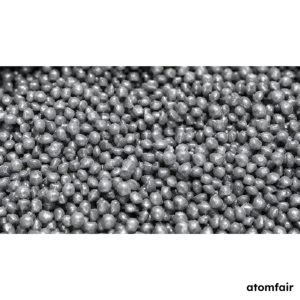
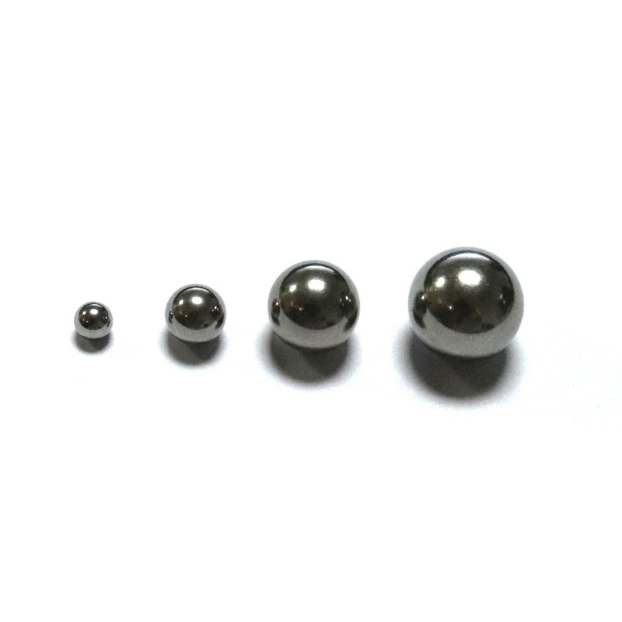
ATOMFAIR 304 STAINLESS STEEL GRINDING BALLS MIXED SIZE 1KG DENSITY 7.9RESEARCH GRADE MATERIAL
|
|||||||||||||||||||||||||||||||||||||||||||||||||||
|
|||||||||||||||||||||||||||||||||||||||||||||||||||
|
TAILORED SOLUTIONS FOR RESEARCH
Contact our engineering team for technical support or official quotations.
EMAIL: inquiry@atomfair.com
|
|||||||||||||||||||||||||||||||||||||||||||||||||||
|
Manufacturer: Atomfair LLC
Brand: ATOMFair®
|
|||||||||||||||||||||||||||||||||||||||||||||||||||
This document outlines the technical constraints and failure modes associated with the use of ATOMFAIR 304 stainless steel grinding balls in ball milling applications. It covers material compatibility limits, environmental sensitivities, wear characteristics, and required infrastructure for optimal performance.
- Material Compatibility: The grinding balls release Fe, Cr, and Ni ions and are incompatible with high-purity materials, concentrated strong acids, strong alkalis, and hydrofluoric acid systems.
- Environmental Sensitivity: The operating range is -20°C to 200°C, with high-temperature humid environments and prolonged dry grinding causing oxidation, rust, and iron dust contamination.
- Failure Modes: Moderate wear at about 10⁻⁵ g/h generates metal debris, and worn balls with scratches, rust spots, or pitting dramatically increase metal release.
- Infrastructure Requirements: Optimal pairing with 304 stainless steel ball mill jars is required; use in agate, nylon, PTFE, or PU soft jars is prohibited as the balls scratch and puncture jar walls.
- Processing Constraints: Multi-ball size ratio (4:2:1 by quantity for Φ15mm, Φ8mm, Φ5mm) is optimized for efficiency, and the balls are not suitable for ultrafine nano-grinding due to high self-wear.
This guide provides essential handling and operational steps for using the 304 stainless steel grinding balls in ball milling processes. It emphasizes jar selection, loading procedures, operational limits, and post-use inspection to minimize contamination and equipment damage.
Required Equipment: Ball mill (planetary, roller, stirred, or vibratory), 304 stainless steel ball mill jar, Sample material to be ground
- Inspect balls
Inspect the grinding balls for any visible scratches, rust spots, or pitting before each use. - Select jar
Select a 304 stainless steel ball mill jar to ensure homogeneous material matching and prevent jar wall wear. - Load balls and material
Load the balls and material into the jar according to the recommended multi-ball size ratio for maximum grinding efficiency. - Operate within temperature limits
Operate the mill within the specified temperature range of -20°C to 200°C to avoid oxidation or rust formation. - Clean after grinding
After grinding, separate the balls from the material and clean the mirror-polished surface to minimize adhesion. - Replace worn balls
Check the balls for signs of wear after each use and replace any that show scratches, rust, or pitting promptly.
What is the trade-off between using 304 stainless steel grinding balls and higher-purity media like zirconia or agate for grinding applications?
304 stainless steel balls offer high density (7.9 g/cm³) and significantly lower raw material cost compared to zirconia, cemented carbide, and agate, but they exhibit high self-wear (wear rate ~10⁻⁵ g/h) and release Fe, Cr, and Ni metal ions, making them unsuitable for high-purity materials such as lithium battery cathode/anode materials, MLCC electronic ceramics, or pharmaceuticals. For applications where metal impurity is tolerable, however, the mixed-size configuration (Φ15mm+Φ8mm+Φ5mm in a 4:2:1 quantity ratio) delivers maximum grinding efficiency at minimal cost.
Can 304 stainless steel grinding balls be used in agate, nylon, PTFE, or PU ball mill jars?
No, 304 stainless steel balls must never be used in agate, nylon, PTFE, or PU jars because the hard metal balls will scratch and puncture the soft jar inner walls. They are best paired with 304 stainless steel ball mill jars for homogeneous material matching that prevents jar wall wear and avoids cross-contamination.
What precautions are necessary when using 304 stainless steel grinding balls for dry grinding in a planetary ball mill?
Prolonged dry grinding generates friction heating that accelerates oxidation and blackening of the ball surface, producing iron dust contamination in the sample. The operating temperature range is -20°C to 200°C; high-temperature humid conditions may cause rust. Replace balls immediately when scratches, rust spots, or pitting appear, as metal release increases dramatically. For ultrafine nano-grinding, zirconia balls are strongly preferred.
The ATOMFAIR 304 SS mixed-size grinding balls (Φ15mm/Φ8mm/Φ5mm, 1kg) leverage a 4:2:1 ratio for enhanced grinding efficiency via size cascading, but require strict adherence to jar compatibility and dry grinding precautions due to metal contamination release and oxidation risks.
Positive
- Optimized mixed-size grinding efficiency: The 4:2:1 ratio of large (Φ15mm), medium (Φ8mm), and small (Φ5mm) balls provides primary impact, intermediate refinement, and fine homogenization, significantly outperforming single-diameter media in achieving uniform particle size.
- High density for strong impact crushing: Density of 7.9 g/cm³ exceeds ceramic media, delivering superior kinetic energy for rapid coarse crushing of ores, metal powders, and hard minerals in planetary and roller ball mills.
Trade-offs
- Metal contamination prohibits high-purity use: Moderate wear releases Fe, Cr, and Ni ions, making these balls unsuitable for lithium battery materials, MLCC ceramics, pharmaceuticals, or any application requiring metal impurity levels below ~10⁻⁵ g/h wear rate.
- Critical jar material and dry grinding limits: Must not be used in soft jars (agate, nylon, PTFE, PU) due to scratching/puncture risk. Prolonged dry grinding causes oxidative blackening and iron dust contamination; wet grinding in corrosive environments beyond weak acids/alkalis also degrades the surface.
Every advanced material, component, equipment, and instrument in our catalog is backed by rigorous testing. We maintain strict internal quality management frameworks and align with CE conformity metrics to deliver transparent, reproducible performance data via our public open-science repository.
To request raw batch performance data, submit formal vendor registration paperwork, or execute a fast-turnaround R&D manufacturing loop, contact us at inquiry@atomfair.com.
Item is dispatched under the Atomfair Shipping & Delivery Framework (Free worldwide shipping on orders over $59 USD). Return is governed by the Atomfair Return & Refund Policy (7-day technical return window).