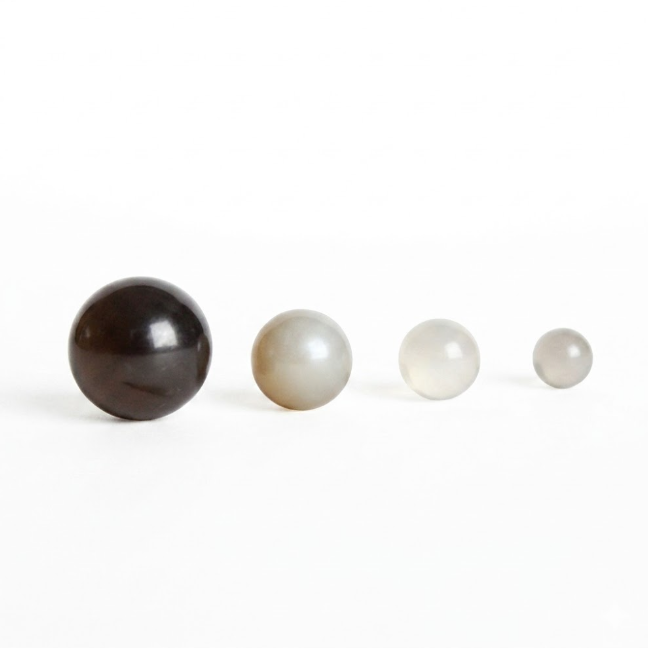
Agate Grinding Balls 97% SiO2 1kg Mixed 5/8/15mm

$110.00

Institutional Procurement & Supply Compliance: As a verified US supplier, Atomfair accepts formal institutional Purchase Orders (POs), contract billing schedules, and custom procurement loops for university and national laboratories, and corporate R&D departments globally.

Research-grade natural agate grinding balls, 1kg mixed Φ15/8/5mm at 4:2:1 ratio, SiO2 ≥97.26%, Mohs 7.0–7.5, zero metal release for dry/wet milling. Order now.

SKU: AF-B-AG-1KG-MX
Category: ,
Tags:
Brands:

Description

ATOMFAIR AGATE GRINDING BALLS MIXED SIZE 1KG NATURAL 97% SIO₂

RESEARCH GRADE MATERIAL

Product Overview

ATOMFAIR® Agate Grinding Balls are manufactured from imported natural agate rough stone (SiO₂ purity ≥ 97.26%, with trace magnesium, calcium, and manganese oxides) through a complete process of cutting, rough grinding, fine polishing, and classification. With natural agate 97.26% SiO₂ Mohs 7.0–7.5 specifications and a density of approximately 2.65 g/cm³, these grinding balls deliver the definitive zero metal contamination trace element analysis performance—releasing only trace silicon during grinding with absolutely no iron, chromium, nickel, aluminum, or tungsten metal elements. This makes them the national standard-designated grinding medium for geological soil, agricultural product, and pharmaceutical trace element testing, where metal contamination would compromise analytical data integrity. The mirror polished non-stick no cross-contamination surface quality—achieved through fine polishing of natural agate—ensures dense, smooth, pore-free surfaces that resist material adhesion and enable simple cleaning between samples. This listing is a mixed-size configuration (Φ15mm + Φ8mm + Φ5mm) with a total net weight of 1kg, specifically designed to maximize grinding efficiency. Multi-ball size ratio grinding delivers significantly higher efficiency than single-diameter media—the large balls provide primary impact force for breaking large particles, medium balls further refine particles, and small balls increase contact points for final fine grinding and homogenization. Custom sizes, mixing ratios, and weight are available upon request at inquiry@atomfair.com.

Technical Specifications

PARAMETER DETAILS
1. Core Material & Composition
Material Natural Agate (SiO₂ ≥ 97.26%, Trace Mg, Ca, Mn Oxides)
Raw Material Source Imported Natural Agate Rough Stone
Manufacturing Process Cutting → Rough Grinding → Fine Polishing → Classification
Density ≈2.65 g/cm³ (Bulk Density: 1.5 kg/L)
Mohs Hardness 7.0–7.5 (Medium Hardness; Lower than Corundum and Zirconia)
Contamination Type Trace Silicon Only; Absolutely Zero Metal Element Release (No Fe, Cr, Ni, Al, W)
Chemical Resistance Resistant to Most Acids, Alkalis, and Organic Solvents (HF Prohibited)
2. Mixed Size Configuration
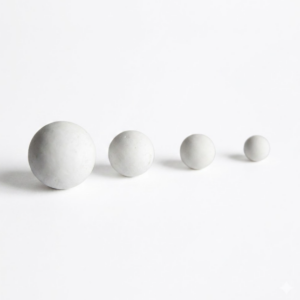
Listing Specification Mixed Size: Φ15mm + Φ8mm + Φ5mm · 1 kg Net Weight
Mixing Ratio (Quantity) Large Ball (Φ15mm) : Medium Ball (Φ8mm) : Small Ball (Φ5mm) ≈ 4 : 2 : 1
Large Ball (Φ15mm) Function Provides primary impact force, responsible for breaking large particles
Medium Ball (Φ8mm) Function Bridges coarse and fine grinding, further refines particles
Small Ball (Φ5mm) Function Increases contact points, final fine grinding and homogenization—critical for uniform nano-scale particle size
Efficiency Advantage Multi-ball size ratio grinding delivers significantly higher efficiency than single-diameter media
Available Custom Diameter Range Φ3 mm–Φ20 mm
3. Performance & Quality Metrics
Surface Quality High Sphericity, Mirror Polished, Pore-Free, Crack-Free, Smooth Non-Stick Surface
Wear Grade Good (Higher Brittleness; Severe Impact May Cause Edge Chipping)
Operating Modes Dry and Wet Grinding Compatible (Wet Grinding Recommended; Avoid Ultra-High Dry Speed)
Custom Configurations Custom diameters, mixing ratios, and batch quantities are available upon request. Please contact us via email at inquiry@atomfair.com.

Key Features & Advantages

  • Optimized Mixed-Size Ratio (4:2:1) for Maximum Grinding Efficiency: Multi-ball size ratio grinding delivers significantly higher efficiency than single-diameter media. The Φ15mm large balls provide primary impact force for breaking large particles, Φ8mm medium balls further refine particles, and Φ5mm small balls increase contact points for final fine grinding and homogenization—critical for achieving uniform nano-scale particle size.
  • Complete Zero Metal Contamination—National Standard Testing Grade Medium: Free from iron, chromium, nickel, aluminum, and tungsten elements; releases only trace silicon during grinding. Designated by national standards as the grinding medium for geological soil, agricultural product, and pharmaceutical trace element testing—will not interfere with heavy metal or elemental analysis data.
  • Mirror Polished Non-Stick Surface for Simple Cross-Sample Cleaning: Natural agate is finely polished to a dense, smooth, pore-free finish that resists adhesion of sticky powders, traditional Chinese medicine materials, and food powders—eliminating cross-contamination risk between samples during material changeover.
  • Chemically Inert and Stable—Compatible with Most Corrosive Systems: Resistant to weak acids, weak alkalis, and various organic dispersants; will not corrode or leach impurities during wet grinding of chemical and biological samples—unlike stainless steel balls which introduce metal ions.
  • No Rust—Stable Long-Term Performance: Unlike stainless steel balls, natural agate has zero oxidation or rust concerns, making it suitable for long-term wet immersion grinding without performance degradation or sample contamination.

APPLICATION SCOPE: Geological and environmental testing (core application): soil, rock, ore, and sediment sample pretreatment for heavy metal and trace element analysis—the nationally standardized medium. Food and traditional Chinese medicine: ultrafine grinding of herbs, grains, and food additives with zero metal contamination for guaranteed detection purity. Biomedical: gentle grinding of active pharmaceutical ingredients and excipients—prevents metal ion interference in drug efficacy testing. Precious metals and high-purity chemical powders: gold and silver powder mixing with absolute elimination of iron contamination; dispersion of fine chemical raw materials with zero tolerance for metal impurities. Light industrial pigments and soft inorganic fillers: gentle mixing and dispersion of low-hardness color powders, talc, and calcium carbonate. Compatible with planetary ball mills, vibratory mills, stirred ball mills, and roller ball mills for both dry and wet grinding.
PACKAGING: This listing is priced for 1 kg mixed-size configuration (Φ15mm + Φ8mm + Φ5mm) with mixing ratio Large : Medium : Small ≈ 4 : 2 : 1 by quantity. Packaged in sealed plastic bottles or vacuum-sealed bags to prevent contamination. Custom diameters, mixing ratios, and batch quantities are available upon request.
RECOMMENDED JAR PAIRING: Best paired with agate ball mill jars for homogeneous material matching that prevents jar wall scratching. Strictly follow the principle: agate jars only with agate balls. Never use corundum, zirconia, stainless steel, or WC cemented carbide balls in agate jars.
IMPORTANT NOTICE: Strictly prohibited for grinding materials with Mohs hardness >7: quartz, corundum, silicon carbide, and other hard materials will rapidly scratch and wear agate balls, generating significant silicon debris contamination while easily shattering the balls. Prohibit pairing with high-hardness grinding balls or hard jar materials: never use corundum, zirconia, stainless steel, or WC carbide balls in agate jars—hard balls will directly crack and scratch the agate jar body. Avoid rapid thermal shock: rapid water cooling of jars after high-temperature grinding or rapid heating during frozen grinding will cause agate ball stress cracking and failure. Hydrofluoric acid (HF) prohibited: HF corrodes the silica matrix, causing ball dissolution and damage. High-speed high-energy planetary milling caution: ultra-high rotation speeds and large ball-to-powder ratios generate excessive impact force that may cause ball edge chipping and fracture; reduce speed and shorten grinding duration for sensitive applications. Replace damaged balls immediately: discard balls showing chipping, cracking, or large amounts of white silicon powder shedding to prevent excess silicon impurity contamination of samples. For custom sizes, mixing ratios, and batch quantities, contact us at inquiry@atomfair.com.
TAILORED SOLUTIONS FOR RESEARCH
Contact our engineering team for technical support or official quotations.
EMAIL: inquiry@atomfair.com
Manufacturer: Atomfair LLC
Brand: ATOMFair®

Natural agate grinding balls (SiO₂ ≥ 97.26%) require strict material compatibility and operational limits to prevent damage and contamination. Failure to observe prohibitions on hydrofluoric acid, high-hardness materials (Mohs >7), thermal shock, and high-energy milling will cause ball cracking, wear, or silicon debris contamination.

  • Hydrofluoric Acid Prohibition: Hydrofluoric acid (HF) corrodes the silica matrix of agate, causing ball dissolution and irreversible damage.
  • Hard Material Restriction: Grinding materials with Mohs hardness greater than 7, such as quartz or corundum, will rapidly scratch and wear the balls, generating silicon debris and risking fracture.
  • Jar Pairing Rule: Agate balls must only be used with agate ball mill jars to prevent jar wall scratching; hard milling media (corundum, zirconia, stainless steel, WC carbide) must never be placed in agate jars.
  • Thermal Shock Avoidance: Rapid temperature changes, such as water cooling after hot grinding or heating after frozen grinding, cause stress cracking and ball failure.
  • High Energy Milling Caution: Ultra-high rotation speeds and large ball-to-powder ratios generate excessive impact force that may cause edge chipping and fracture; reduce speed and duration for sensitive applications.

Follow these steps to load, mill, and clean mixed-size agate grinding balls while avoiding contamination and mechanical damage. Always inspect balls and jar before use and respect material compatibility limits.

Required Equipment: Suitable agate ball mill jar (matching material), Planetary ball mill or compatible mill, Sample material (Mohs hardness ≤ 7)

  1. Inspect grinding balls for damage
    Inspect all balls visually for chips, cracks, or white powder shedding; discard any damaged balls immediately to prevent silicon contamination.
  2. Select and prepare agate jar
    Confirm the jar is also agate; load the balls and sample such that the ball-to-powder ratio and total volume do not exceed mill capacity.
  3. Set mill parameters for safe operation
    Set rotation speed and grinding time within the mill's recommended ranges for agate media, avoiding ultra-high speeds that cause excessive impact.
  4. Run the mill and monitor temperature
    Run the mill for the designated cycle; after stopping, allow the jar to cool gradually—never quench with water or rapidly heat a cold jar.
  5. Separate and clean balls after grinding
    Separate balls from the ground sample using a sieve or manual sorting; rinse with compatible solvent (avoid HF) and dry before storage.

Despite their zero metal contamination advantage, what mechanical trade-offs exist when using agate grinding balls for high-energy milling applications?

Agate grinding balls have a Mohs hardness of 7.0–7.5 and exhibit high brittleness, so severe impact from ultra-high rotation speeds or large ball-to-powder ratios can cause edge chipping and fracture. The product description advises reducing speed and shortening grinding duration for sensitive applications to avoid damage. Additionally, they are strictly prohibited for grinding materials with Mohs hardness greater than 7, such as quartz and corundum, which would rapidly wear and shatter the balls. This trade-off means that while they eliminate metal contamination, their mechanical durability is lower than zirconia or tungsten carbide alternatives.

Can agate grinding balls be used with any type of ball mill jar material, or are there specific pairing restrictions?

Agate grinding balls must be used exclusively with agate ball mill jars to prevent jar wall scratching, as per the product's jar pairing principle: 'agate jars only with agate balls.' Using corundum, zirconia, stainless steel, or WC cemented carbide balls in agate jars is strictly prohibited because the harder balls will crack and scratch the agate jar body. The balls are compatible with planetary ball mills, vibratory mills, stirred ball mills, and roller ball mills for both dry and wet grinding, provided the jar material matches.

What handling precautions are critical to prevent cracking or failure of natural agate grinding balls during use?

Agate grinding balls should not be subjected to rapid thermal shock, such as rapid water cooling after high-temperature grinding or rapid heating from frozen grinding, as this causes stress cracking. Hydrofluoric acid (HF) is strictly prohibited because it corrodes the silica matrix. Additionally, the balls should be replaced immediately if chipping, cracking, or white silicon powder shedding is observed, to prevent excess silicon contamination. For high-speed planetary milling, reduce speed and grinding duration to avoid excessive impact that causes edge chipping.

The Atomfair Agate Grinding Balls Mixed Size 1kg (Φ15mm + Φ8mm + Φ5mm) provide a zero-metal-contamination grinding medium with trace silicon release only, optimized for geological, agricultural, and pharmaceutical trace element analysis. The 4:2:1 mixed-size ratio enhances grinding efficiency over single-diameter media, but the material's Mohs hardness of 7.0–7.5 limits use to softer samples and requires careful operational controls to avoid chipping or thermal shock.

Positive

  • Zero metal contamination for trace analysis: Releases only trace silicon during grinding with absolutely no iron, chromium, nickel, aluminum, or tungsten, making it the national standard-designated medium for geological soil, agricultural product, and pharmaceutical trace element testing.
  • Optimized mixed-size ratio boosts efficiency: The 4:2:1 ratio of Φ15mm, Φ8mm, and Φ5mm balls provides primary impact, intermediate refinement, and final fine grinding, delivering significantly higher efficiency than single-diameter media for uniform nano-scale particle size.

Trade-offs

  • Limited to materials below Mohs 7: Strictly prohibited for grinding materials with Mohs hardness >7 such as quartz, corundum, and silicon carbide, as these will rapidly scratch and wear the agate balls, generating silicon debris and risking shattering.
  • Susceptible to thermal shock and impact damage: Rapid temperature changes from water cooling after high-temperature grinding or heating after frozen grinding cause stress cracking; ultra-high rotation speeds in planetary mills may cause edge chipping and fracture.

Every advanced material, component, equipment, and instrument in our catalog is backed by rigorous testing. We maintain strict internal quality management frameworks and align with CE conformity metrics to deliver transparent, reproducible performance data via our public open-science repository.

To request raw batch performance data, submit formal vendor registration paperwork, or execute a fast-turnaround R&D manufacturing loop, contact us at inquiry@atomfair.com.

Item is dispatched under the Atomfair Shipping & Delivery Framework (Free worldwide shipping on orders over $59 USD). Return is governed by the Atomfair Return & Refund Policy (7-day technical return window).