Description
ATOMFAIR® SINGLE-SIDED PRUSSIAN BLUE COATED ALUMINUM FOILRESEARCH GRADE MATERIAL
|
|||||||||||||||||||||||||||||
|
|||||||||||||||||||||||||||||
|
TAILORED SOLUTIONS FOR RESEARCH
Contact our engineering team for technical support or official institutional quotations.
EMAIL: INQUIRY@ATOMFAIR.COM
|
|||||||||||||||||||||||||||||
|
Manufacturer: Atomfair LLC
Brand: ATOMFAIR®
|
|||||||||||||||||||||||||||||
Store in an inert atmosphere (argon, <0.1 ppm O2 and H2O) to prevent moisture absorption and oxidation of the active material. Avoid mechanical abrasion, static discharge, and conductive surface contact to prevent short circuits and coating delamination.
- Moisture Sensitivity: The Prussian Blue coating degrades upon exposure to ambient humidity, requiring storage and handling in a dry, inert environment.
- Oxygen Sensitivity: Prolonged exposure to oxygen can oxidize the sodium-iron hexacyanoferrate framework, reducing electrochemical capacity.
- Electrical Hazard: The conductive aluminum substrate and active material pose a short-circuit risk if contacted with other conductive surfaces or during cell assembly.
- Mechanical Integrity: Coating may crack or delaminate under excessive bending or pressure, compromising electrode performance.
Initialize all steps inside an argon-filled glovebox to maintain material integrity and operator safety. Assemble the electrode into a coin cell following standard sodium-ion battery protocols.
Required Equipment: Inert atmosphere glovebox (argon, <0.1 ppm O2 and H2O), Cell assembly die set with ceramic cutting blade, Coin cell crimping press
- Transfer to glovebox
Transfer the foil pack into an argon-filled glovebox without breaking the vacuum seal to avoid ambient exposure. - Inspect coating
Visually inspect the Prussian Blue coating for cracks, pinholes, or delamination before further processing. - Cut electrode discs
Cut the sheet into desired electrode dimensions using a ceramic blade to minimize edge fraying and debris. - Assemble coin cell
Place the electrode disc into a coin cell casing with appropriate separator, sodium counter electrode, and electrolyte. - Crimp and isolate
Crimp the cell using a hydraulic press to achieve a hermetic seal and ensure electrical isolation of the casing.
Does the 10–20 μm coating thickness of the Prussian Blue cathode sheet provide sufficient areal capacity for practical sodium-ion cell testing?
Yes, the typical 10–20 μm thickness is designed for research-scale testing; the open-framework structure of Prussian Blue enables rapid ion diffusion and high theoretical capacity, making this thickness suitable for evaluating electrochemical performance in standard coin or pouch cells without requiring in-house coating.
Can the 230mm × 90mm Prussian Blue cathode sheets be used directly in both coin cells and pouch cells without modification?
The pre-cut sheets are tailored for standard pouch cell or split-test cell preparation without modification; for coin cells, the sheet can be punched to smaller diameters, and the single-sided coating requires careful orientation to ensure the active layer faces the separator and prevent shorting via the conductive aluminum substrate.
What are the critical storage requirements to preserve the performance of Prussian Blue cathode sheets?
Store in a cool, dry environment, ideally in a desiccator or dry room, and keep away from high humidity to prevent moisture absorption by the Prussian Blue lattice, which can affect electrochemical performance.
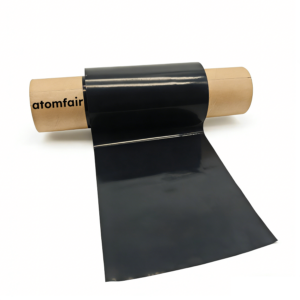
This pre-coated Prussian Blue electrode on aluminum foil is designed for sodium-ion battery research, offering a research-ready cathode that eliminates in-house slurry coating. Its open-framework Prussian Blue active material supports rapid ion diffusion, but users must account for moisture sensitivity and batch-to-batch coating thickness variation.
Positive
- Pre-coated electrode eliminates slurry coating: The single-sided Prussian Blue coating on aluminum foil bypasses the need for in-house slurry preparation and coating, accelerating electrode fabrication for standard testing and scale-up.
- High-purity aluminum substrate conductivity: The high-purity battery-grade aluminum foil provides excellent electrical conductivity and mechanical support, ensuring reliable current collection during electrochemical cycling.
Trade-offs
- Moisture-sensitive Prussian Blue lattice: Storage in a cool, dry environment (desiccator or dry room) is required; high humidity can cause moisture absorption into the Prussian Blue framework, degrading electrochemical performance.
- Batch-to-batch coating thickness variation: The coating thickness is typically 10-20 μm with exact thickness varying per batch, which may introduce variability in electrode loading that users must account for in experimental design.
Every advanced material, component, equipment, and instrument in our catalog is backed by rigorous testing. We maintain strict internal quality management frameworks and align with CE conformity metrics to deliver transparent, reproducible performance data via our public open-science repository.
To request raw batch performance data, submit formal vendor registration paperwork, or execute a fast-turnaround R&D manufacturing loop, contact us at inquiry@atomfair.com.
Item is dispatched under the Atomfair Shipping & Delivery Framework (Free worldwide shipping on orders over $59 USD). Return is governed by the Atomfair Return & Refund Policy (7-day technical return window).