Description
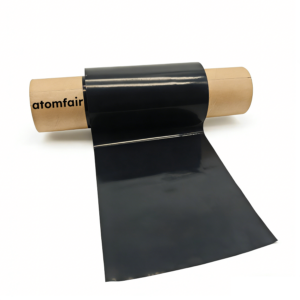
ATOMFAIR® NVP-D01 SODIUM VANADIUM PHOSPHATE (NVP) ELECTRODE SHEETRESEARCH GRADE MATERIAL
|
||||||||||||||||||||||||||||||||||||||||||||||
|
||||||||||||||||||||||||||||||||||||||||||||||
|
|||
|
TAILORED SOLUTIONS FOR RESEARCH
Contact our engineering team for technical support or official institutional quotations.
EMAIL: inquiry@atomfair.com
|
|||
|
Manufacturer: ATOMFAIR LLC
Brand: ATOMFAIR®
|
Sodium vanadium phosphate electrode sheets require storage in a dry, inert atmosphere to prevent moisture-induced degradation of the active material. Cell assembly must be performed in a controlled environment to ensure reliable electrochemical performance.
- Moisture Sensitivity: Store electrode sheets in a dry, inert environment such as an argon glovebox to prevent moisture contamination.
- Mechanical Handling: Handle sheets with clean tweezers or gloves and avoid bending or creasing the electrode to maintain coating integrity.
- Contamination Control: Minimize exposure to dust and particulate matter by working in a clean area or glovebox during electrode processing.
What is the trade-off between the 93.5% active material ratio and the 1.5 g/cm³ compaction density in terms of rate capability and mechanical integrity?
The high active material ratio of 93.5% maximizes specific capacity per unit mass but reduces interparticle electronic pathways, potentially limiting rate capability. The compaction density of 1.5 g/cm³ balances sufficient porosity for electrolyte wetting while maintaining mechanical cohesion, enabling stable cycling at moderate C-rates. These parameters are optimized for reproducible coin cell testing with a nominal capacity of 110 mAh/g.
Is this double-sided NVP electrode compatible with standard sodium-ion electrolytes such as 1 M NaClO4 in EC/DEC?
Yes, the NVP active material and carbon-coated aluminum foil substrate are fully compatible with carbonate-based electrolytes like 1 M NaClO4 in EC/DEC. The 12 μm thick substrate with 3.63 mg/cm² areal density provides stable mechanical support and current collection in both symmetrical and full-cell configurations. Electrolyte decomposition at the carbon coating is negligible under standard cycling conditions.
How is the electrode sheet baking time determined?
The electrode sheet requires 12 hours under vacuum baking at 100°C. This protocol ensures thorough removal of residual solvent and water from the wet-process coating, preventing side reactions during electrochemical testing. The baking conditions are optimized for the 20 mg/cm² double-sided coating density on the 12 μm carbon-coated aluminum foil.
The NVP-D01 electrode sheet delivers high active material loading (20 mg/cm², 93.5% ratio) on carbon-coated aluminum foil, optimized for sodium-ion coin cell or pouch cell R&D. However, users must plan for mandatory vacuum baking and note the fixed sheet dimensions and pack size.
Positive
- High active material loading: Double-side coating at 20 mg/cm² with 93.5% active material ratio provides high areal capacity and energy density for sodium-ion battery testing.
- Consistent electrochemical performance: Specified compaction density (1.5 g/cm³) and capacity (110 mAh/g) across 5 sheets per pack ensure reproducible results in laboratory evaluations.
Trade-offs
- Vacuum baking required before use: Electrode sheets must undergo 12-hour vacuum baking at 100°C prior to cell assembly, requiring dedicated oven capacity and extended preparation time.
- Fixed sheet size and pack quantity: Coating area is limited to 152×100 mm and packs contain only 5 sheets, which may constrain large-format cell builds or high-throughput screening workflows.
Every advanced material, component, equipment, and instrument in our catalog is backed by rigorous testing. We maintain strict internal quality management frameworks and align with CE conformity metrics to deliver transparent, reproducible performance data via our public open-science repository.
To request raw batch performance data, submit formal vendor registration paperwork, or execute a fast-turnaround R&D manufacturing loop, contact us at inquiry@atomfair.com.
Item is dispatched under the Atomfair Shipping & Delivery Framework (Free worldwide shipping on orders over $59 USD). Return is governed by the Atomfair Return & Refund Policy (7-day technical return window).