Description
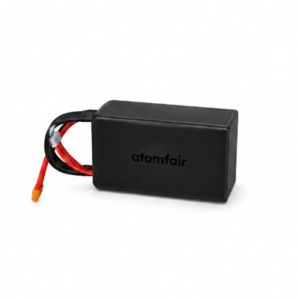
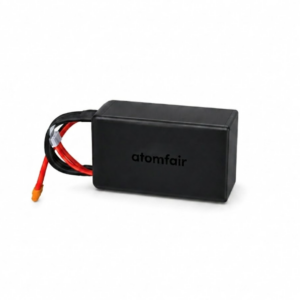
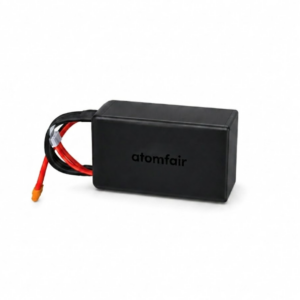
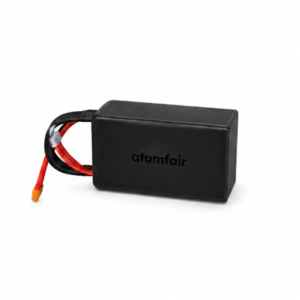
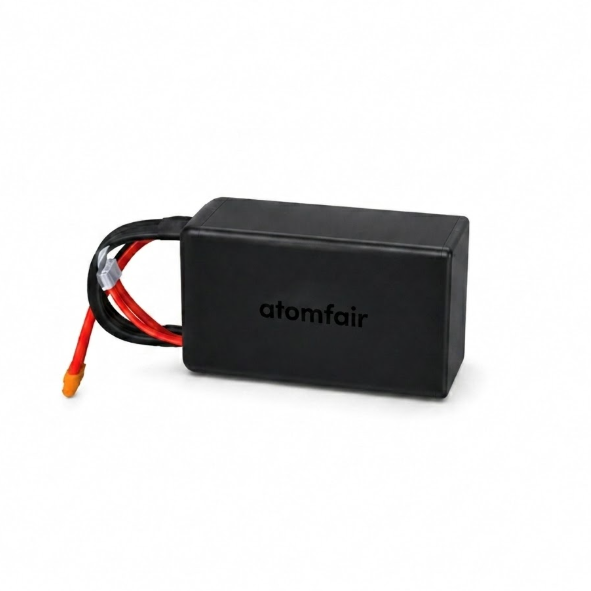
83.2V 233.1Ah ENERGY STORAGE STATION BATTERY | ATOMFAIRCOMMERCIAL GRADE · PRODUCTION
|
|||||||||||||||||||||||||||||||||
|
|||||||||||||||||||||||||||||||||
|
TAILORED SOLUTIONS FOR RESEARCH
Contact our engineering team for technical support or official institutional quotations.
EMAIL: inquiry@atomfair.com
|
|||||||||||||||||||||||||||||||||
|
Manufacturer: Atomfair LLC
Brand: ATOMFAIR®
|
This battery must be stored within -30°C to 60°C in any humidity level and operated at altitudes below 2000 meters. Charge and discharge must remain within specified temperature windows and current thresholds to prevent thermal runaway and electrical failure.
- Temperature Storage Constraint: Store the battery between -30°C and 60°C when not in use to avoid material degradation and capacity loss.
- Humidity Protection: The battery enclosure tolerates unlimited relative humidity, but external condensation on connectors must be prevented during operation.
- Altitude Limit: Maximum operating altitude is 2000 meters to ensure adequate cooling and electrical insulation performance.
- Current Limits: Do not exceed 116A continuous charge current or 466A peak discharge current to avoid internal heating and cell stress.
- Ventilation Requirement: Maintain proper ventilation around the chassis to dissipate heat and prevent accumulation of flammable gases during operation.
Install the battery in a well‑ventilated area compliant with local electrical codes and connect using appropriately rated high‑current cables. Configure the charging system to respect 116A rated charge current and 94.9V maximum voltage, then monitor temperature during the first cycle.
Required Equipment: Shock‑insulated crating opener, High‑current cable assembly (rated ≥ 116A), Charge controller with programmable current limits, Temperature monitor or thermocouple
- Unpack and Inspect
Open the shock‑insulated crate and inspect the battery for physical damage or electrolyte leakage before handling. - Position and Ventilate
Place the battery on a flat, non‑conductive surface in a well‑ventilated area with clearance around the chassis for airflow. - Connect Cables
Attach the high‑current cables to the battery terminals, ensuring the polarity matches and connections are torque‑tightened to manufacturer specifications. - Configure Charge Controller
Set the charge controller to limit charging current to 116A continuous and maximum voltage to 94.9V DC. - Monitor Initial Cycle
Verify that battery temperature stays within the 0°C to 50°C charging range during the first full charge cycle and adjust ventilation if necessary. - Confirm Discharge Limits
Check that the discharge system respects the 233A continuous and 466A peak current limits before loading the battery. - Store if Idle
Disconnect the battery and store it in a dry, ventilated area within -30°C to 60°C if it will not be used for an extended period.
How does the 2C peak discharge rate affect thermal management requirements for continuous EV fast charging operation?
The system's condensed core technology provides ultra-low internal resistance and excellent thermal stability, enabling 466A peak discharge (2C). However, continuous operation at peak is limited; the rated discharge is 233A (1C). During sustained high-rate use, the battery must remain within its discharge temperature window of -20°C to 50°C, requiring proper ventilation and adherence to local electrical codes to prevent thermal buildup.
What are the voltage and current requirements for integrating this 83.2V battery into an existing EV fast charging system?
This battery operates at a nominal 83.2V DC with a working voltage range of 65.0V to 94.9V. Charging requires a compatible source capable of delivering up to 116A continuous (233A peak at 1C), while discharging can supply 233A continuous (466A peak at 2C). Integration into an EV fast charging station demands a charging controller and power electronics that support these voltage and current thresholds.
What are the physical and environmental prerequisites for safely installing this 100 kg battery module in an outdoor EV charging station?
The module weighs 100±5 kg and requires custom shock-insulated industrial crating for transport. It is designed for outdoor deployment with unlimited humidity tolerance and operation up to 2000m altitude. Installation must follow local electrical codes, ensure proper ventilation, and maintain operating temperatures within the charging (0°C to 50°C) and discharging (-20°C to 50°C) windows. When not in use, storage should be between -30°C and 60°C.
The 83.2V 233.1Ah Energy Storage Station Battery is a high-voltage (83.2V DC) 19.39kWh modular storage unit featuring Atomfair's condensed core technology for ultra-low internal resistance and thermal stability. It supports a rated discharge of 233A (1C) and peak 466A (2C), making it suited for rapid EV charging buffers, but its 100kg mass and 0°C lower charge limit impose handling and environmental constraints.
Positive
- Condensed core low-resistance design: Integrated condensed core infrastructure delivers ultra-low internal resistance and excellent thermal stability, enabling 1C peak charge (233A) and 2C peak discharge (466A) for super fast charging stations.
- Wide environmental operating range: Operates in diverse climates with discharge from -20°C to 50°C, storage from -30°C to 60°C, unlimited humidity tolerance, and altitude up to 2000m, suitable for outdoor 24/7 deployment.
Trade-offs
- Heavy 100 kg chassis mass: The standalone module weighs approximately 100 kg, requiring mechanical lifting equipment and reinforced structural support for installation and servicing.
- Limited charging temperature window: Charging is only permitted between 0°C and 50°C; operation below freezing requires thermal management to avoid damage, and altitude is capped at 2000m.
Every advanced material, component, equipment, and instrument in our catalog is backed by rigorous testing. We maintain strict internal quality management frameworks and align with CE conformity metrics to deliver transparent, reproducible performance data via our public open-science repository.
To request raw batch performance data, submit formal vendor registration paperwork, or execute a fast-turnaround R&D manufacturing loop, contact us at inquiry@atomfair.com.
Item is dispatched under the Atomfair Shipping & Delivery Framework (Free worldwide shipping on orders over $59 USD excl. heavy equipment). Return is governed by the Atomfair Return & Refund Policy (7-day technical return window).