
Battery Equipment
ATOMFAIR Battery Equipment supports the complete development path from laboratory-scale cell prototyping to pilot-line validation and production-oriented process automation. This category brings together equipment for slurry preparation, electrode coating, film forming, calendaring, electrode cutting, stacking, welding, electrolyte filling, vacuum sealing, controlled-atmosphere handling, electrochemical testing, safety evaluation, and process quality control.
For university laboratories and early-stage R&D teams, compact benchtop instruments help accelerate material screening, electrode preparation, lithium-metal handling, pouch-cell trials, and early electrochemical validation. For pilot-line and pre-production teams, semi-automatic and automated equipment supports repeatable electrode fabrication, cell assembly, electrolyte wetting, sealing, sorting, and format-specific process optimization.
Battery equipment selection should follow the workflow of the cell being built rather than the machine name alone. Key selection factors include electrode size, coating width, pressure range, temperature control, vacuum level, atmosphere requirement, alignment accuracy, throughput target, testing channel configuration, and whether the system is intended for R&D, pilot validation, or production-oriented automation.
Show More Battery Equipment, Assembly Systems & Process Validation Tools
I. BATTERY EQUIPMENT BY DEVELOPMENT STAGE
| Development Stage | Equipment Focus | Typical Use Case | Key Selection Factors |
|---|---|---|---|
| Benchtop Laboratory Equipment | Compact mixers, coaters, sealers, testers, glove boxes, small-format preparation tools | Material screening, small electrode preparation, early pouch or coin-cell research | Sample size, coating area, atmosphere control, voltage/current range, testing channels |
| Small Pilot-Line Equipment | Semi-automatic coating, calendaring, cutting, stacking, welding, filling, and sealing systems | Repeatable pouch/cylindrical cell prototyping and formulation validation | Electrode width, alignment accuracy, vacuum level, temperature range, process repeatability |
| Mid-Scale Validation Line | Intermittent coating, roll-to-roll forming, automated stacking, OCV/IR testing, sorting, and QC equipment | Pre-production process optimization and customer sample builds | Throughput, web handling stability, data traceability, line compatibility |
| Production-Oriented Automation | Automatic grooving, crimping, shell loading, wrapping, sorting, testing, and safety inspection systems | Higher-throughput cylindrical, pouch, prismatic, and supercapacitor production workflows | PPM rate, yield target, safety interlocks, PLC/HMI integration, maintenance access |
II. BATTERY MANUFACTURING WORKFLOW GUIDE
| Process Stage | Equipment Family | Technical Purpose | Typical Applications |
|---|---|---|---|
| Slurry Preparation | Vacuum mixers, weighing and feeding systems, filtration devices | Improve dispersion, degassing, batch consistency, and defect control | Cathode/anode slurry development, high-solids formulations, silicon-carbon systems |
| Electrode Fabrication | Coaters, dryers, film-forming systems, calenders, slitting and die-cutting equipment | Control coating thickness, areal loading, density, edge quality, and dimensional repeatability | Lab electrodes, pilot electrodes, separator coatings, dry or semi-dry electrode concepts |
| Cell Assembly | Stackers, welders, case loaders, forming tools, grooving and crimping systems | Manage layer alignment, tab connection, shell/case handling, and mechanical closure | Pouch, cylindrical, prismatic, and supercapacitor cell assembly |
| Filling & Sealing | Electrolyte filling systems, vacuum standing chambers, pouch-cell sealers, secondary sealing equipment | Control wetting, vacuum level, sealing width, gas removal, and pouch integrity | Pouch cells, cylindrical cells, supercapacitors, electrolyte compatibility studies |
| Testing & Quality Control | Battery cyclers, OCV/IR testers, short-circuit testers, safety chambers, sorting equipment | Screen electrical consistency, insulation safety, internal resistance, and cycle behavior | Formation studies, cell sorting, process QC, safety validation |
III. EQUIPMENT PATHWAYS BY CELL FORMAT
| Cell Format / Research Direction | Recommended Equipment Logic | Key Questions Before Selection |
|---|---|---|
| Coin Cell Research | Slurry preparation, coating, drying, electrode punching, coin-cell assembly, crimping, disassembly, and battery testing | What electrode diameter, sample throughput, electrolyte handling method, and test channel count are required? |
| Pouch Cells | Coating, calendaring, cutting, stacking, tab welding, electrolyte filling, vacuum sealing, hot pressing, and cycling | What electrode size, stack height, sealing length, vacuum level, and throughput are required? |
| Cylindrical Cells | Electrode slitting, winding-related preparation, grooving, crimping, shell loading, wrapping, OCV/IR testing, and sorting | Which cell format, production rate, groove depth, crimp force, and QC method are needed? |
| Prismatic Cells & Supercapacitors | Case shaping, tab punching/riveting, injection, sealing, testing, and mechanical handling | What case size, tab structure, injection volume, and sealing method are required? |
| Solid-State & Lithium-Metal Systems | Glove boxes, lithium metal slitting, composite electrode forming, lamination, hot pressing, and controlled-atmosphere processing | What moisture/oxygen limits, interface pressure, lithium thickness, and layer uniformity are needed? |
| Dry / Semi-Dry Electrode R&D | Fibrillation, fiber-network strengthening, multi-roll film forming, lamination, and densification | Is the process focused on PTFE fibrillation, high-loading electrodes, low-solvent processing, or roll-to-roll feasibility? |
IV. RECOMMENDED BATTERY LAB AND PILOT-LINE CONFIGURATIONS
| Setup Type | Core Equipment Groups | Suitable For |
|---|---|---|
| Basic Battery Materials Lab | Mixing, coating, drying, electrode punching, cell assembly, sealing, and battery testing | Universities, material screening, cathode/anode formulation research |
| Pouch Cell R&D Line | Slurry preparation, coating, calendaring, cutting, stacking, tab welding, filling, vacuum sealing, hot pressing, and cycling | Pouch-cell prototyping, electrolyte evaluation, electrode process optimization |
| Cylindrical Cell Pilot Setup | Slitting, winding-related preparation, grooving, crimping, shell loading, wrapping, OCV/IR testing, and sorting | 18650 / 21700 / 26650-style cylindrical process development |
| Solid-State Battery Research Platform | Controlled atmosphere, lithium metal preparation, composite electrode forming, lamination, hot pressing, and pressure-assisted testing | Sulfide, oxide, polymer, lithium-metal, and anode-free battery research |
| Production QC Extension | OCV testing, internal resistance testing, sorting, safety inspection, short-circuit testing, and traceability tools | Process validation, incoming/outgoing QC, cell matching, safety screening |
TECHNICAL FAQ FOR BATTERY EQUIPMENT & CELL PROCESS VALIDATION
How should I choose between benchtop battery equipment and pilot-line equipment?
Benchtop equipment is suitable for material screening, small electrode preparation, and early cell prototyping. Pilot-line equipment is more appropriate when the goal is repeatability, larger electrode formats, controlled assembly, higher throughput, and customer-facing validation samples.
Why should battery equipment be selected by process stage rather than model name?
Most buyers first need to identify which process bottleneck they are solving: slurry dispersion, coating uniformity, electrode density, cell assembly, electrolyte wetting, sealing reliability, or testing consistency. Model-level selection should come after the workflow requirement is clear.
What equipment is typically needed for pouch cell development?
A pouch cell workflow typically includes slurry mixing, coating, drying, calendaring, electrode cutting, stacking, tab welding, aluminum-plastic film forming, electrolyte filling, vacuum pre-sealing, standing or aging, secondary sealing, hot pressing, and electrochemical testing.
When is controlled-atmosphere equipment necessary?
Glove boxes or controlled-atmosphere systems are recommended for lithium metal, sodium metal, sulfide solid electrolytes, moisture-sensitive salts, and other materials that degrade when exposed to oxygen or water.
Why do coating and calendaring conditions affect battery test results?
Coating and calendaring determine electrode thickness, areal loading, porosity, adhesion, and density. If these variables are not controlled, test results may reflect process variation rather than the true performance of the active material.
How do battery testers differ from OCV and internal resistance testers?
Battery testers run controlled charge/discharge cycling over time. OCV and internal resistance testers are used for faster screening, sorting, and quality checks. They are complementary tools in cell evaluation and production QC.
What is missing if a lab wants to build a basic battery prototyping setup?
A basic setup often requires mixing, coating, drying, calendaring or pressing, electrode punching, cell assembly, sealing, electrolyte handling, and battery testing. For coin-cell labs, crimpers, disassemblers, coin-cell dies, and electrode punching tools are especially important.
What information should be confirmed before requesting a quotation?
Customers should confirm cell format, electrode size, coating width, pressure range, temperature range, vacuum requirement, atmosphere requirement, automation level, throughput target, utility requirements, and whether the equipment is for R&D, pilot-line validation, or production use.
Showing 65–69 of 69 results
-
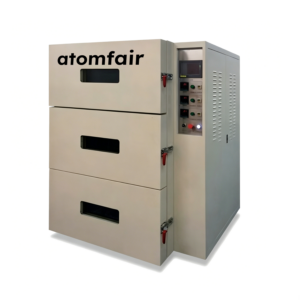
Three-Layer Vacuum Oven -0.1MPa 8kW 220V PID
$14,464.00 -
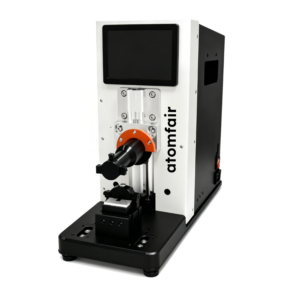
Ultrasonic Metal Welding Machine 40kHz/20kHz ATOMFAIR®
Price range: $7,000.00 through $10,500.00 -
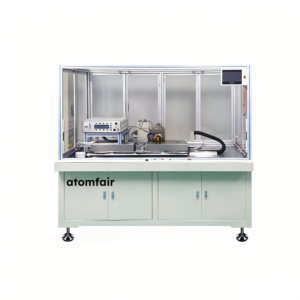
USW-724 Ultrasonic Welder Cylindrical Batteries
$5,000.00 -
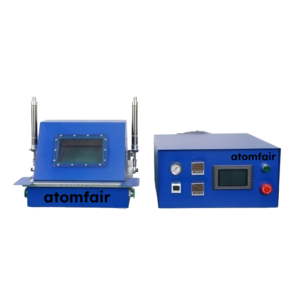
Vacuum Pre-Sealing Machine 200mm Copper Heads
$4,152.00 -
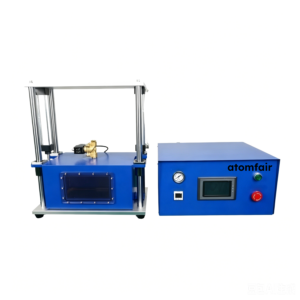
Vacuum Standing Chamber -95kPa Pouch Cylindrical
$3,669.00