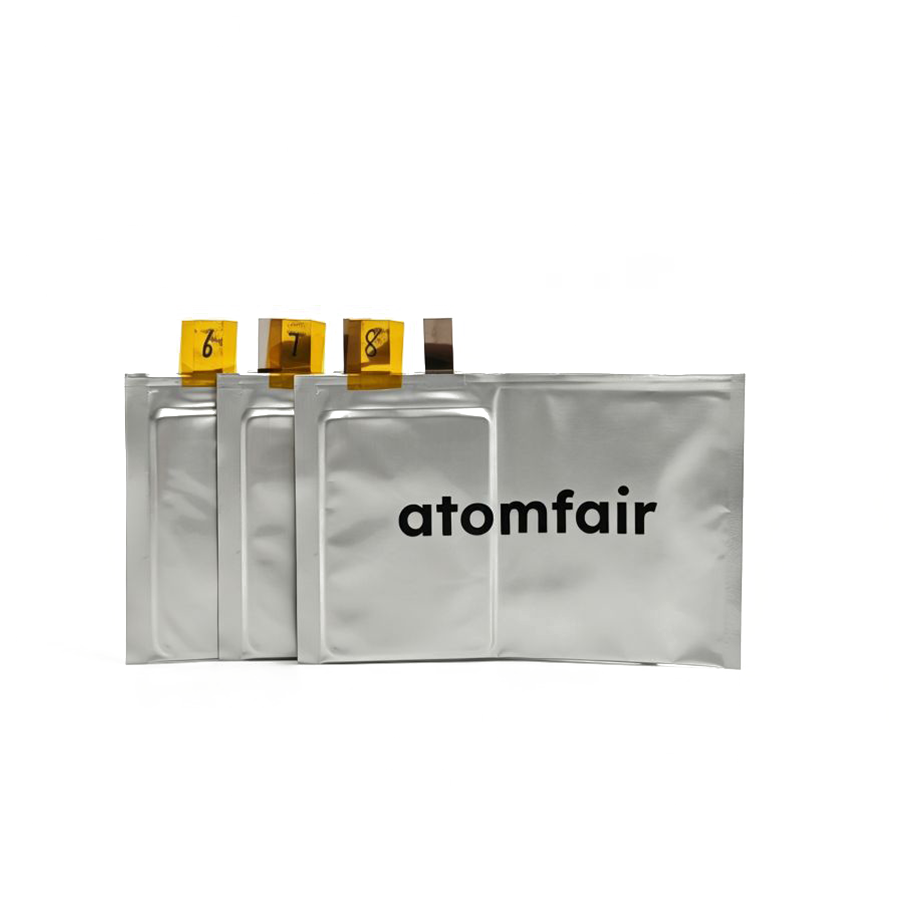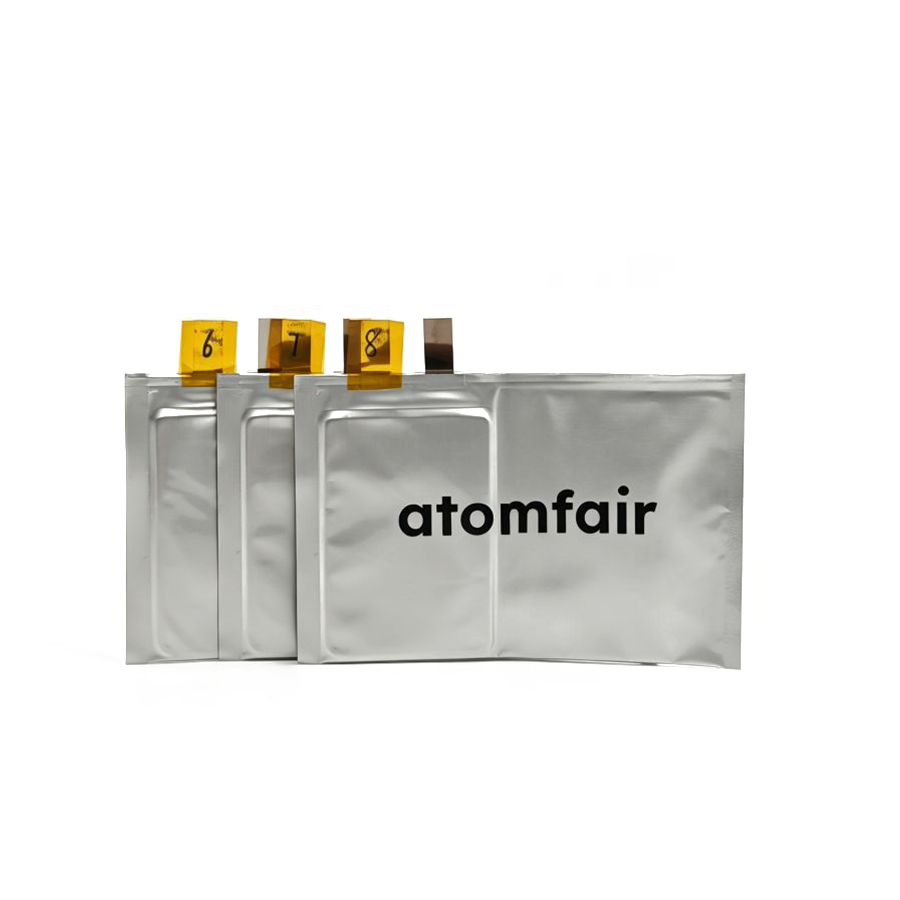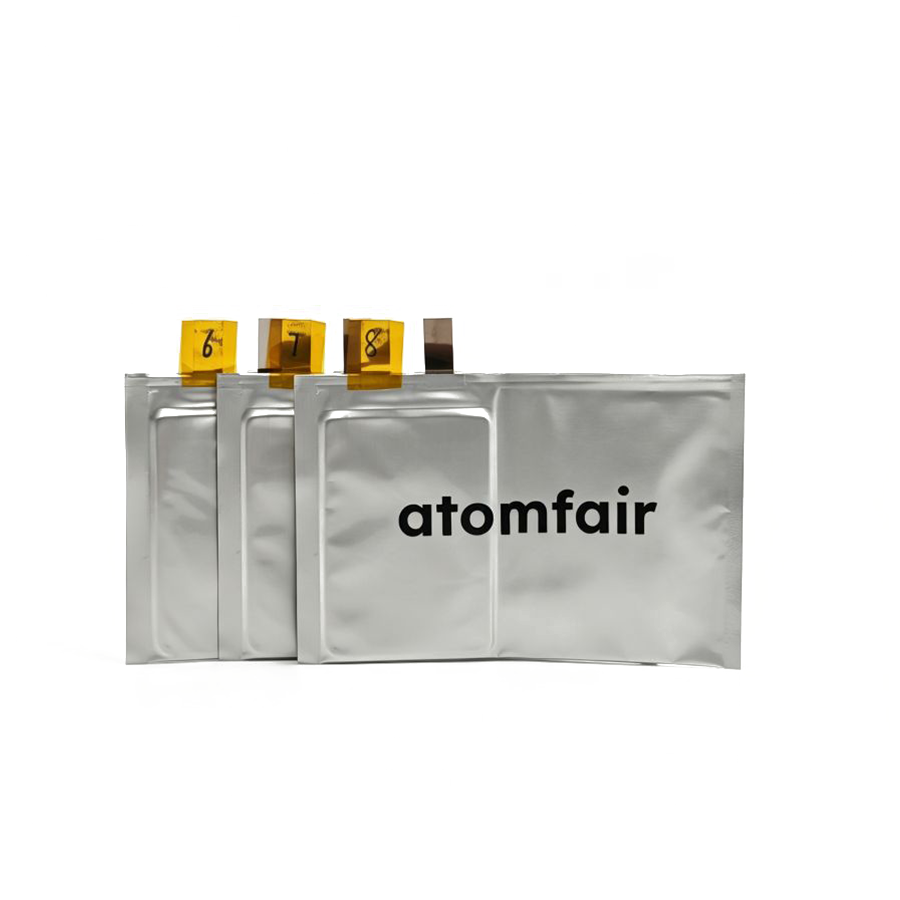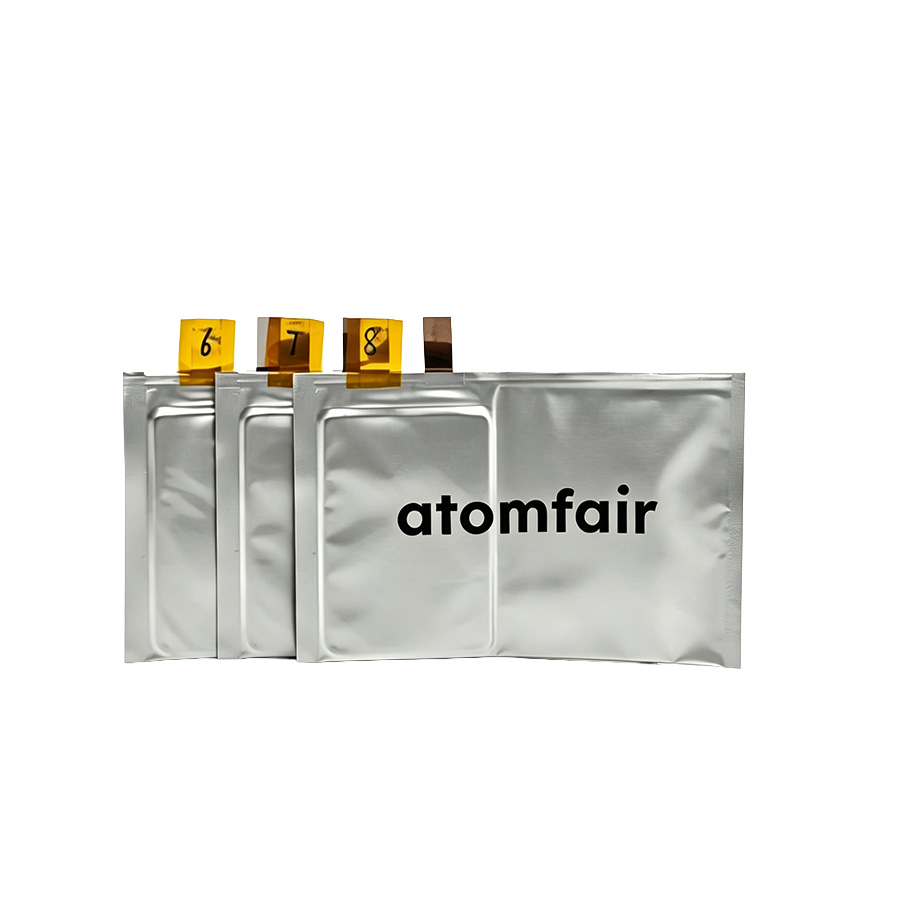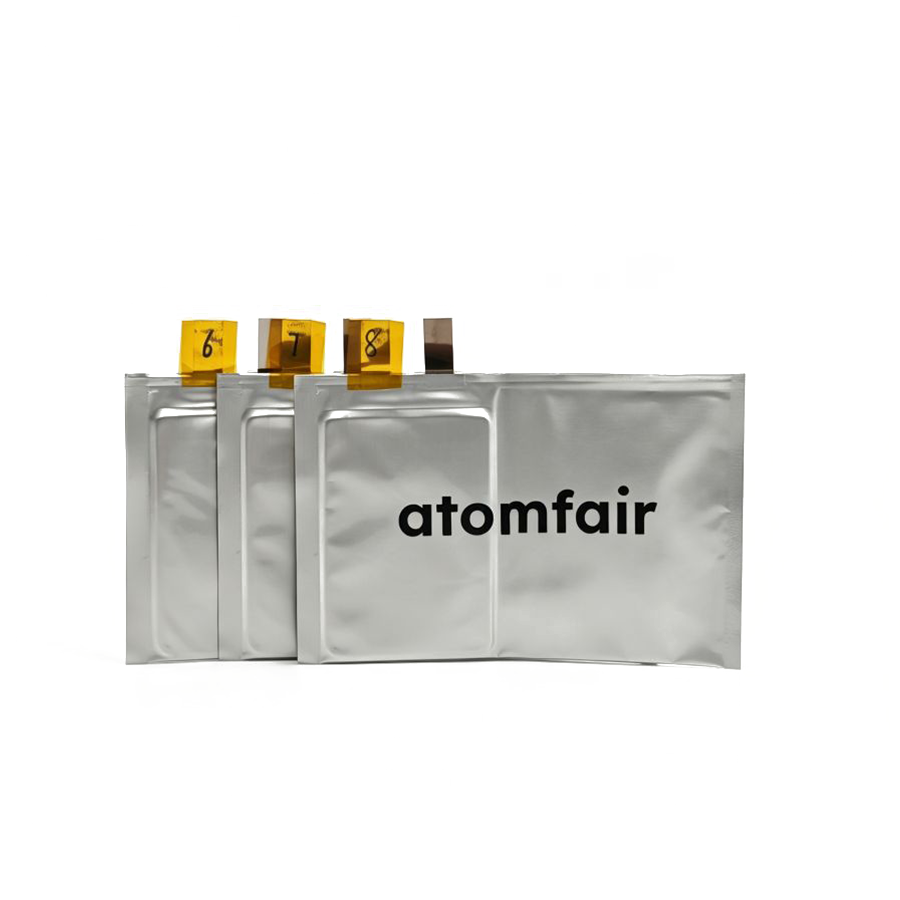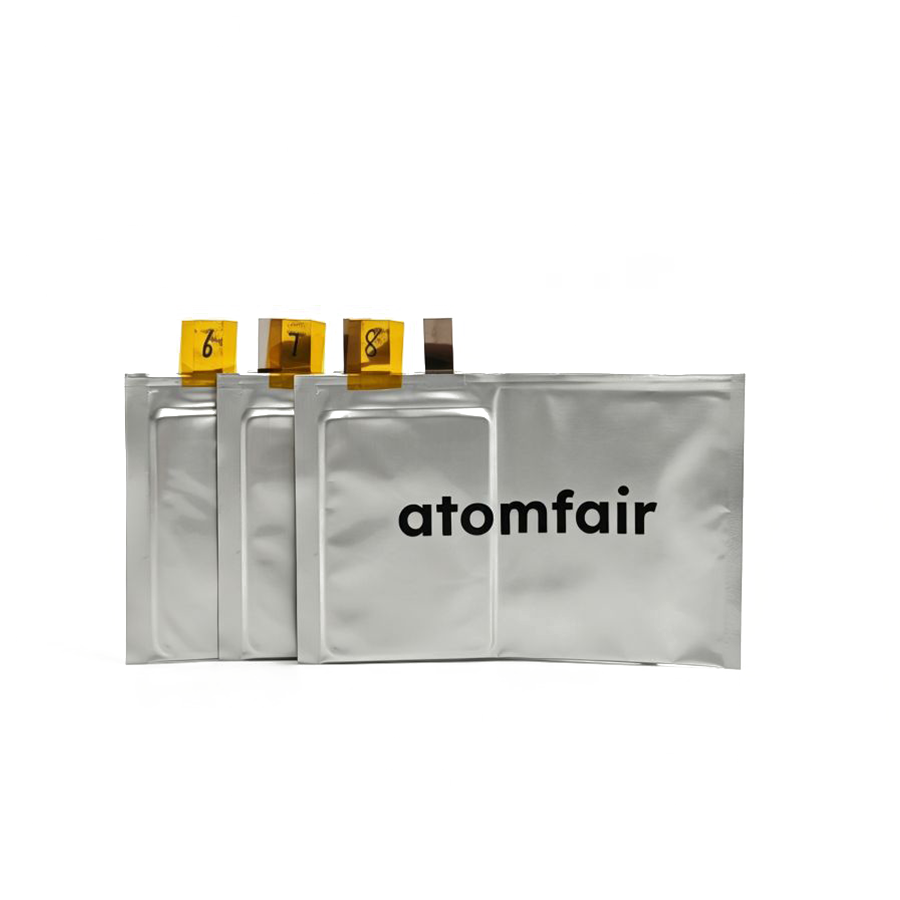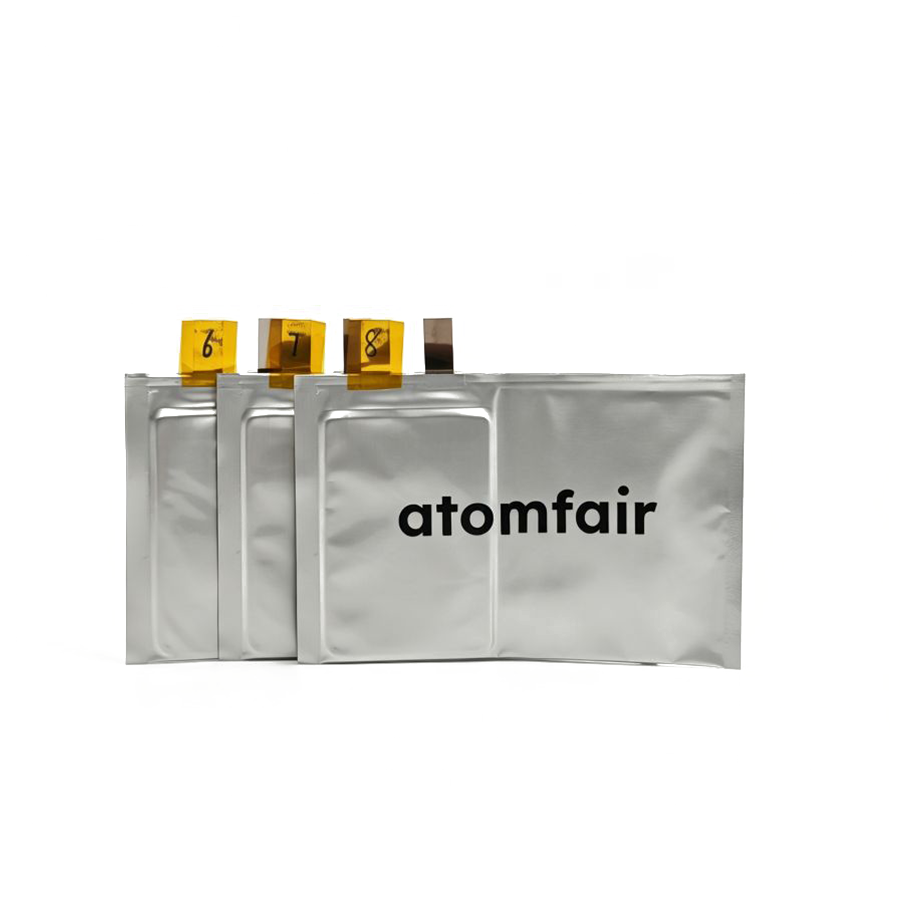
Ni90 Dry Pouch Cell (1Ah) – Si/C 1350 Anode |
||||||||||||||||||||||||||||||||||||||||||||||||||||
|
||||||||||||||||||||||||||||||||||||||||||||||||||||
|
||||||||||||
Related Products |
||||||||||||
|
||||||||||||
|
TAILORED SOLUTIONS FOR RESEARCH
Contact our engineering team for technical support or official institutional quotations.
EMAIL: inquiry@atomfair.com
|
||||||||||||
| Manufacturer: Atomfair LLC Brand: ATOMFAIR |
Store the dry pouch cell in a dry, inert atmosphere to prevent moisture absorption and electrode oxidation. Avoid physical damage, short circuits, and exposure to temperatures above 60°C to maintain cell integrity.
- Environmental Storage: Store in a moisture-free environment with temperature between 15°C and 30°C to preserve electrode stability.
- Safety Handling: Handle with insulated tools and avoid contact with conductive surfaces to prevent accidental electrical discharge.
- Degradation Risk: Silicon-carbon anodes are prone to swelling and capacity fade if exposed to humid air prior to electrolyte filling.
This procedure outlines the safe handling and electrolyte filling steps for the dry pouch cell. All steps must be performed in an inert atmosphere glovebox to prevent contamination.
Required Equipment: Argon-filled glovebox, Electrolyte dispensing syringe, Vacuum sealer
- Inspect
Inspect the dry pouch cell for any physical defects or damage before handling. - Transfer to Glovebox
Transfer the cell into an inert atmosphere glovebox with low moisture and oxygen content. - Inject Electrolyte
Inject a measured volume of electrolyte into the pouch cell through the pre-sealed fill port. - Vacuum Seal
Vacuum seal the pouch under controlled pressure to ensure complete wetting of the electrodes. - Rest and Equilibrate
Allow the filled cell to rest for at least 12 hours to achieve electrolyte distribution and equilibrium.
How does the high specific capacity of the SiC1350 anode (1350 mAh/g) affect cycle life and mechanical integrity in this dry pouch cell configuration?
The SiC1350 anode delivers 1350 mAh/g specific capacity with a compaction density of 1.1 g/cc, enabling high energy density but introducing significant volume expansion during lithiation. This mechanical stress can degrade the electrode structure over cycling; however, the dry pouch cell design allows researchers to isolate and study electrolyte-specific mitigation strategies without interference from pre-filled liquid chemistry.
Can the ATOMFAIR Ni90 Silicon Carbon 1350 dry pouch cell be directly paired with solid-state electrolytes, and what voltage constraints must be considered?
Yes, the cell is designed as an electrolyte-free platform for solid-state electrolyte investigations, featuring an ultra-high capacity Ni0.9Mn0.03Co0.07 cathode (cathode areal density 28.5 mg/cm²) and a SiC1350 composite anode (anode areal density 5.2 mg/cm²) with an NP ratio of 1.08. The operating voltage window is 2.3 V to 4.2 V, which must be matched to the electrochemical stability window of the solid electrolyte to prevent decomposition.
What handling and assembly conditions are required for the ATOMFAIR Ni90 Silicon Carbon 1350 dry pouch cell before electrolyte infusion?
Since the cell is supplied electrolyte-free and unfilled, it must be assembled and infused with electrolyte in a moisture-controlled environment, typically an argon-filled glovebox (<0.1 ppm H2O and O2). The dry electrodes and 12 µm PE separator with 2 µm ceramic coating are sensitive to atmospheric moisture and oxygen, which can cause parasitic reactions and degrade performance before testing begins.
This 1 Ah dry pouch cell integrates a high-nickel NMC cathode (206 mAh/g) with a SiC1350 anode (1350 mAh/g) in a 4/5 stacked configuration, designed for solid-state electrolyte benchmarking with full interfacial control.
Positive
- Ultra-high anode specific capacity: The SiC1350 anode delivers 1350 mAh/g, enabling high-energy-density cell designs for advanced solid-state electrolyte research.
- Electrolyte-free baseline control: As a dry pouch cell without pre-filled electrolyte, it allows precise isolation of interfacial degradation phenomena when testing proprietary electrolytes.
Trade-offs
- Requires electrolyte filling before use: The cell is supplied unfilled, necessitating that the researcher integrate electrolyte injection into their workflow and manage wetting protocols.
- Cathode-anode dimensional mismatch: The cathode (45.5×64 mm) and anode (46.5×65 mm) have different dimensions, requiring careful alignment during stacking to avoid misalignment artifacts.
Every advanced material, component, equipment, and instrument in our catalog is backed by rigorous testing. We maintain strict internal quality management frameworks and align with CE conformity metrics to deliver transparent, reproducible performance data via our public open-science repository.
To request raw batch performance data, submit formal vendor registration paperwork, or execute a fast-turnaround R&D manufacturing loop, contact us at inquiry@atomfair.com.
Item is dispatched under the Atomfair Shipping & Delivery Framework (Free worldwide shipping on orders over $59 USD excl. heavy equipment). Return is governed by the Atomfair Return & Refund Policy (7-day technical return window).