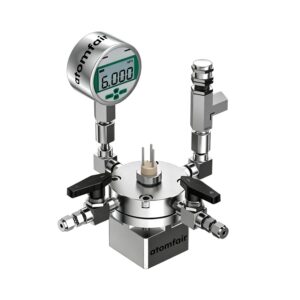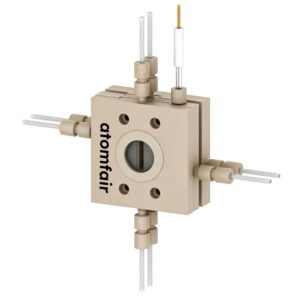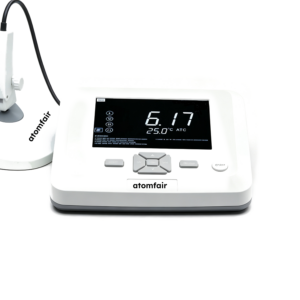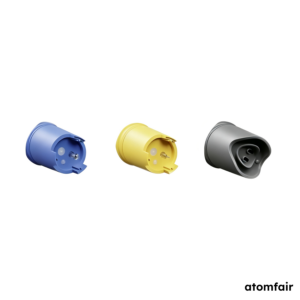
Photocatalytic High-Pressure Electrochemical Cell – Double LayerProduct Type: Variation
Laboratory procurement configuration
|
|||||||||||||||||||||||||||
|
|||||||||||||||||||||||||||
|
LABORATORY PROCUREMENT SUPPORT
For model selection, technical compatibility or configuration confirmation, contact our technical sales team.
E-MAIL: inquiry@atomfair.com
|
|||||||||||||||||||||||||||
|
Manufacturer: Atomfair LLC LLC
Brand: ATOMFAIR®
|
This double-layer cell must be stored in a clean, dry environment away from direct sunlight and extreme temperatures. Operational safety requires adherence to rated pressure limits and proper handling of vacuum and pressurized conditions.
- Pressure and Vacuum Safety: Always operate the cell within the specified pressure and vacuum limits to prevent mechanical failure.
- Material Compatibility: Use only electrolytes and reagents compatible with pure titanium, high borosilicate glass, and quartz glass to avoid corrosion or degradation.
- Thermal Management: Avoid rapid temperature changes to prevent thermal shock to the quartz window and glass components.
- Seal Integrity: Inspect all O-rings and seals before each use to maintain leak-tight operation under pressure and vacuum.
- Storage Conditions: Store the cell in a dry, dust-free environment with all ports capped to protect internal surfaces.
This procedure describes the safe assembly and initial pressurization of the double-layer cell. Follow each step sequentially to ensure proper sealing and safe operation.
Required Equipment: Torque wrench, Vacuum pump, Pressure regulator, Leak detection solution
- Inspection
Inspect all components for damage or contamination before assembly. - Assembly
Assemble the double-layer chamber with the appropriate gaskets and sealing elements. - Leak Check under Vacuum
Connect the vacuum line and pull a vacuum to verify the system holds pressure. - Electrolyte Filling
Fill the inner chamber with electrolyte solution to the recommended volume. - Pressurization
Pressurize the cell slowly with the desired gas while monitoring the pressure gauge. - Final Leak Check
Verify the system is leak-tight using a suitable detection method. - Reaction Initiation
Begin the photocatalytic reaction by exposing the cell to the light source.
What is the functional difference between the double-layer and single-layer configurations of the Atomfair Photocatalytic High-Pressure Electrochemical Cell?
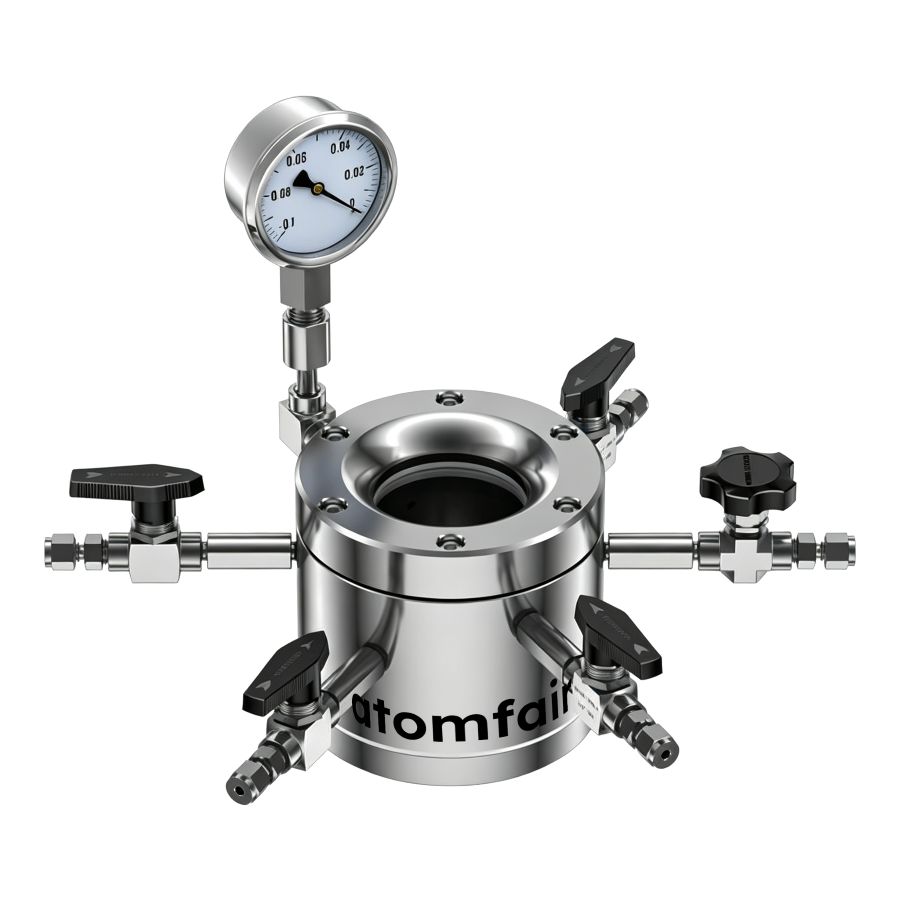
The double-layer configuration adds a double-layer chamber structure while maintaining the 50 mL working volume. It retains the pure titanium body, quartz glass window with >95% transmittance, and vacuum capability. The specific functional advantage of the double-layer design is not detailed in the product description, but it is a distinct configuration from the single-layer version.
What electrodes, membranes, and window materials are compatible with the Atomfair AF-PHC-D double-layer cell?
Electrodes, membranes, windows, and gas diffusion electrodes are separately purchased items that must be confirmed during configuration. The standard optical window is quartz glass with >95% transmittance, and the inner chamber is high borosilicate glass. For non-standard electrode sizes or window materials, customization is available upon request. Compatibility should be verified with the technical sales team.
What are the vacuum and pressure handling requirements for the Atomfair Photocatalytic High-Pressure Electrochemical Cell?
The cell is vacuum capable, allowing vacuum to be pulled on the system. The pure titanium chamber body and quartz glass window with >95% transmittance are designed for high-pressure photocatalytic applications. For specific pressure limits and detailed handling procedures, it is recommended to contact the technical sales team.
The Atomfair AF-PHC-D double-layer photocatalytic high-pressure cell features a 50 mL pure titanium body with a >95% transmittance quartz window and vacuum capability, but lacks a specified maximum operating pressure.
Positive
- Double-layer chamber design: The double-layer structure with an inner high borosilicate glass chamber and outer pure titanium body provides enhanced chemical isolation and thermal management for photocatalytic reactions.
- High-transmittance quartz window: Quartz glass window with >95% transmittance ensures efficient light penetration for photoactivation of catalytic processes.
Trade-offs
- Unspecified pressure rating: The maximum operating pressure is not listed; users must verify pressure tolerance with the manufacturer before use in high-pressure applications.
Every advanced material, component, equipment, and instrument in our catalog is backed by rigorous testing. We maintain strict internal quality management frameworks and align with CE conformity metrics to deliver transparent, reproducible performance data via our public open-science repository.
To request raw batch performance data, submit formal vendor registration paperwork, or execute a fast-turnaround R&D manufacturing loop, contact us at inquiry@atomfair.com.
Item is dispatched under the Atomfair Shipping & Delivery Framework (Free worldwide shipping on orders over $59 USD excl. heavy equipment). Return is governed by the Atomfair Return & Refund Policy (7-day technical return window).