Description
High-Specific-Energy Lightweight UAV Battery Packs (360Wh/kg Series) | ATOMFAIRCOMMERCIAL GRADE · PRODUCTION
|
|||||||||||||||||||||||||||||||
|
|||||||||||||||||||||||||||||||
|
TAILORED SOLUTIONS FOR RESEARCH
Contact our engineering team for technical support or official institutional quotations.
EMAIL: inquiry@atomfair.com
|
|||||||||||||||||||||||||||||||
|
Manufacturer: Atomfair LLC
Brand: ATOMFAIR®
|
|||||||||||||||||||||||||||||||
Store lithium-ion battery packs within a controlled temperature environment below 60°C to mitigate thermal degradation and safety hazards. Always pair with an intelligent battery management system (BMS) for real-time voltage monitoring and cell balancing to prevent over-discharge and multi-cell imbalance.
- Temperature Constraint: Prolonged exposure to temperatures exceeding 60°C must be avoided to prevent capacity loss and risk of thermal runaway.
- Discharge Limit: Over-discharge below the recommended lower voltage boundary causes irreversible cell damage and reduces cycle life.
- BMS Requirement: A compatible intelligent BMS with real-time status tracking is mandatory to maintain cell balance and suppress degradation paths.
- Mechanical Integrity: Drop impacts and physical shock can compromise internal cell structure and must be prevented during handling and storage.
- Transport Compliance: Transport must comply with standard safety parameters for lithium-ion batteries, with documentation available for institutional operators.
Initialize the battery pack by connecting it to a compatible intelligent BMS configured for the correct cell count. Handle the pack with care, avoiding impacts and extreme temperatures, and monitor discharge levels to prevent over-discharge.
Required Equipment: Intelligent Battery Management System (BMS) compatible with 4S or 6S configuration
- Inspect Pack
Inspect the battery pack for any physical damage, swelling, or deformation before use. - Connect BMS
Connect the pack to an intelligent BMS, ensuring correct polarity and secure terminal connections. - Configure BMS
Configure the BMS to match the pack's cell count (4S or 6S) and set appropriate voltage thresholds. - Store Safely
Store the pack in a temperature-controlled environment below 60°C and away from flammable materials when not in use.
What is the trade-off between selecting the 14.8V (4S) versus the 22.2V (6S) configuration for this 10 Ah high-specific-energy UAV battery pack?
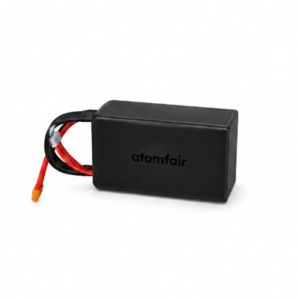
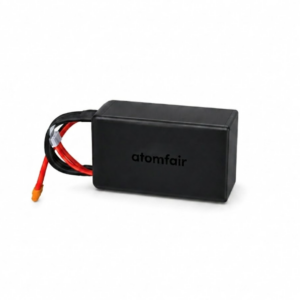
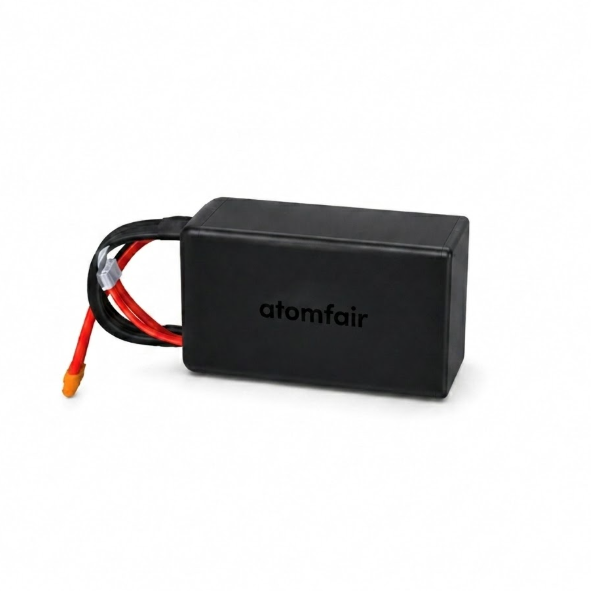
The 14.8V variant weighs 475 g and measures 46 × 46 × 165 mm, while the 22.2V variant weighs 710 g and measures 64 × 46 × 165 mm, both delivering ≥360 Wh/kg gravimetric energy density and 50 A continuous current. The trade-off is weight and thickness versus voltage: the 14.8V pack reduces deadweight for tighter center-of-gravity control, but the 22.2V pack provides higher voltage output for UAVs requiring greater electrical power at the same current draw. Both share identical 10 Ah capacity and 5C continuous rate.
What integration constraints exist when replacing legacy UAV battery packs with these soft-pack high-specific-energy lithium-ion modules?
The packs are designed to smoothly substitute standard legacy packs without generating center-of-gravity imbalance tracking faults, but the physical envelope differs: 14.8V is 46 × 46 × 165 mm and 22.2V is 64 × 46 × 165 mm. They require pairing with an intelligent BMS capable of real-time balancing to suppress multi-cell degradation, as stated in the operational compliance notice. Standard power terminals are included, but custom connectors like XT90-S anti-spark or AS150 must be requested for compatibility with existing UAV harnesses.
What critical handling, safety, and storage precautions are required for these high-density pouch lithium-ion battery packs?
The packs must always be used with an intelligent battery management system (BMS) to maintain cell balancing and prevent degradation. Avoid drop impacts, over-discharge below the lower voltage boundary, and prolonged exposure to temperatures exceeding 60 °C. They are approved under standard transport safety parameters with official records available for verified institutional operators. For storage, maintain the pack at an appropriate charge state and within safe temperature limits as per lithium-ion pouch cell best practices.
This high-specific-energy UAV battery pack lineup achieves up to 360 Wh/kg in 4S and 6S configurations, enabling extended flight endurance for lightweight aerial platforms, but requires precise BMS balancing and strict operating limits to maintain cell uniformity and safety.
Positive
- Industry-leading specific energy density: With gravimetric energy density reaching 360 Wh/kg, these packs significantly reduce deadweight, extending flight runtime for demanding UAV missions such as high-altitude mapping and surveying.
- Soft-pack design with thermal and vibration resilience: The premium pouch cell architecture promotes faster heat dissipation and structural vibration dampening, supporting stable operation under continuous 5C (50 A) loads.
Trade-offs
- Mandatory intelligent BMS integration: High-density pouch matrix modules require precise battery management balancing to suppress multi-cell degradation paths; pairing with a capable BMS is essential for safe long-term use.
- Sensitive to over-discharge, impact, and elevated temperatures: The packs must be protected from drop impacts, deep discharge below lower voltage limits, and prolonged exposure to heat above 60 °C, demanding careful handling and monitoring in the field.
Every advanced material, component, equipment, and instrument in our catalog is backed by rigorous testing. We maintain strict internal quality management frameworks and align with CE conformity metrics to deliver transparent, reproducible performance data via our public open-science repository.
To request raw batch performance data, submit formal vendor registration paperwork, or execute a fast-turnaround R&D manufacturing loop, contact us at inquiry@atomfair.com.
Item is dispatched under the Atomfair Shipping & Delivery Framework (Free worldwide shipping on orders over $59 USD excl. heavy equipment). Return is governed by the Atomfair Return & Refund Policy (7-day technical return window).