
Description
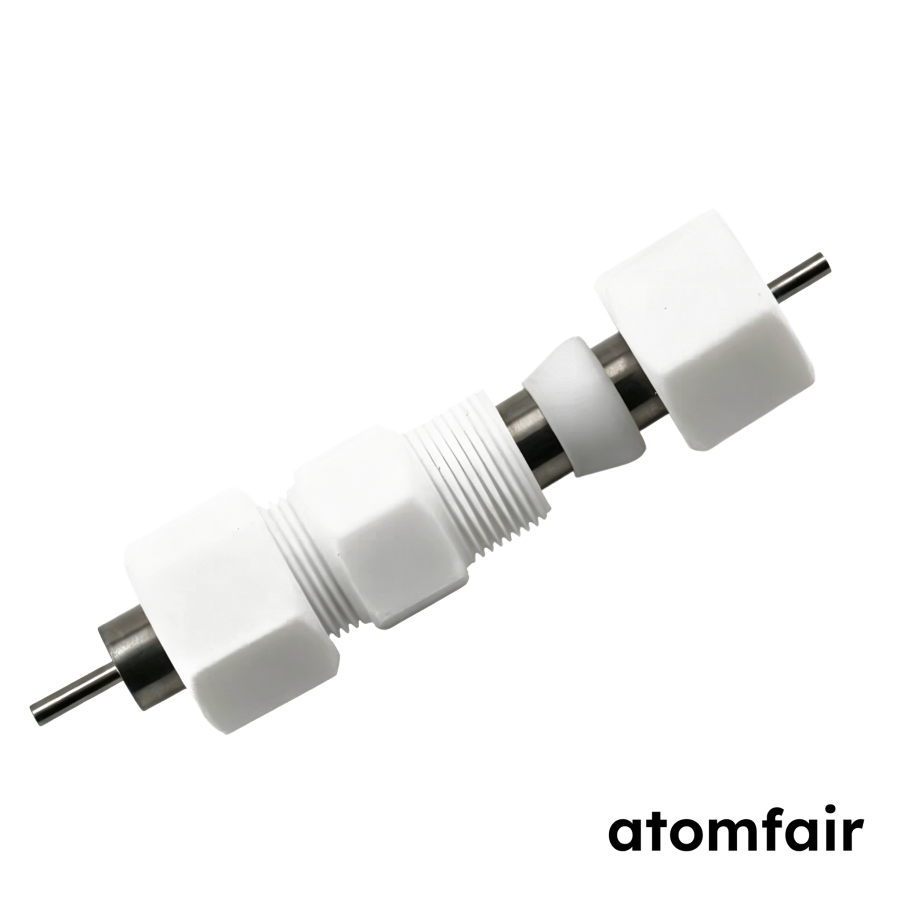
ATOMFAIR® SWAGELOK TWO-ELECTRODE TESTING CELL (TC4/304 STAINLESS STEEL)RESEARCH GRADE MATERIAL
|
|||||||||||||||||||||||
|
|||||||||||||||||||||||
|
TAILORED SOLUTIONS FOR RESEARCH
Contact our engineering team for technical support or official quotations.
EMAIL: inquiry@atomfair.com
|
|||||||||||||||||||||||
|
Manufacturer: Atomfair LLC
Brand: ATOMFAIR®
|
This stainless steel electrochemical testing cell requires storage in a cool, dry location to prevent corrosion and contamination. Dispose of the cell according to local regulations for hazardous materials.
- Storage and Disposal Constraint: Store the cell in a cool, dry location when not in use and follow local disposal regulations for hazardous materials.
What are the electrochemical compatibility trade-offs between the TC4 titanium alloy and 304 stainless steel components in this Swagelok cell?
The TC4 titanium alloy provides superior corrosion resistance in organic electrolytes and minimizes metal ion contamination, while the 304 stainless steel offers higher mechanical strength and cost-effectiveness. This hybrid construction balances electrochemical purity with structural durability for reliable battery testing.
Is this Swagelok two-electrode cell compatible with standard 2032 coin cell components for testing electrode materials?
Yes, the cell is designed for lab coin cell testing and accommodates standard 2032 coin cell components such as spacers, springs, and gaskets. The compact Swagelok design ensures proper alignment and pressure distribution for reproducible electrochemical measurements.
What storage and handling conditions are required to maintain the integrity of this Swagelok cell when used with air-sensitive battery electrolytes?
Store the cell in a cool, dry location when not in use to prevent corrosion of the stainless steel components. For air-sensitive electrolytes, assemble the cell in an inert atmosphere glovebox to avoid moisture and oxygen contamination that could degrade performance or create safety hazards.
This Swagelok two-electrode cell delivers robust stainless steel construction and secure Swagelok fittings for consistent electrochemical measurements, but requires cool, dry storage and regulated disposal of hazardous residues.
Positive
- Corrosion-resistant stainless steel construction: The cell body is fabricated from TC4/304 stainless steel, providing excellent durability and resistance to electrolyte corrosion for long-term lab use.
- Secure Swagelok electrical connections: The integrated Swagelok fittings ensure reliable electrical contact and leak-tight sealing, minimizing contact resistance and electrolyte leakage during experiments.
Trade-offs
- Cool, dry storage requirement: The cell assembly must be stored in a cool, dry environment to prevent moisture ingress and corrosion of stainless steel components between uses.
- Hazardous waste disposal protocol: Electrolyte residues and contaminated cell components are classified as hazardous materials and must be disposed of according to local regulations, adding waste management overhead.
Every advanced material, component, equipment, and instrument in our catalog is backed by rigorous testing. We maintain strict internal quality management frameworks and align with CE conformity metrics to deliver transparent, reproducible performance data via our public open-science repository.
To request raw batch performance data, submit formal vendor registration paperwork, or execute a fast-turnaround R&D manufacturing loop, contact us at inquiry@atomfair.com.
Item is dispatched under the Atomfair Shipping & Delivery Framework (Free worldwide shipping on orders over $59 USD). Return is governed by the Atomfair Return & Refund Policy (7-day technical return window).