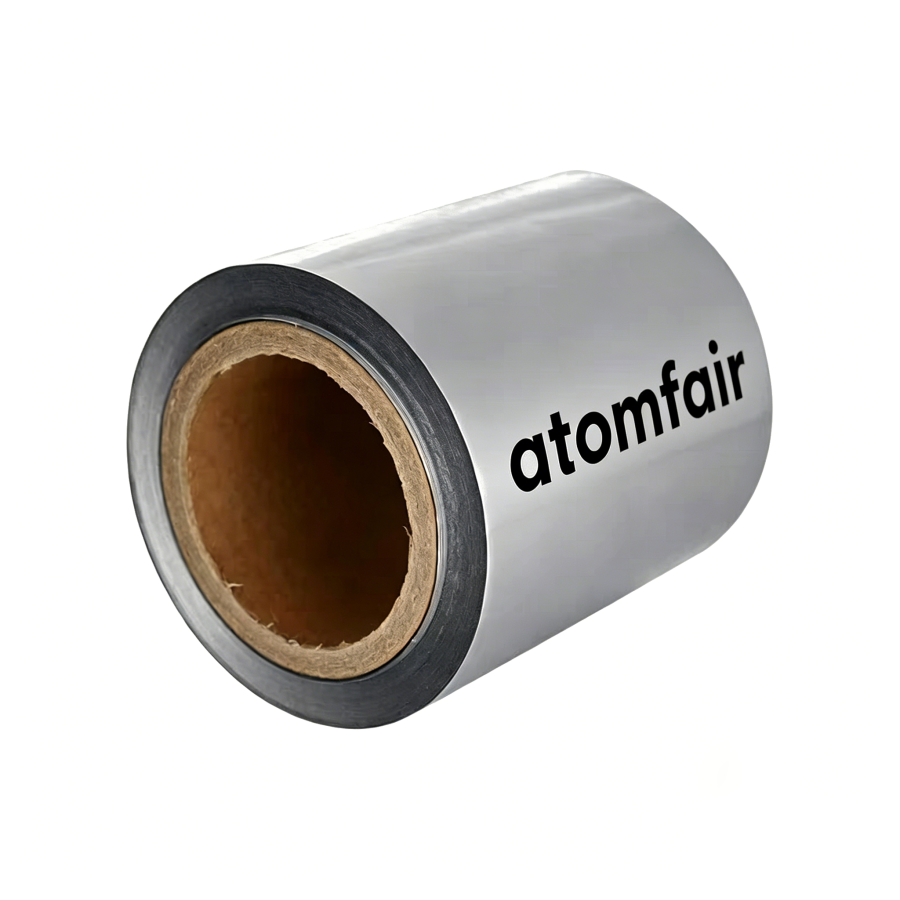
113μm Aluminum Laminated Film 200mm × 10m ATOMFAIR®

$89.00

Institutional Procurement & Supply Compliance: As a verified US supplier, Atomfair accepts formal institutional Purchase Orders (POs), contract billing schedules, and custom procurement loops for university and national laboratories, and corporate R&D departments globally.

113μm aluminum laminated film, 200mm×10m roll, commercial grade JIS nylon outer, aluminum core, polypropylene seal. Supports ≥5.0mm deep draw. Order now.

SKU: AFMSBKGS054
Category:
Tags:

Description

113μm Aluminum Laminated Film for Pouch Cell Packaging (200mm × 10m)

COMMERCIAL GRADE · PRODUCTION

Product Overview

High-performance energy storage scaling platforms require absolute environmental isolation barriers, and this premium aluminum laminated film substrate yields excellent electrochemical lifecycle preservation against structural gas evolution loops. Incorporating a specialized 113 μm multi-layer barrier matrix, this pouch cell packaging material integrates a specialized nylon outer core structural layer, a pinned central gas-barrier metal core, and an electrolyte-resistant inner polypropylene film to withstand aggressive organic solvents. Engineered to fulfill stringent laboratory deep drawing mandates, the material supports a flexible cold-forming draw depth matrix of ≥5.0 mm without triggering localized mechanical necking or interlayer delamination faults. Available in standardized 200 mm × 10 m rolled footprints, this uncompromised multi layer battery composite film array accommodates modern automatic punch configurations and manual tooling, serving as a dependable option for academic laboratory research groups, institutional prototyping cleanrooms, and high-reliability pouch cell scaling validation lines.

Technical Specifications

STRUCTURAL LAYER SPECIFICATION MATERIAL STANDARD MATRIX & THICKNESS BOUNDS
Outer Structural Layer Nylon (Conforming to JIS Z1714) | 0.025 mm (±0.0025 mm)
Primary Adhesive Matrix 1 Specialty Polyester-Polyurethane Formulation | 4 – 5 g/m² Coating Distribution
Central Core Gas-Barrier Layer Aluminum Foil Core (Conforming to JIS A8079/A8021) | 0.040 mm (±0.004 mm)
Secondary Adhesive Matrix 2 Polyurethane-Free High-Stability Adhesive | 2 – 3 g/m² Coating Distribution
Inner Thermal Sealing Layer Cast Polypropylene (CPP) Inner Shield | 0.040 mm (±0.004 mm)
Cumulative Composite Thickness 113 μm Nominal Cross-Section Geometry
Cold-Forming Mechanical Limit ≥ 5.0 mm Deep Drawing Limit Capabilities
Thermal Bonding Process Limits 180 °C – 190 °C (Conventional Target) | 200 °C Max Standard Testing Bounds
Moisture & Oxygen Gas Isolation ≤ 200 ppm Transgression Cumulative Window / 5 Years Horizon
Interlayer Interfacial Peel Strength Nylon to Aluminum Matrix ≥ 2 N/15mm | Aluminum to CPP Matrix ≥ 5 N/15mm
Thermal Joint Seal Joint Strength ≥ 29.4 N/15mm Joint Yield (Tested @ 200 °C, 0.2 MPa, 2s Dwell Period)
Total Volatile Carbon Residue < 5 mg/m² Trace Solvent Threshold Control Limits
Internal Surface Friction Coefficient < 1.0 (CPP / CPP Interface Slip Index)
Alternative Catalog Items Explore our complete component catalog for alternative volumetric capacities, high-conductivity polymer separators, aluminum-laminated protective packaging films, or multi-channel battery cycling systems.

Key Features & Advantages

  • High Barrier Performance: Central aluminum layer coupled with a multi-layer composite matrix prevents moisture and oxygen ingress to safely expand pouch cell service lifespan curves.
  • Superior Drawing Formability: Engineered to yield ≥5.0 mm deep drawing capability to support multi-layered stack enclosures without surface tearing or localized layer rupture events.
  • Excellent Electrolyte Resistance: A dedicated inner cast polypropylene liner actively resists chemical corrosion from aggressive lithium salt networks, stopping swelling trends.
  • Stable Heat-Seal Process: Broad operational temperature window delivers clean, high mechanical seal strength (≥29.4 N/15mm) across automated or manual iron tooling systems.
  • Low Residue, High Cleanliness: Trace solvent metrics are held strictly below industry safety parameters, neutralizing risk factors associated with electrolyte cross-contamination.

TECHNICAL COMPATIBILITY & CROSS-REFERENCE: This premium aluminum laminated matrix is processed to meet strict laboratory-grade dimensional metrics, exhibiting identical physical insulation tolerances and moisture transmission curves to standard energy storage research standards. It functions as a highly reliable institutional alternative for research groups presently employing conventional commercial composite specifications, matching baseline structural performance parameters seamlessly.
EXPERIMENTAL APPLICATION & SETUP GUIDE: Our laminated composite is optimized for high-precision electrochemical validation loops. Due to its standard mechanical drawing tolerances, it fits perfectly into mainstream assembly tooling lines. For example, during cup matrix forming steps, this film offers seamless integration with typical pneumatic deep drawing hardware blocks or industrial thermal vacuum side sealing equipment without demanding custom intermediate adjustments.
OPERATIONAL COMPLIANCE NOTICE: Recommended sealing variables require calibration: set jaw parameters to 180 °C – 190 °C under a constant force boundary of 0.15 – 0.25 MPa with a 1 – 3s duration dwell cycle. Do not exceed the material physical cup forming boundaries to insulate the internal metallic layer from fracture faults. Store rolls in a secure, cool room isolated from high humidity and vaporous organic chemical agents. Our manufacturing chains conform fully with environmental verification tracing structures, and modules are processed through verified logistics channels.

Frequently Asked Technical Questions

Can this composite film replace alternative enterprise-grade laminate rolls inside existing battery line formulations?

Yes. This laminated configuration features technical metrics (including chemical purity, peel strength limits, and multi-layer structural thickness) that align perfectly with the performance standards of industry-standard materials. Many academic and corporate energy research groups integrate this material as an independent structural alternative to optimize project budgeting while tracking identical data reproducibility.

What properties stop internal mechanical short-circuit tracks during hard fold cycles?

The internal cast polypropylene (CPP) layer exhibits high dielectric insulation breakdown properties under extreme surface loads. This non-conductive barrier material buffers the inner active cell pack grid from grounding against the central aluminum core barrier foil when executing acute edge fold steps.

How does moisture-barrier transmission rate trace under long-term climatic validation lines?

The central pinhole-free core aluminum sheet layer (0.040 mm) drops vapor transgression indexes to zero under stable conditions. Long-term environmental modeling predicts a cumulative internal moisture accretion bound below ≤200 ppm across a five-year deployment horizon, shielding organic lithium electrolyte compounds from aggressive hydrolysis loops.
TAILORED SOLUTIONS FOR RESEARCH
Contact our engineering team for technical support or official institutional quotations.
EMAIL: INQUIRY@ATOMFAIR.COM
Manufacturer: PRODUCTION DIVISION · ADVANCED ENERGY STORAGE DIVISION
Brand: INDUSTRIAL TESTING HARDWARE
Specifications are representative and subject to change without notice. For the latest version and compliance certificates, contact official sales channel.

This multi-layer barrier composite requires processing in a controlled environment to prevent contamination of the sealing interface. The aluminum foil core must be formed with a draw depth of at least 5.0 mm to avoid mechanical necking and interlayer delamination.

  • Deep Drawing Depth Constraint: The material supports a cold-forming draw depth of ≥5.0 mm without localized mechanical necking or interlayer delamination faults.
  • Electrolyte Compatibility: The inner cast polypropylene sealing layer is formulated to resist aggressive organic solvents commonly used in lithium-ion electrolytes.
  • Cleanroom Handling Requirement: The film must be handled in a cleanroom or dry-room environment to avoid particulate contamination on the sealing surfaces.

This procedure covers the cutting, forming, and inspection of the laminated film to produce pouch cell packaging. Proper execution maintains the barrier integrity and prevents delamination during deep drawing.

Required Equipment: Cleanroom or dry-room workspace, Precision cutter or automatic punch machine, Cold-forming deep drawing press, Visual inspection station with magnifier

  1. Prepare the workspace and film
    Unroll the aluminum laminated film onto a clean, dry surface within a controlled environment to minimize contamination.
  2. Cut the film to pouch dimensions
    Cut the film to the required pouch footprint using a precision cutter or an automatic punch machine set to the specified dimensions.
  3. Form the pouch via deep drawing
    Position the cut film in the cold-forming deep drawing press and apply controlled pressure to achieve a draw depth of at least 5.0 mm.
  4. Inspect the formed pouch
    Visually examine the formed pouch under magnification for any signs of necking, delamination, or pinholes before proceeding to electrolyte filling.

How does the 113 μm total film thickness and specific layer composition influence the achievable forming depth of ≥5.0 mm for pouch cell packaging?

The 113 μm film consists of a 0.025 mm nylon outer layer, a 0.040 mm aluminum foil middle layer, and a 0.040 mm CPP inner layer, which collectively provide sufficient ductility to achieve a forming depth of ≥5.0 mm without compromising barrier integrity. The aluminum layer thickness is optimized to allow deep drawing without cracking, while the nylon layer ensures puncture resistance and mechanical strength during the forming process.

What heat-sealing equipment and conditions are required to achieve the stated ≥29.4 N/15mm seal strength with this aluminum laminated film?

The film is compatible with conventional heat-sealing equipment operating at 180–190°C; under standard test conditions at 200°C, the seal strength reaches ≥29.4 N/15mm. Proper alignment and dwell time are critical to ensure complete fusion of the 0.040 mm CPP inner layer for reliable sealing integrity.

What storage conditions are recommended to maintain the film's barrier performance of ≤200 ppm moisture and oxygen transmission over 5 years?

The film should be stored in a dry, low-humidity environment to preserve its barrier properties, as the 0.040 mm aluminum foil layer provides excellent moisture and oxygen barrier but can be compromised by prolonged exposure to high humidity. The ≤200 ppm transmission target over 5 years is achieved under proper storage conditions that prevent degradation of the adhesive and polymer layers.

This 113 μm aluminum laminated film offers exceptional barrier properties and forming depth suitable for pouch cell packaging, but requires precise temperature control during sealing and is offered in limited standard dimensions.

Positive

  • Superior barrier performance against moisture and oxygen: Multi-layer structure with 0.040 mm aluminum foil core achieves ≤200 ppm moisture/oxygen transmission over 5 years, significantly extending pouch cell shelf life.
  • Deep-drawing formability ≥5.0 mm: Film supports forming depth of at least 5.0 mm, allowing fabrication of deep pouch cell cavities without cracking or delamination.

Trade-offs

  • Narrow heat-sealing temperature window: Effective sealing requires temperatures between 180–190°C (conventional) or up to 200°C (standard test), limiting compatibility with heat-sealing equipment that cannot precisely maintain this range.
  • Standard dimensions require custom order for variation: Supplied in fixed 200 mm width × 10 m length rolls; any deviation in size necessitates custom specification via inquiry, adding lead time and minimum order considerations.

Every advanced material, component, equipment, and instrument in our catalog is backed by rigorous testing. We maintain strict internal quality management frameworks and align with CE conformity metrics to deliver transparent, reproducible performance data via our public open-science repository.

To request raw batch performance data, submit formal vendor registration paperwork, or execute a fast-turnaround R&D manufacturing loop, contact us at inquiry@atomfair.com.

Item is dispatched under the Atomfair Shipping & Delivery Framework (Free worldwide shipping on orders over $59 USD). Return is governed by the Atomfair Return & Refund Policy (7-day technical return window).