Description
ES02 Series Ultra-High Energy Solid-State Cells (400Wh/kg UAV Battery) | ATOMFAIR
Product Overview
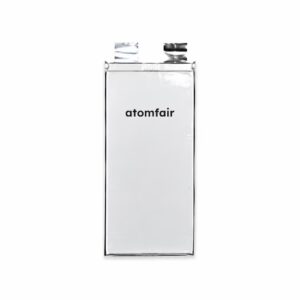
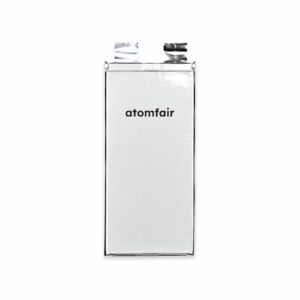
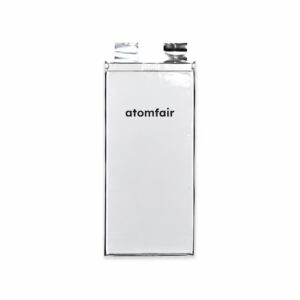
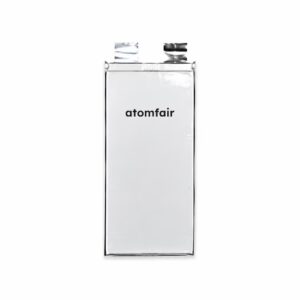
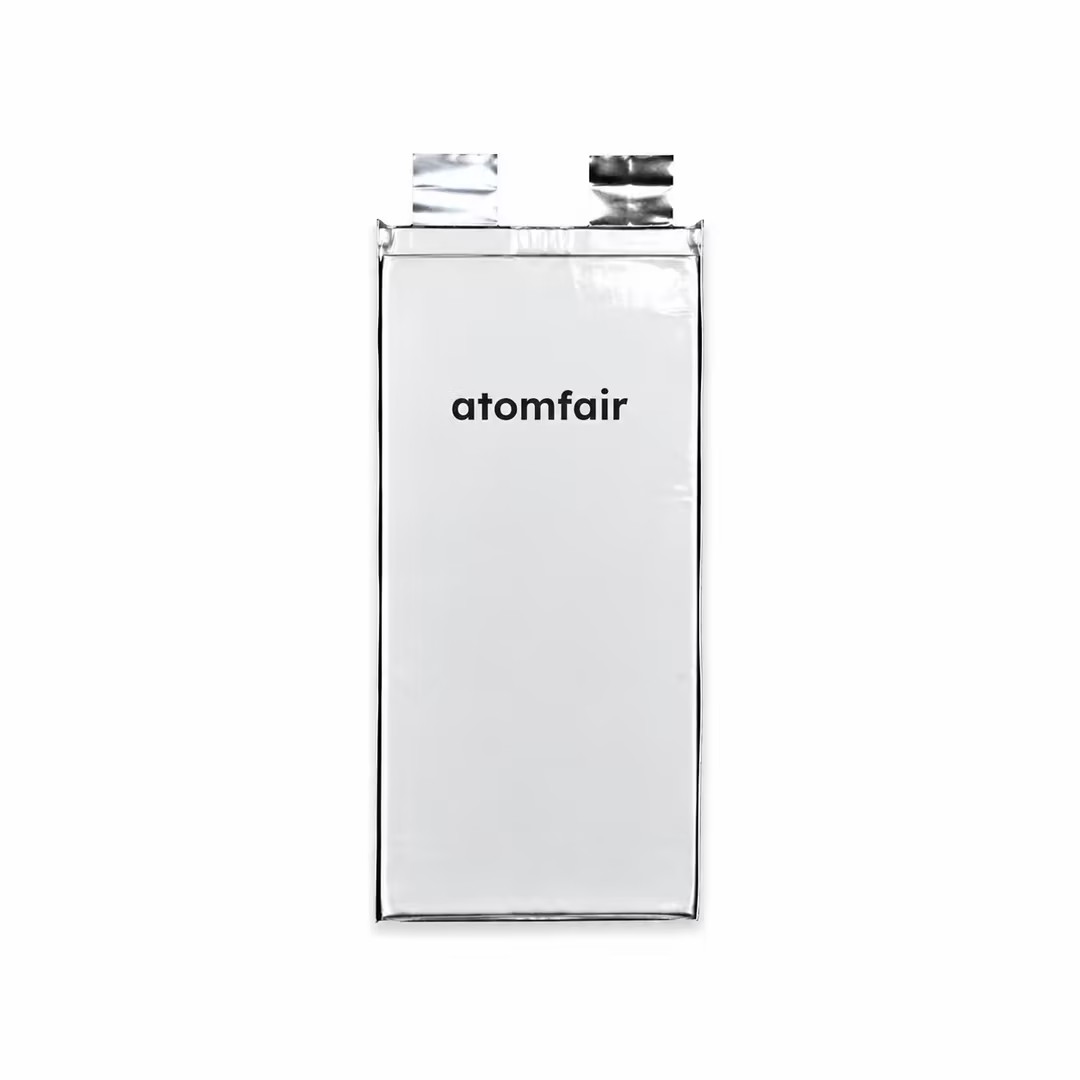
The ES02 series represents the pinnacle of solid-state battery technology, specifically engineered for high-end UAV (Unmanned Aerial Vehicle) applications requiring extreme endurance. With a record-breaking specific energy density of up to 400Wh/kg, these cells deliver unprecedented mission ranges for long-duration patrol, surveying, mapping, and monitoring tasks. Utilizing advanced solid-state architecture, the ES02 series ensures solid power support and thermal stability for the most demanding flight profiles. For bulk inquiries or official volume quotations, please contact us via email at inquiry@atomfair.com.
Technical Specifications
| Specification | ES0287187T1-39 | ES02122175T1-53 |
|---|---|---|
| Nominal Capacity | 39Ah | 53Ah |
| Energy Density | 390Wh/kg | 395Wh/kg |
| Nominal Voltage | 3.44V | 3.44V |
| Cell Size (mm) | 10.5 * 87 * 187 | 10.7 * 122 * 175 |
| Voltage Range | 2.5V – 4.25V | 2.5V – 4.25V |
| AC Internal Resistance | ≤2.5mΩ (30% SOC) | ≤2.5mΩ (30% SOC) |
| Cont. Discharge Rate | 2C ≥ 90% SOC | 2C ≥ 90% SOC |
| Operating Temperature | -20°C to 60°C | -20°C to 60°C |
| Cycle Life @RT | 1C/1C ≥ 300 cycles | 1C/1C ≥ 300 cycles |
Core Features & Advantages
Peak Specific Energy
Industry-leading energy density of 390-400Wh/kg, maximizing payload efficiency and endurance for high-end UAVs.
Benchmark Mission Endurance
Specifically engineered to provide record-breaking flight times for critical aerial patrolling, monitoring, and mapping missions.
Stable High-Output Power
Maintains a capacity retention of ≥90% SOC even during 2C continuous discharge cycles for steady operational performance.
Application Scope
- Long-Endurance Patrol UAVs
- Geological Surveying & Mapping Drones
- Real-time Aerial Monitoring Platforms
- High-Altitude Intelligence & Surveillance
Accessories & Customization
Solid-State Advantage: Superior thermal safety and volumetric efficiency compared to traditional Li-polymer pouch cells.
Internal Resistance: Low IR design (≤2.5mΩ) ensures minimal heat generation during sustained flight operations.
Custom Solutions: Specialized cell dimensions and tab configurations are available for research-grade prototyping and industrial scaling.
Store cells within the -20°C to 60°C temperature range and maintain voltage between 2.5V and 4.25V to prevent performance degradation. Avoid mechanical deformation, short circuits, and exposure to conductive environments to mitigate electrical hazards.
- Storage Temperature: Store cells in a dry, ventilated environment within -20°C to 60°C to preserve cycle life and safety.
- Voltage Limits: Never discharge below 2.5V or charge above 4.25V to prevent irreversible capacity loss and internal damage.
- Discharge Rate: Continuous discharge at 2C is permissible only when the cell is above 90% state of charge to maintain thermal stability.
- Mechanical Integrity: Protect the cell from punctures, crushing, and bending to avoid internal short circuits and electrolyte leakage.
- Electrical Safety: Use insulated tools and approved connectors to prevent accidental short circuits during handling and integration.
Follow these steps to safely initialize and handle the solid-state cells for UAV integration. Proper procedures minimize risk of electrical and thermal incidents.
Required Equipment: Multimeter, Constant-current constant-voltage charger, Insulated gloves
- Inspect
Inspect the cell envelope for dents, creases, or punctures before any electrical connection. - Measure voltage
Measure open-circuit voltage with a multimeter to confirm it lies within the 2.5V to 4.25V range. - Connect charger
Connect the cell to a constant-current constant-voltage charger using appropriate gauge leads and connectors. - Set charge parameters
Verify that the charger is compatible with solid-state lithium cells and set termination voltage to 4.25V. - Monitor temperature
Monitor cell surface temperature during charging; abort if temperature exceeds 60°C. - Store safely
Store cells in a dry, ventilated environment within -20°C to 60°C, away from conductive surfaces. - Dispose responsibly
Dispose of damaged or end-of-life cells according to local hazardous waste regulations.
How does the 2C continuous discharge rating affect the effective capacity of the ES02 solid-state cells under sustained high-load UAV operations?
The ES02 cells maintain ≥90% of rated capacity at 2C continuous discharge. For the 39Ah variant (ES0287187T1-39), this yields at least 35.1Ah usable; for the 53Ah variant (ES02122175T1-53), at least 47.7Ah. This trade-off enables stable high-power output without major capacity sacrifice.
What specific voltage and dimensional constraints must be considered when integrating ES02 series cells into a UAV battery management system?
The ES02 cells operate at a nominal voltage of 3.44V with a voltage range of 2.5V–4.25V, requiring a BMS compatible with that window. Physical dimensions differ: the 39Ah cell is 10.5×87×187 mm and the 53Ah cell is 10.7×122×175 mm, so mechanical integration must accommodate these distinct form factors.
What thermal management and operational temperature limits apply to the ES02 solid-state cells during UAV deployment?
The ES02 series operates safely from -20°C to 60°C and features low AC internal resistance (≤2.5mΩ at 30% SOC) to minimize self-heating. Its solid-state architecture provides superior thermal stability versus conventional Li-polymer cells, reducing the need for active cooling. Cycle life is 300 cycles at 1C/1C charge/discharge at room temperature.
The ES02 series solid-state cells deliver industry-leading energy density (390–395 Wh/kg) for extended UAV flight times, with low internal resistance enabling sustained 2C discharge. However, the limited cycle life (~300 cycles at 1C/1C) and narrow operating temperature range present operational constraints for applications requiring long calendar life or extreme thermal environments.
Positive
- Ultra-high specific energy density: Achieves 390–395 Wh/kg, maximizing payload efficiency and mission endurance for high-end UAV applications.
- Low internal resistance with stable high-rate discharge: IR ≤2.5 mΩ ensures minimal heat generation, and capacity retention ≥90% SOC during 2C continuous discharge for steady flight performance.
Trade-offs
- Limited cycle life at room temperature: Rated for ≥300 cycles at 1C/1C RT, which is lower than conventional Li-ion chemistries and may reduce lifetime value for frequent-use deployments.
- Restricted operating temperature range: Specified from -20°C to 60°C; performance and cycle life may degrade outside this range, requiring thermal management in extreme environments.
Every advanced material, component, equipment, and instrument in our catalog is backed by rigorous testing. We maintain strict internal quality management frameworks and align with CE conformity metrics to deliver transparent, reproducible performance data via our public open-science repository.
To request raw batch performance data, submit formal vendor registration paperwork, or execute a fast-turnaround R&D manufacturing loop, contact us at inquiry@atomfair.com.
Item is dispatched under the Atomfair Shipping & Delivery Framework (Free worldwide shipping on orders over $59 USD excl. heavy equipment). Return is governed by the Atomfair Return & Refund Policy (7-day technical return window).