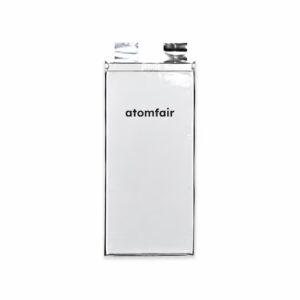
Description
ES03 Series All-Rounder Solid-State Cells (340Wh/kg High-Power Battery) | ATOMFAIR
Product Overview
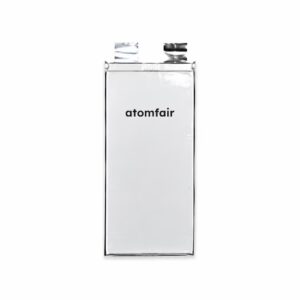
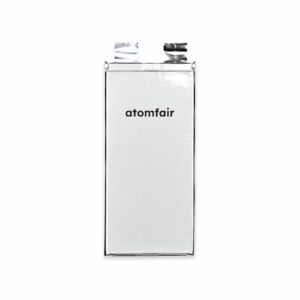
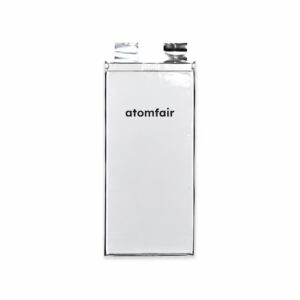
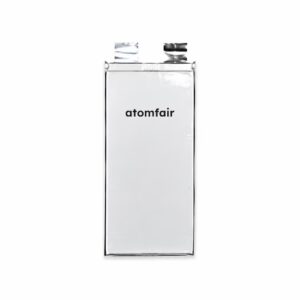
The ES03 series solid-state battery cell is the ultimate “all-rounder” for high-performance applications. It masterfully achieves an exquisite balance between high energy density (340Wh/kg), robust power output (3C discharge), and long cycle life. Specifically engineered to maintain a low temperature rise of less than 30°C during heavy operation, the ES03 series provides a reliable and efficient energy solution for diverse application scenarios, including professional UAV platforms and industrial robotics. For bulk inquiries or official volume quotations, please contact us via email at inquiry@atomfair.com.
Technical Specifications
| Specification | ES0387187T1-36 | ES0387187T2-39 |
|---|---|---|
| Nominal Capacity | 36Ah | 39Ah |
| Energy Density | 340Wh/kg | |
| Nominal Voltage | 3.54V | 3.54V |
| Cell Size (mm) | 10.5*87*187 | 11.5*87*187 |
| AC Internal Resistance | ≤1mΩ (30% SOC) | |
| Cont. Discharge Rate | 3C ≥ 95% SOC | |
| Operating Temperature | -20°C to 60°C | |
| Cycle Life @RT | 1C/3C ≥ 500 cycles | |
Core Features & Advantages
Balanced All-Round Performance
Harmonizes high energy density (340Wh/kg) with high power output (3C discharge) to meet the diverse needs of modern robotics.
Exceptional Thermal Management
Features an industry-leading temperature rise of less than 30°C during operation, ensuring long-term cell health and system safety.
Ultra-Low Internal Resistance
The ≤1mΩ internal resistance minimizes energy loss and maximizes efficiency during high-rate discharge cycles.
Application Scope
- Professional Surveillance UAVs
- Industrial Automation Robotics
- High-Performance Motive Power Systems
- Diverse Scientific Research Prototyping
Accessories & Customization
BMS Integration: Optimized for smart management systems requiring precise high-rate discharge monitoring and thermal control.
Custom Form Factors: Bespoke cell dimensions and tab orientations are available for specialized research and industrial integration.
Technical Data: Full discharge curve sets and safety testing documentation are available upon verified inquiry.
Store and operate the cell within -20°C to 60°C to prevent performance degradation or safety hazards. Monitor AC internal resistance; values exceeding 1mΩ indicate potential degradation requiring replacement.
- Temperature Range: Maintain cell temperature between -20°C and 60°C during storage and operation to avoid irreversible capacity loss or thermal runaway.
- Internal Resistance Limit: Do not operate the cell if AC internal resistance exceeds 1mΩ at 30% SOC, as this signals increased energy loss and reduced safety margin.
- Discharge Rate Limit: Limit continuous discharge to 3C or less; exceeding this rate may cause overheating and accelerate cycle life degradation.
- Thermal Rise Constraint: Ensure adequate heat dissipation so that cell temperature rise stays below 30°C during high-rate discharge to preserve long-term health.
- Cycle Life Expectancy: The cell is rated for at least 500 cycles at 1C/3C at room temperature; operation outside these conditions will reduce cycle life.
Follow these steps to safely deploy the solid-state cell in high-power applications. Proper initialization and monitoring prevent damage and ensure reliable performance.
Required Equipment: Battery Management System (BMS) configured for high-rate discharge, Calibrated multimeter for voltage verification, Thermal management system (e.g., heatsink or active cooling)
- Inspect Cell Condition
Inspect the cell for physical damage, deformation, or leakage before any electrical connection. - Verify Voltage
Verify the open-circuit voltage matches the nominal value of 3.54V using a calibrated multimeter. - Connect BMS
Connect the cell to a compatible BMS that monitors voltage, current, and temperature during operation. - Set Operating Environment
Ensure the ambient temperature is within -20°C to 60°C before commencing discharge or charge cycles. - Apply Thermal Management
Apply appropriate thermal management to keep the cell temperature rise below 30°C during sustained high-rate discharge. - Monitor Discharge Rate
Do not exceed a continuous discharge rate of 3C; reduce load if temperature approaches the limit. - Periodic Resistance Check
Monitor AC internal resistance periodically at 30% SOC to detect early signs of degradation.
How does the ES03 series achieve 340 Wh/kg energy density while supporting a 3C continuous discharge rate, and what is the resulting cycle life trade-off?
The ES03 series balances high energy density (340 Wh/kg) and high power output (3C discharge ≥95% SOC) through its solid-state architecture and ultra-low internal resistance (≤1 mΩ). However, this combination comes with a cycle life trade-off: at room temperature with 1C charge/3C discharge, the cell delivers ≥500 cycles, which is moderate compared to cells optimized purely for longevity.
What integration constraints must be considered when embedding the ES03 series solid-state cell into a UAV or robotic platform, given its thickness and thermal profile?
The ES03 cell is available in thicknesses of 10.5 mm (36Ah) or 11.5 mm (39Ah), with dimensions 87 mm x 187 mm. Its exceptional thermal management limits temperature rise to <30°C during continuous 3C discharge, reducing active cooling needs. However, integration requires a BMS capable of precise high-rate discharge monitoring, and the operating temperature range of -20°C to 60°C must be respected through enclosure design. Custom form factors and tab orientations are available for specialized integration.
What safety and handling protocols are critical for the ES03 series given its ≤1 mΩ internal resistance and high-rate discharge capability?
The ≤1 mΩ internal resistance enables extremely efficient high-current delivery but also means any external short circuit or BMS failure can result in very high fault currents. Robust external circuit protection, proper BMS integration with overcurrent monitoring, and physical protection against puncture or crush are essential. The solid-state chemistry reduces electrolyte leakage risk, but cells must be stored within -20°C to 60°C. Safety testing documentation is available upon verified inquiry.
The ES03 series solid-state cell delivers a balanced 340Wh/kg energy density with 3C continuous discharge and ≤1mΩ internal resistance, optimized for UAV and robotics applications requiring low thermal rise under 30°C.
Positive
- Balanced high energy and power density: Achieves 340Wh/kg energy density with 3C continuous discharge, enabling sustained high-rate output for demanding robotic and UAV platforms without sacrificing capacity.
- Ultra-low internal resistance and thermal control: AC internal resistance ≤1mΩ minimizes energy loss during discharge, while temperature rise stays below 30°C under heavy load, preserving cell health and system safety.
Trade-offs
- Limited cycle life at high rate: Cycle life is specified at ≥500 cycles under 1C/3C at room temperature, which may be insufficient for applications requiring extended longevity under continuous high-rate cycling.
- Narrow operating temperature range: Operating temperature spans -20°C to 60°C, restricting deployment in extreme cold or hot environments without additional thermal management infrastructure.
Every advanced material, component, equipment, and instrument in our catalog is backed by rigorous testing. We maintain strict internal quality management frameworks and align with CE conformity metrics to deliver transparent, reproducible performance data via our public open-science repository.
To request raw batch performance data, submit formal vendor registration paperwork, or execute a fast-turnaround R&D manufacturing loop, contact us at inquiry@atomfair.com.
Item is dispatched under the Atomfair Shipping & Delivery Framework (Free worldwide shipping on orders over $59 USD excl. heavy equipment). Return is governed by the Atomfair Return & Refund Policy (7-day technical return window).