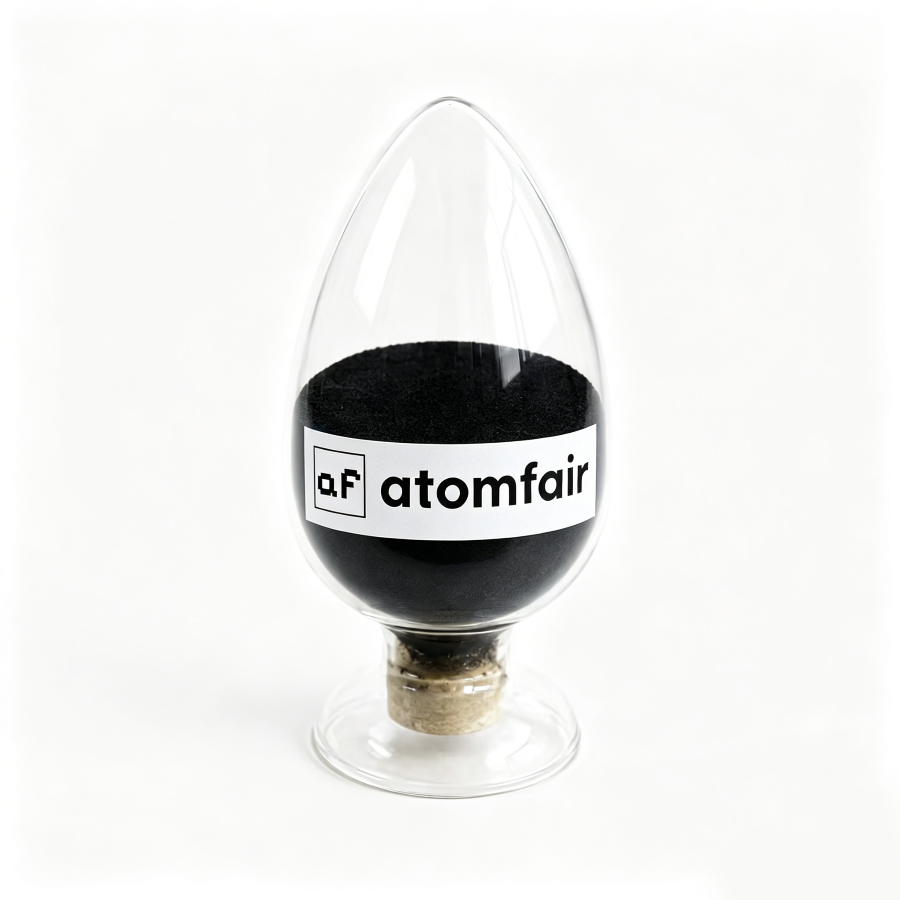
ATOMFAIR Lithium-rich Nickelate Pre-lithiation AdditiveRESEARCH GRADE MATERIAL
|
|||||||||||||||||||||||||||||||||||||||||||||||||||||
|
|||||||||||||||||||||||||||||||||||||||||||||||||||||
|
TAILORED SOLUTIONS FOR RESEARCH
Contact our engineering team for technical support or official institutional quotations.
EMAIL: inquiry@atomfair.com
|
|||||||||||||||||||||||||||||||||||||||||||||||||||||
|
Manufacturer: Atomfair LLC
Brand: ATOMFAIR®
|
|||||||||||||||||||||||||||||||||||||||||||||||||||||
This material is a moisture-sensitive lithium nickel oxide powder with residual surface alkali that requires inert atmosphere storage. It must be handled using personal protective equipment to prevent skin and eye contact.
- Inert Atmosphere Storage: Store the powder in a sealed container under argon or nitrogen with less than 0.1 ppm water and oxygen to prevent moisture uptake and carbonate formation.
- Moisture Exposure Limitation: Minimize exposure to ambient air to less than 10 minutes during transfer to avoid significant moisture adsorption and degradation of electrochemical performance.
- Personal Protective Equipment: Wear nitrile gloves, safety goggles, and a lab coat when handling the powder to protect against irritation from residual alkaline species.
This procedure outlines the safe handling and incorporation of the moisture-sensitive LNO powder into a cathode slurry within an inert atmosphere. The steps ensure minimal exposure to ambient air and proper dispersion of the additive.
Required Equipment: Glovebox (argon or nitrogen, <0.1 ppm H2O/O2), Analytical balance (0.1 mg readability), Static-dissipative spatula, Mixing vessel with sealable cap
- Inspect container
Inspect the sealed container for any signs of damage or moisture ingress before opening inside the glovebox. - Transfer to glovebox
Transfer the unopened container into a glovebox maintained under argon with less than 0.1 ppm oxygen and moisture. - Weigh powder
Weigh the required amount of LNO additive using a static-dissipative spatula and an analytical balance inside the glovebox. - Prepare slurry
Mix the weighed additive with cathode active material, conductive carbon, and binder in a dry, anhydrous solvent under inert conditions. - Homogenize and coat
Allow the slurry to homogenize by stirring for at least 30 minutes before coating onto a current collector.
What is the trade-off between first charge capacity and first cycle efficiency for single-crystal Li2NiO2 sacrificial additive at different voltage windows?
The material delivers a first charge capacity of 430.47 mAh/g at 2.5V–4.2V and 440.21 mAh/g at 2.5V–4.3V, both exceeding target standards of ≥400 and ≥410 mAh/g, respectively. However, first cycle efficiency remains low at ~36% for both windows, meeting the target standard of ≤40%, indicating that high initial lithium release is inherently coupled with irreversible capacity loss—a deliberate trade-off for sacrificial pre-lithiation purposes.
What slurry compatibility issues arise from residual surface alkalis when integrating Li2NiO2 into cathode formulations?
Surface residual alkali levels of LiOH at 1.97% and Li2CO3 at 0.77%, combined with a pH of 11.2, create a strongly basic environment that can dehydrofluorinate PVDF binders and catalyze NMP decomposition, leading to gelation or poor electrode uniformity. Slurry formulation must employ moisture-controlled atmospheres and may require neutralization strategies or alternative binder systems to prevent processing failure.
What are the moisture sensitivity and storage infrastructure requirements for single-crystal Li2NiO2 powder?
With a specified water content of 160 ppm, the powder is hygroscopic and must be handled and stored exclusively in dry, inert atmospheres such as an argon-filled glovebox with H2O and O2 levels below 0.1 ppm. Exposure to ambient humidity will rapidly increase residual alkali content, degrade electrochemical performance, and compromise the sacrificial additive's capacity deliverable per the stated 430–440 mAh/g targets.
This single-crystal Li2NiO2 sacrificial additive delivers a first charge capacity of 430.47 mAh/g (2.5–4.2V) and 440.21 mAh/g (2.5–4.3V), exceeding target standards of ≥400 and ≥410 mAh/g respectively, making it a high-capacity pre-lithiation source for cathode benchmarking. However, the low first-cycle efficiency (~36%) and elevated surface residual alkali levels (LiOH 1.97%, Li2CO3 0.77%) impose strict handling and slurry compatibility constraints typical of lithium-rich nickelate additives.
Positive
- High first charge capacity above target: The material delivers 430.47 mAh/g at 4.2V and 440.21 mAh/g at 4.3V, exceeding the specified target standards of ≥400 mAh/g and ≥410 mAh/g respectively, enabling robust pre-lithiation compensation in full-cell architectures.
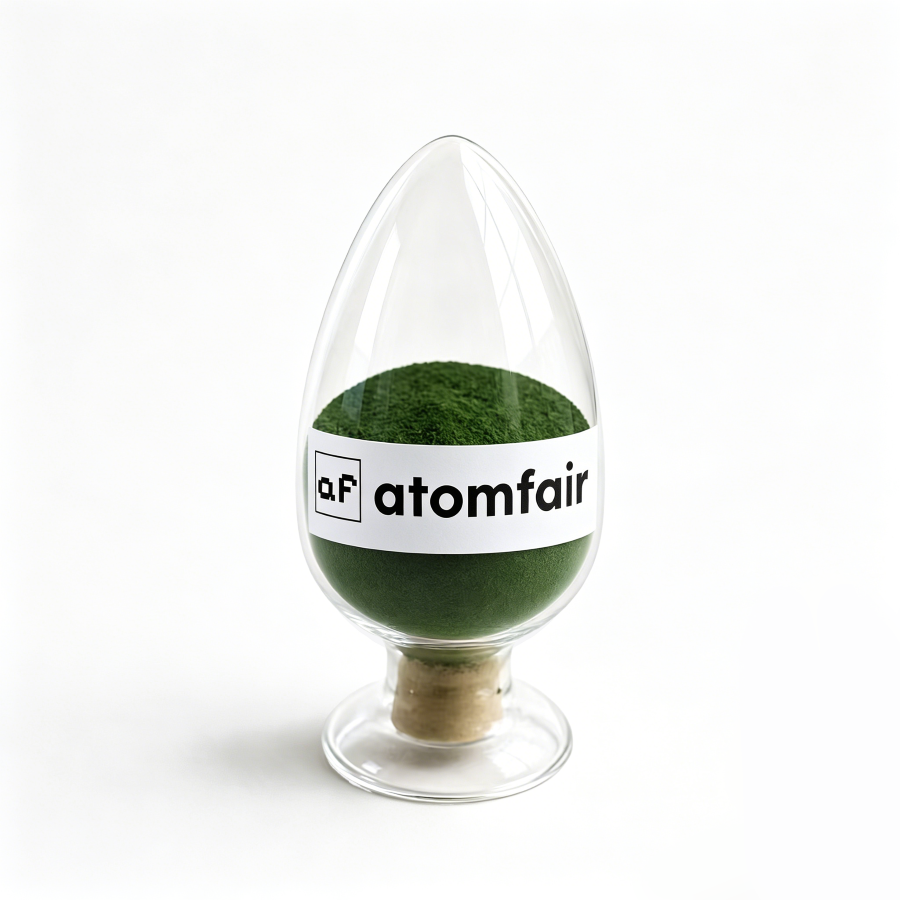
- Single-crystal morphology for stability: The dark green powder exhibits a single-crystal morphological shape, which may reduce particle cracking and side reactions during electrochemical cycling, providing improved structural integrity compared to polycrystalline counterparts.
Trade-offs
- High residual alkali and pH value: Surface residual alkali LiOH is 1.97% and Li2CO3 is 0.77% with a pH of 11.2 (water method); these conditions require moisture-controlled processing and may cause slurry gelation or coating defects if not precisely managed.
- Low first-cycle efficiency inherent design: First-cycle efficiency is 36.05% at 4.2V and 36.03% at 4.3V (target ≤40%), meaning nearly 64% of initial charge capacity is irreversible—a deliberate sacrificial characteristic that must be accounted for in electrode balancing and system-level capacity planning.
Every advanced material, component, equipment, and instrument in our catalog is backed by rigorous testing. We maintain strict internal quality management frameworks and align with CE conformity metrics to deliver transparent, reproducible performance data via our public open-science repository.
To request raw batch performance data, submit formal vendor registration paperwork, or execute a fast-turnaround R&D manufacturing loop, contact us at inquiry@atomfair.com.
Item is dispatched under the Atomfair Shipping & Delivery Framework (Free worldwide shipping on orders over $59 USD excl. heavy equipment). Return is governed by the Atomfair Return & Refund Policy (7-day technical return window).